My pilgrimage to the 8,000-year-old grape harvest in Kakheti, Georgia
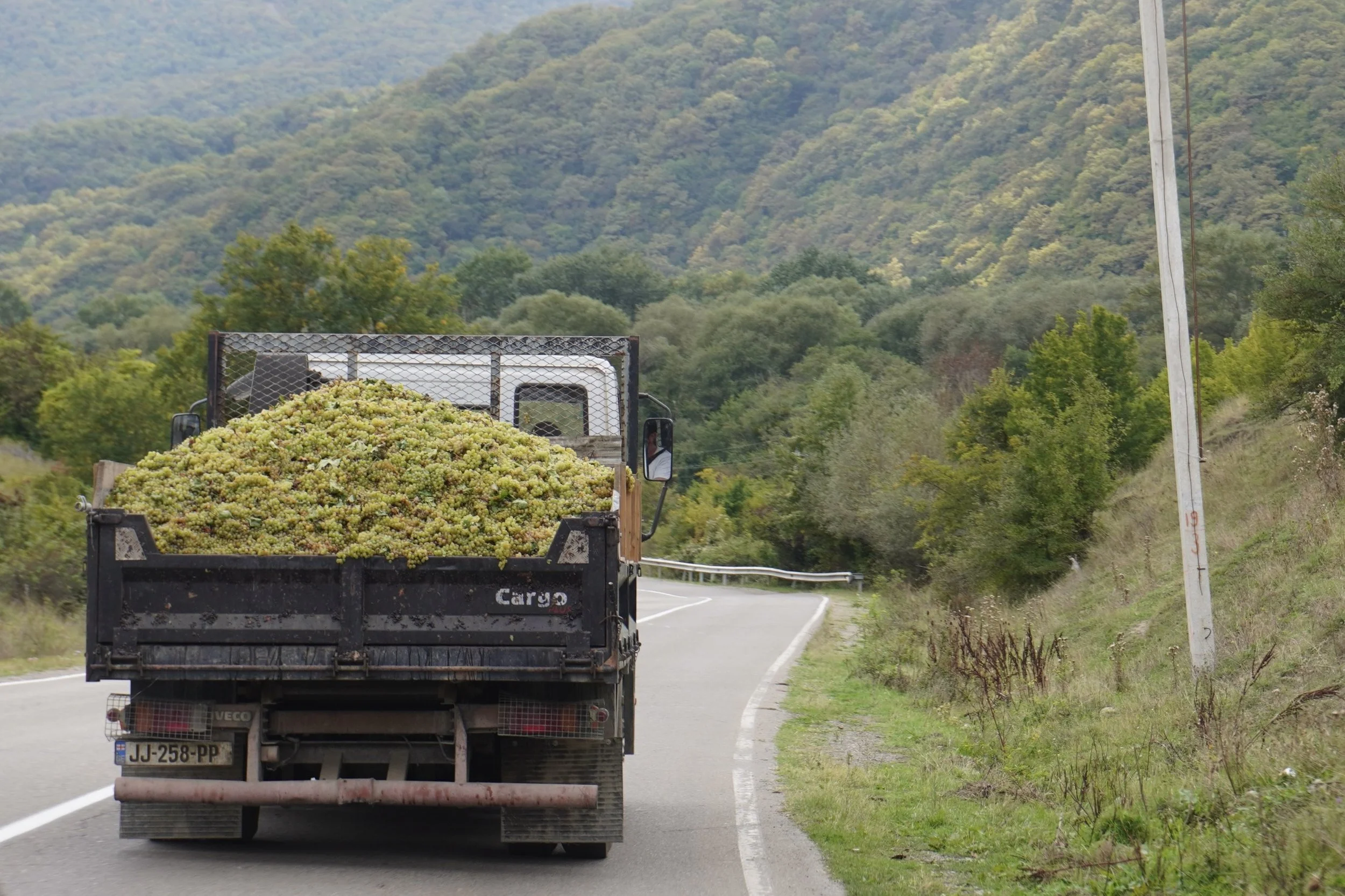
Buckle up! Your windshields might be wiping grape juice around this time of year.
As we speak, the Georgian diaspora makes their return home. Home is in the vineyards. Rtveli, the annual grape harvest, has arrived! I knew that I’d forever regret if I didn’t attempt the journey to Kakheti: the birthplace of wine.
To get from the Black Sea coast to the other edge of the country was not exactly straightforward but it was an adventure I was ready to take. On a six-hour train to the capital, in the last seat of an Embassy car, and in ahitched ride with a family of three is all it took.
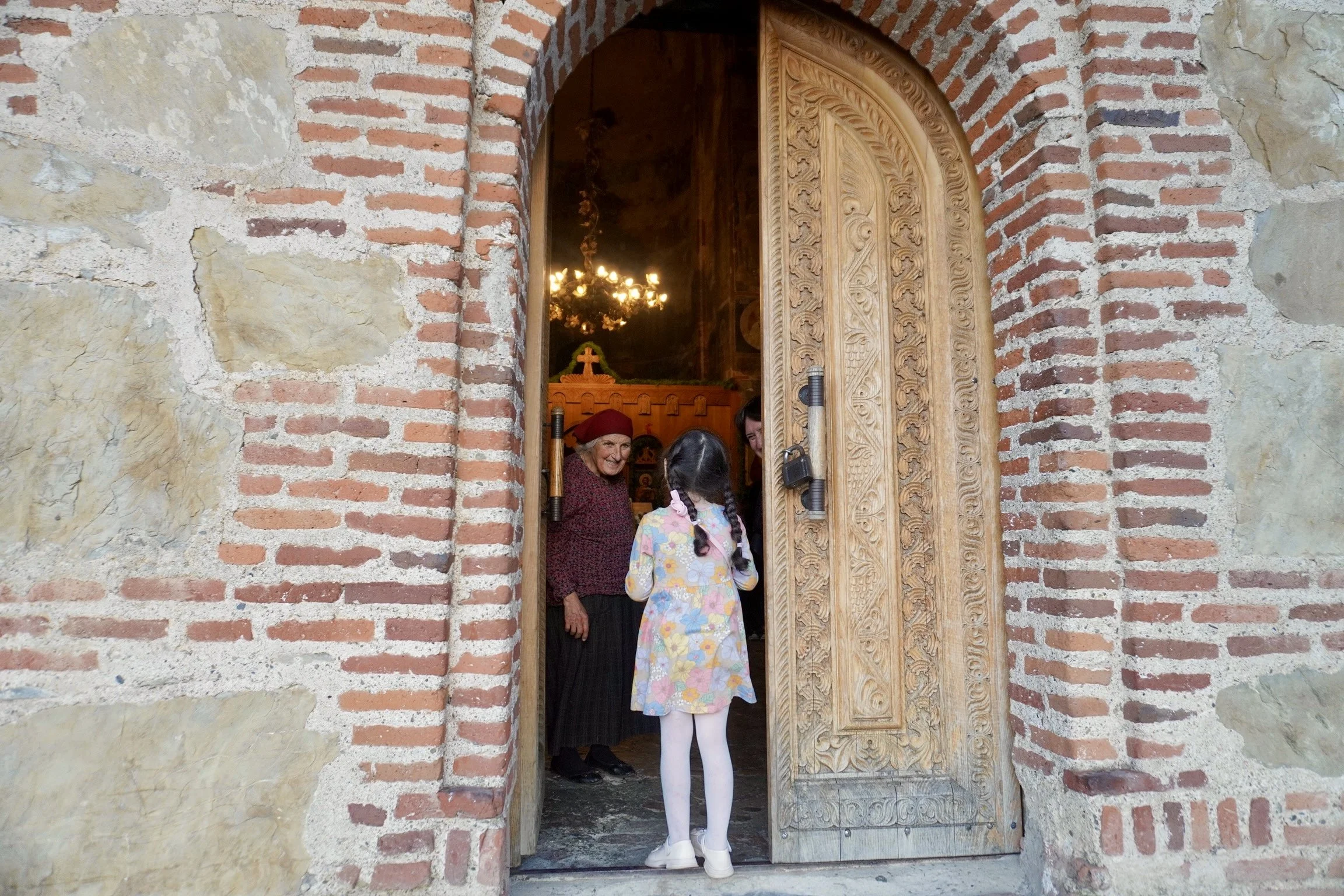
The family generously sprinkled history lessons along the way and pitstops at towering monasteries. This particular cathedral smelled of fresh cedar as we made the ascent up crumbling stairs at golden hour.
When we lost internet in the final stretch, I got out of the car every few kilometers to ask for directions. First, from a busy cow herder. Then from three grandmas cracking walnuts on a long bench. But it was the two teenagers sharing a cigarette who pointed us around the final bend.
I was naive at the time of just how many precarious, unplanned and informal modes of transportation were in my future. No guarantee. Just blind faith, I guess?
That’s the Georgian Orthodox way.
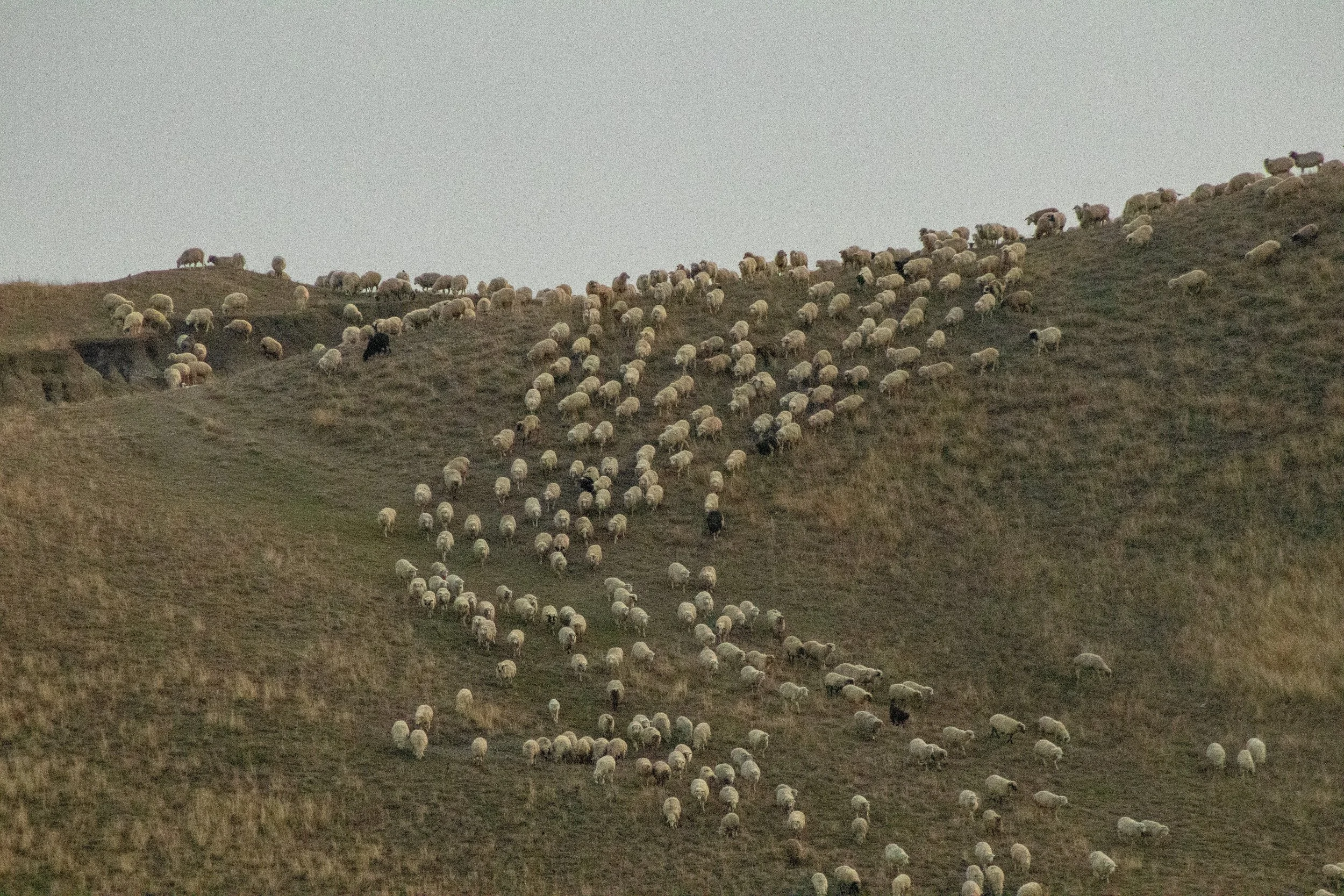
To reach Shilda, we drove past the village where the transhumance ends. Before the brutal winter season, thousands of sheep are resettled here from the highest permanent settlement in Europe (Tusheti).
Georgia’s wine cradle
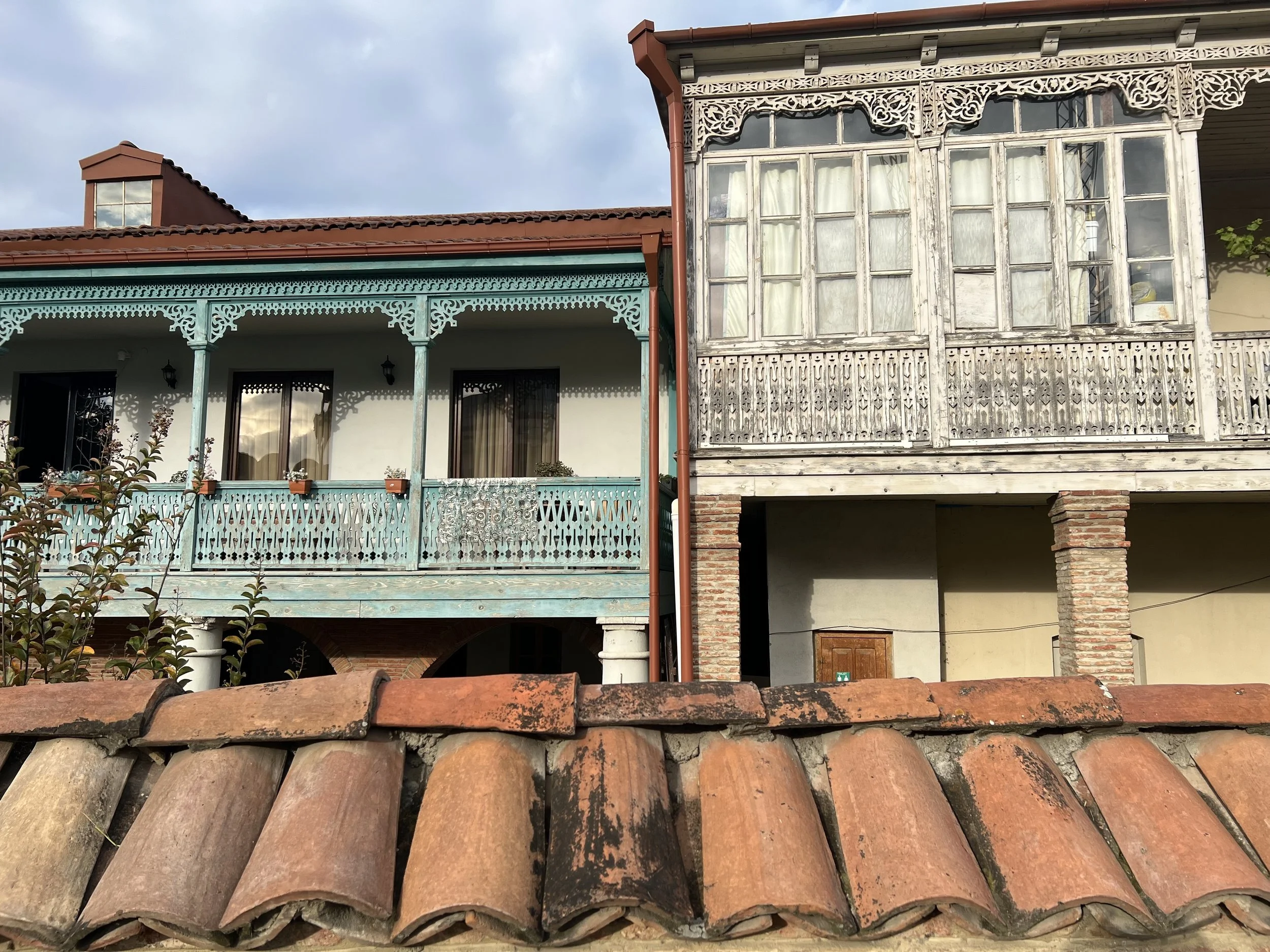
Shilda is a remote stone village tucked in the hills of Kakheti beneath the Caucasus Mountains. Its location within the Kindzmarauli microzone is a protected designation of origin for Saperavi wines.
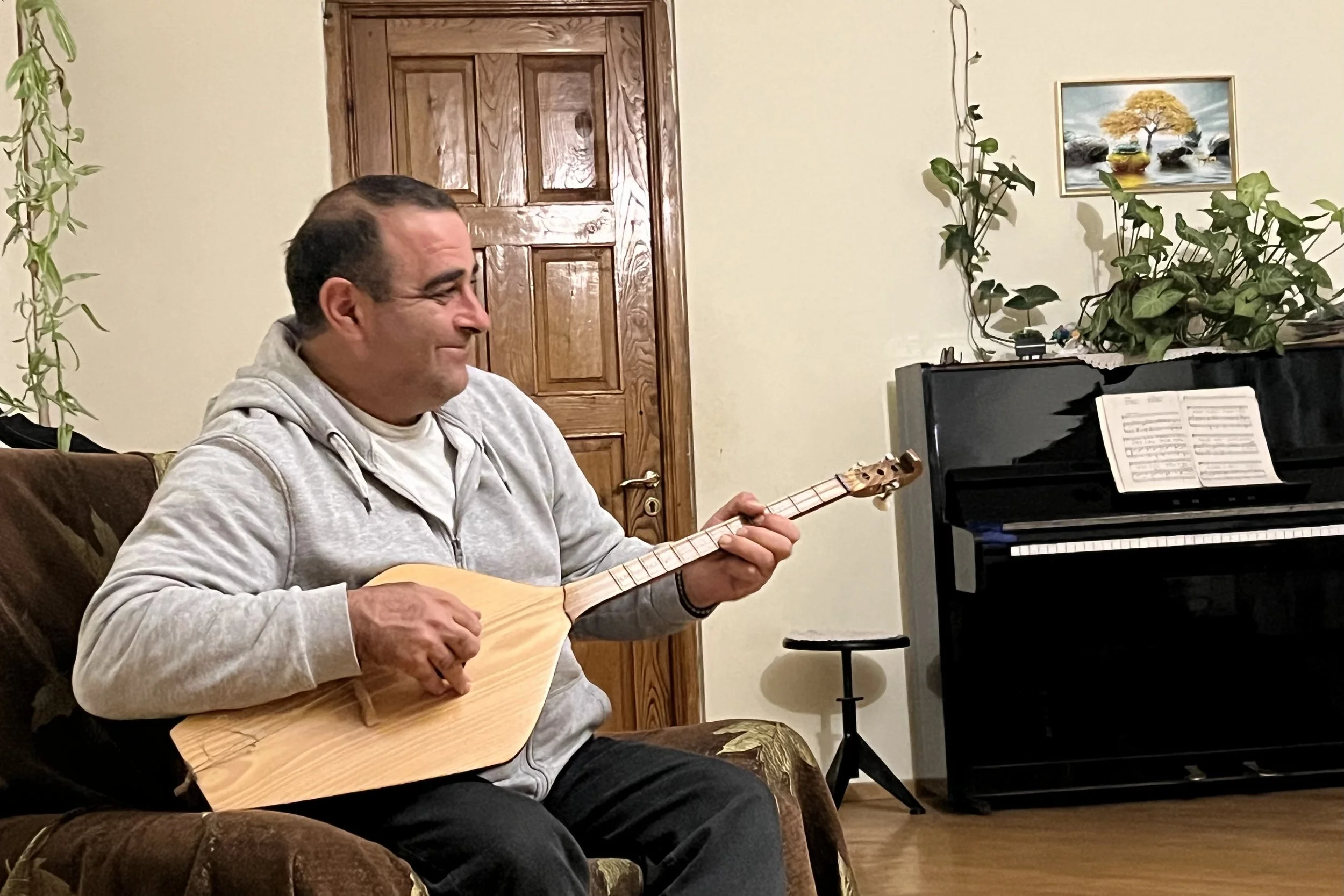
Shilda is famous for hot “shoti” bread, ancient winemaking techniques, and traditional folk music. These same polyphonic sounds brought 19th-century French ethnographers and German scholars to witness “the songs rise from the depths of their souls.”
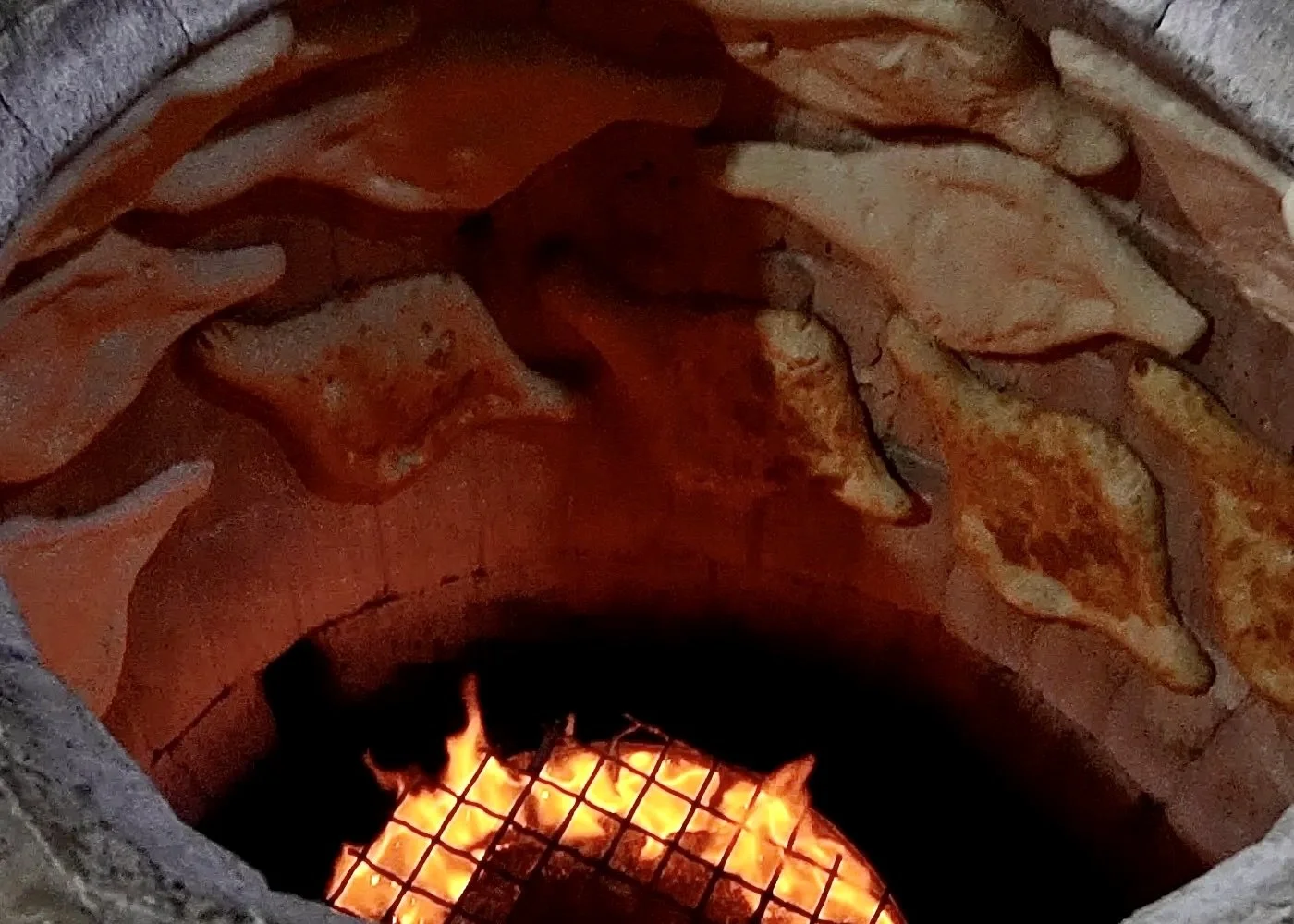
Bakers bend over backwards to slap the “shot” dough into the tone oven.
Shilda is the kind of village where everybody goes way back. We’re talking tens of generations back. In fact, previous ones would trek all the way to Dagestan - bartering homemade wine in exchange for fresh dairy.
It’s the kind of village that replaces chaotic city life with cathartic calm (minus the impassioned dinner table discussions). Yet it’s also the kind of village where patriarchal customs are still embraced in the name of “tradition”…more on that later.
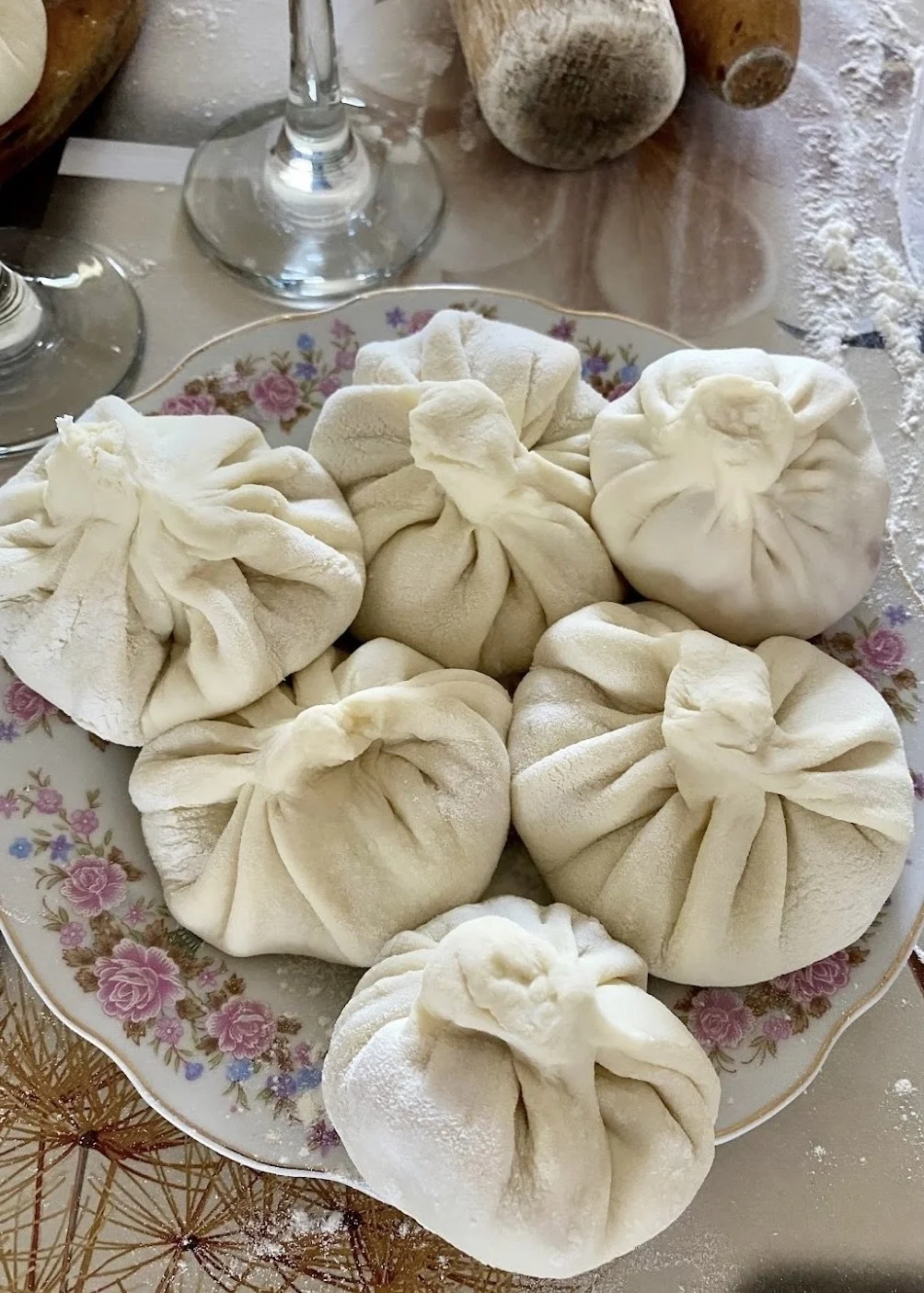
Folding homemade khinkali stuffed with diced mushrooms.
I have one person to thank for making my rtveli dream come true: Keti.
Keti is the local village feminist winemaker. The ONLY village feminist winemaker. In typical Georgian fashion, all it took was a Facebook message the night before.
“We don’t typically accept guests at this time, but I sometimes make exceptions…
See you tomorrow,” she replied to me.
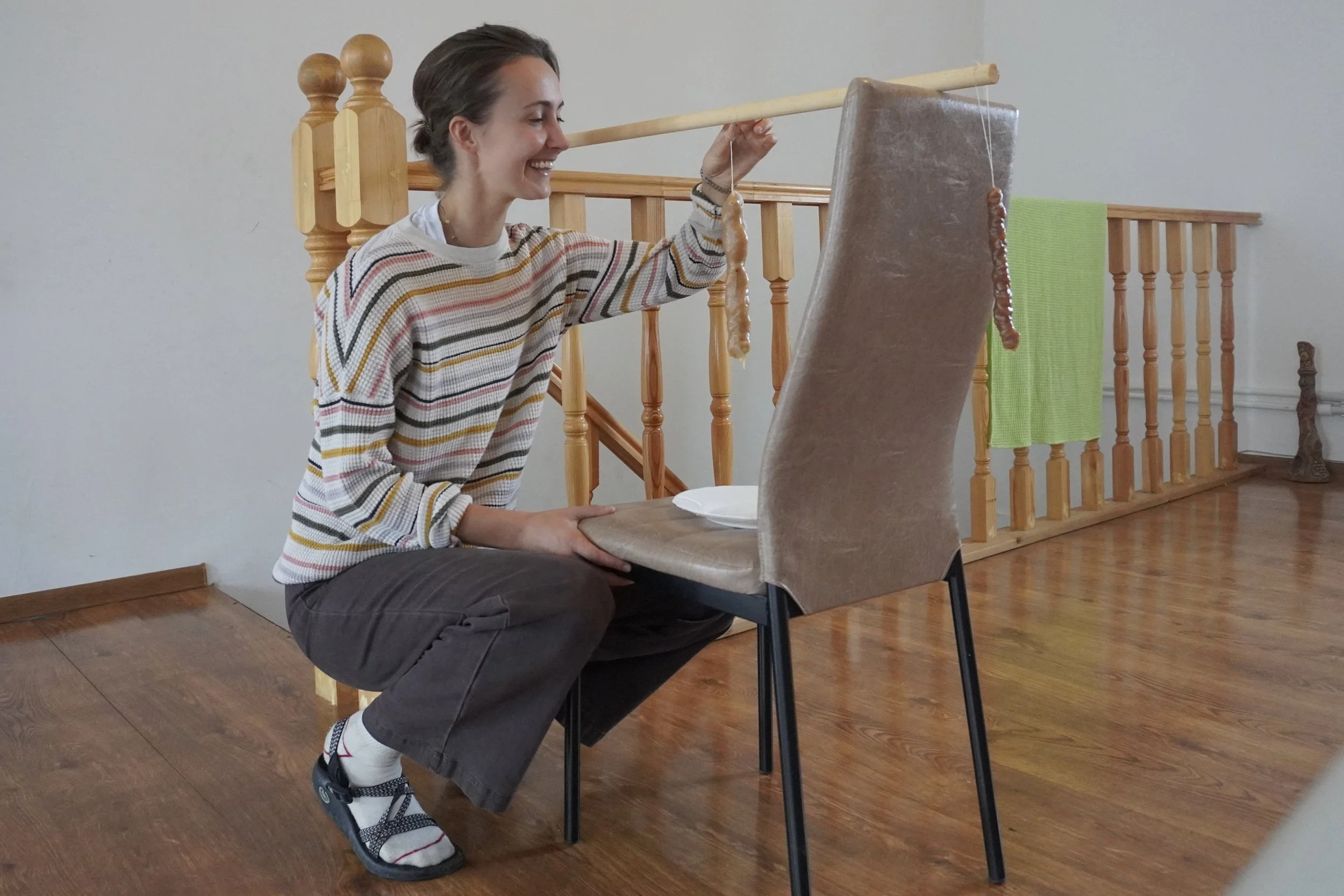
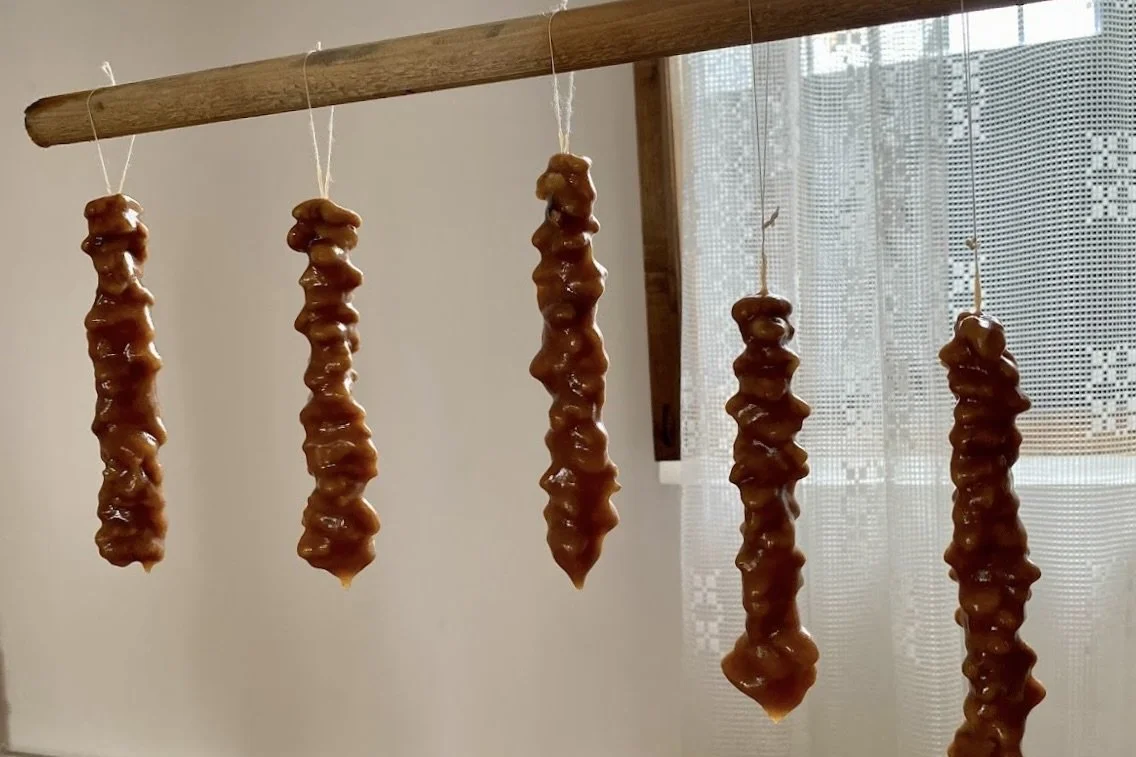
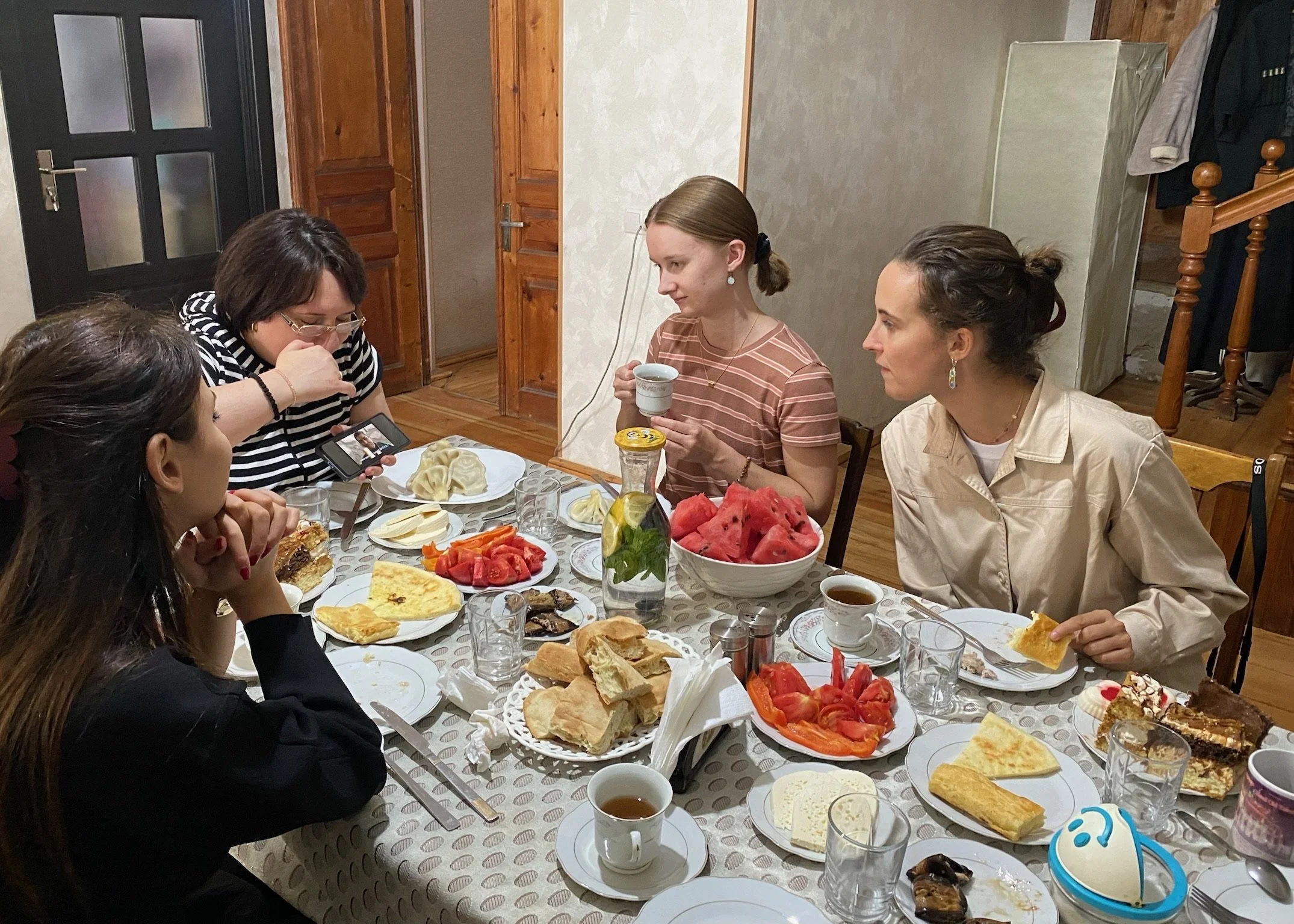
By inviting myself during this time, I agreed to be part of their unedited family life. Together, we shucked lobio beans on the patio and stirred chacha liquor in the cellar. We threaded walnuts onto string and dipped them into thickened grape juice (tatara) while I licked the remains.
It was just the beginning of my introduction to the Eastern edge of this ancient country.
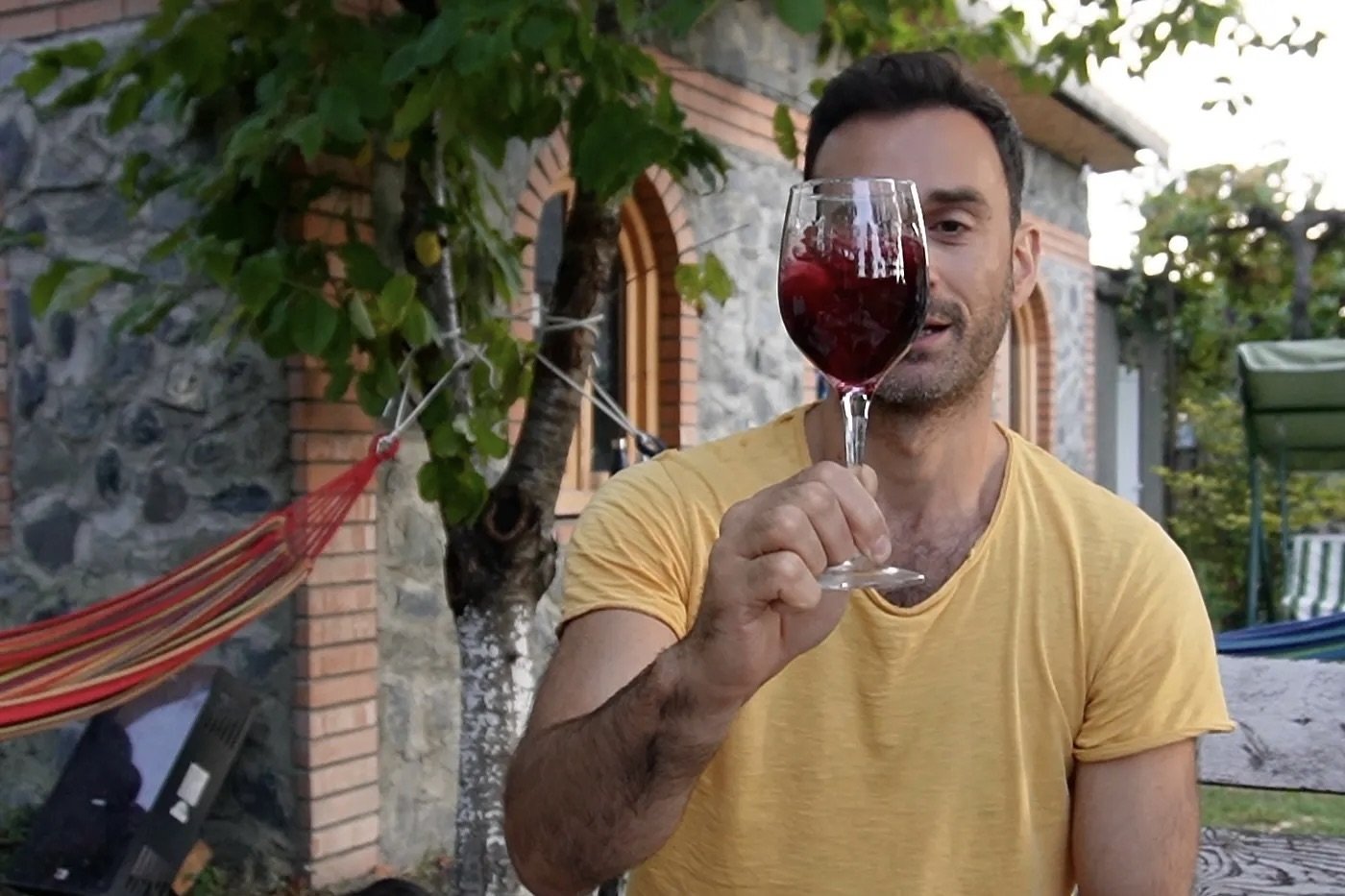
Keti’s brother, Shota, just arrived from London. Like thousands of others, he came back with his partner Nona to help the family with harvest.
To the vineyards we flock
Barefoot, at the foot of the Caucasus mountains, stomping on grapes.
We follow in the footsteps of the ancestors who, for over eight thousand years, softened the same earth. Legend says that the Georgian alphabet was inspired by the curve of the grape vines.
Existentialist mode activated!!!
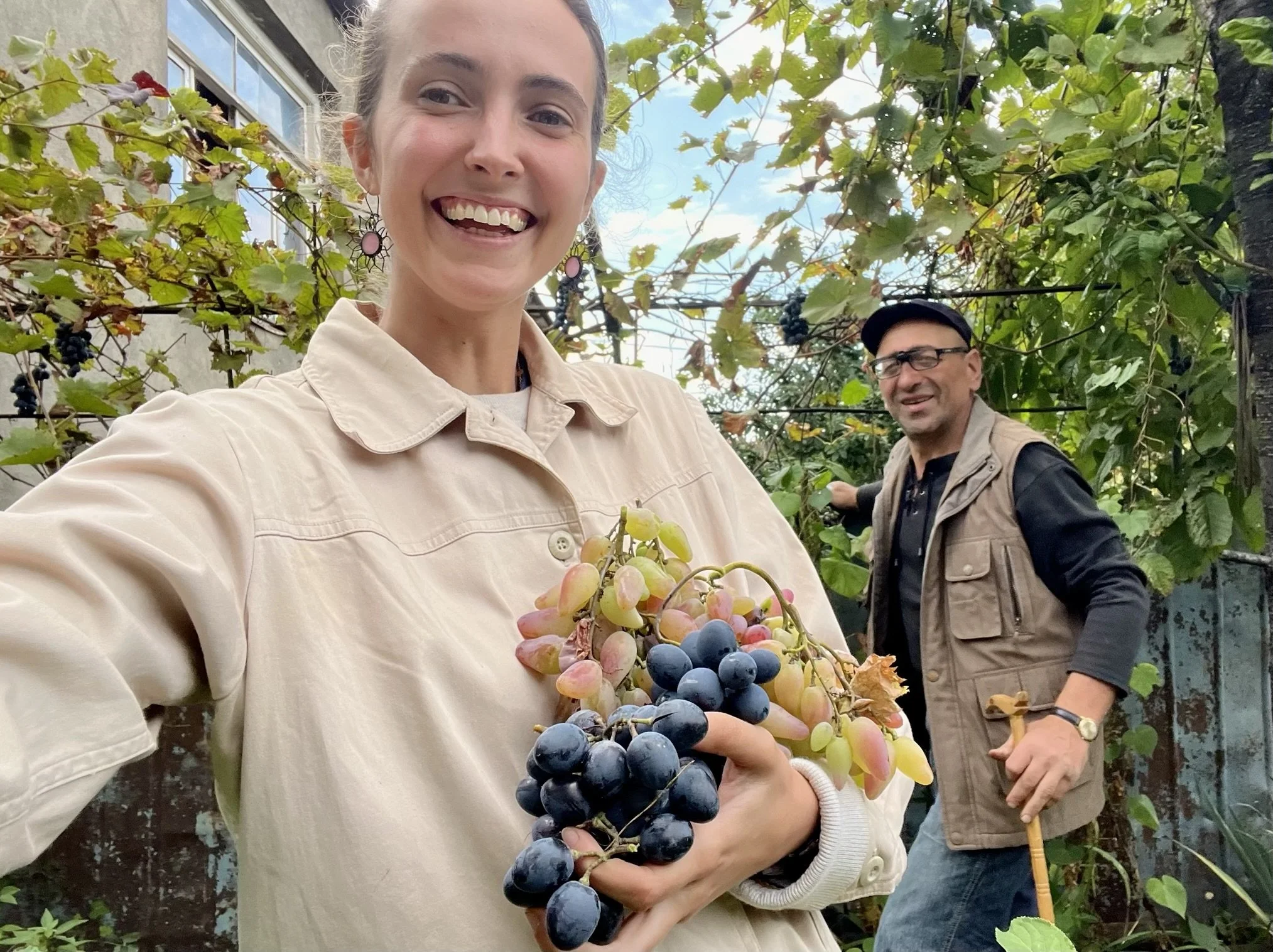
We carry scissors while walking down rows of grapevines. Our task at hand? To collect enough to fill the wooden barrels.
The sound of snipping meets the song of Mrajiashvili: a soundscape as ancient as the wine itself, Shota tells me. Georgia is home to over 400 indigenous grapes. Or was it 600? Every time I’m told a different number. But that really doesn’t matter.
What matters is that many of these species grow only in this microclimate. The mineral-rich soil is highly fertile for cultivating indigenous grape varieties like Saperavi, Rkatsiteli, and Kisi.
This is what makes Georgian wine so special. But still - it’s only half the story. From plucking the grape to pouring the wine, I participated in every step of the process at the family vineyard Shaverge. The entire cycle is a deeply meditative art and science; craft and legacy.
I managed vessels whose names I still can’t pronounce, witnessed ancient techniques merge with modern ones, learned how European winemaking controls the contact with skin and seeds while Georgians just put it all in there, and maybe taste-tested one too many final products…
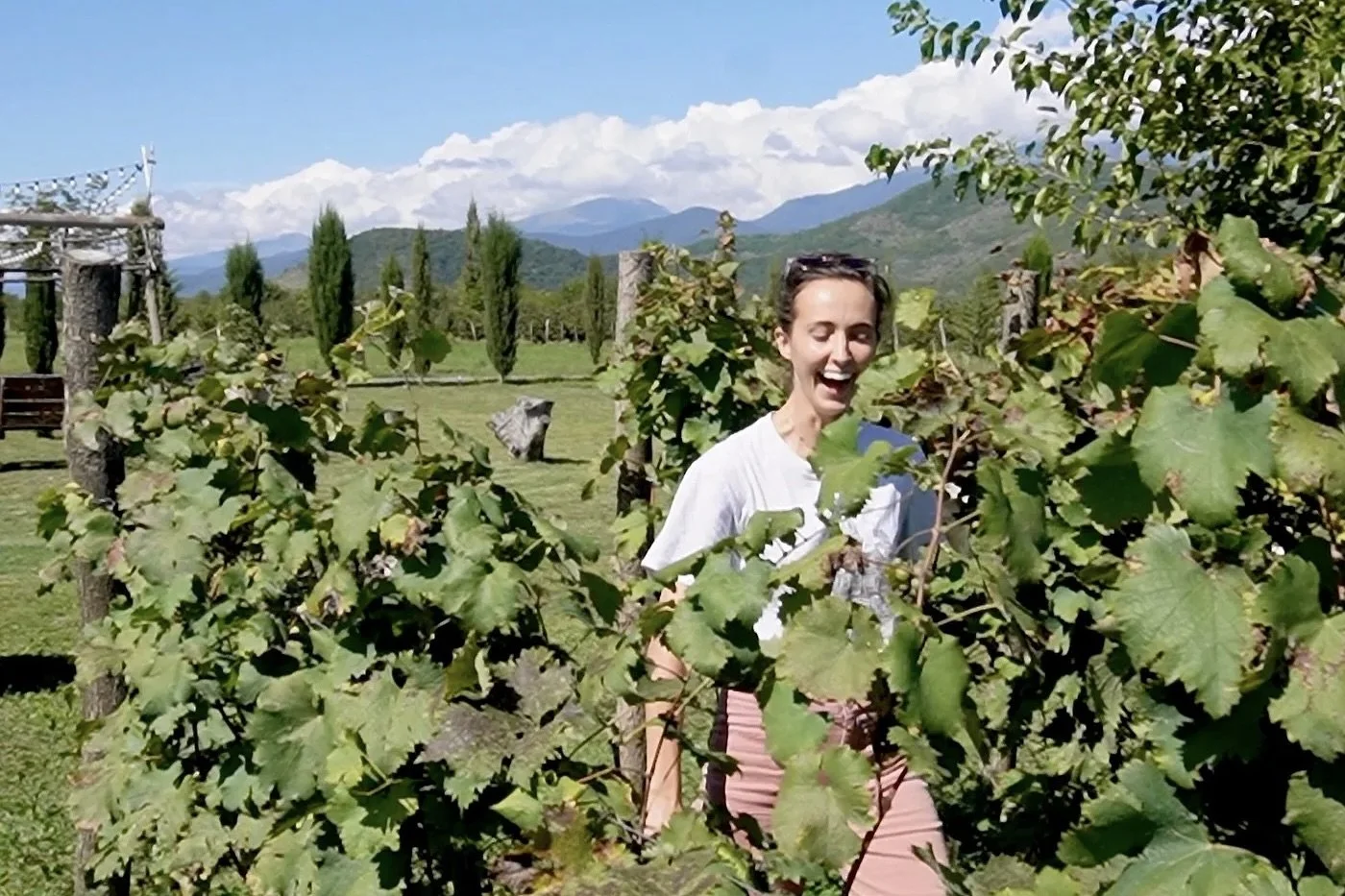
STEP 1. SNIP
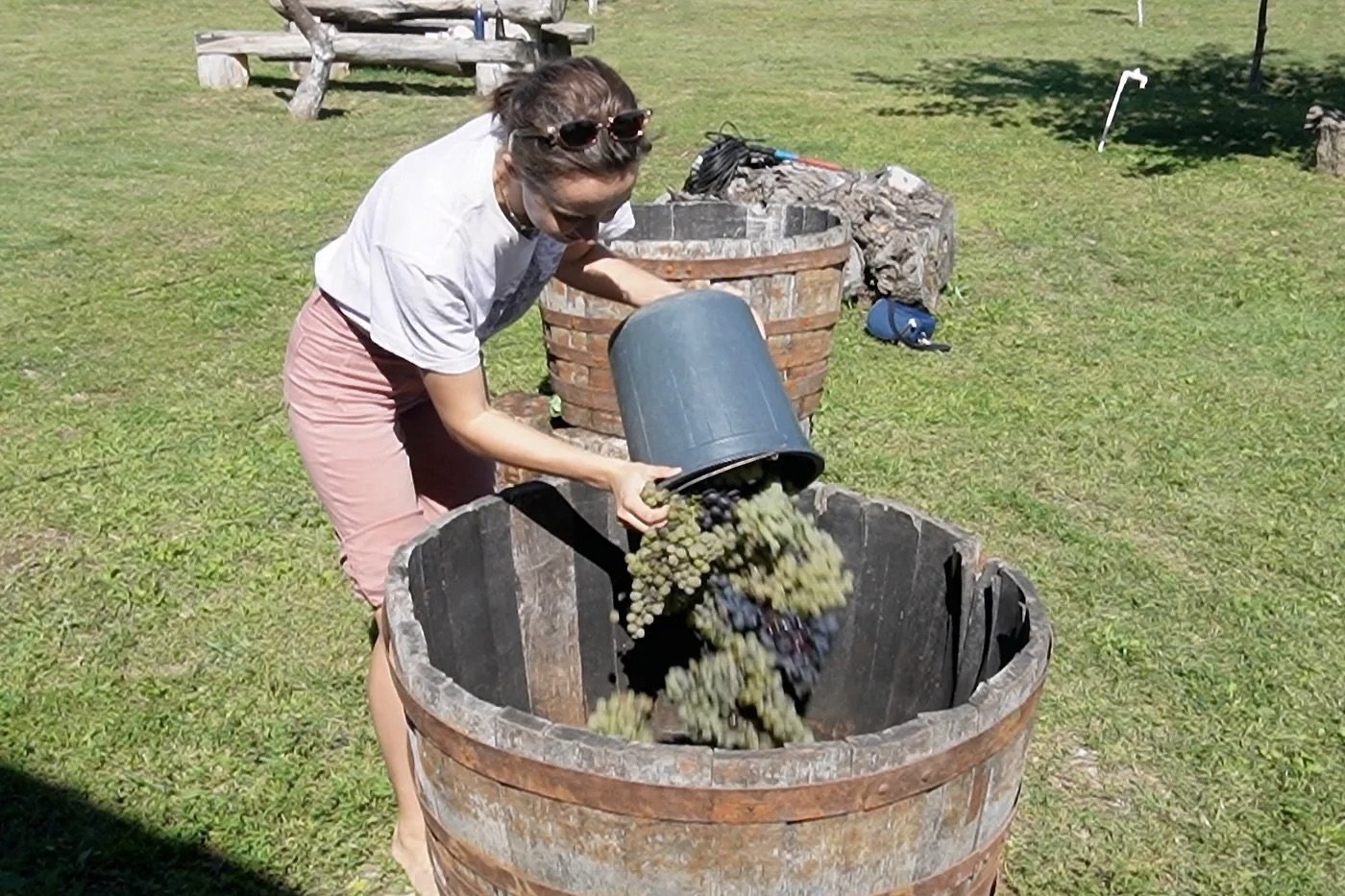
STEP 2. SPILL
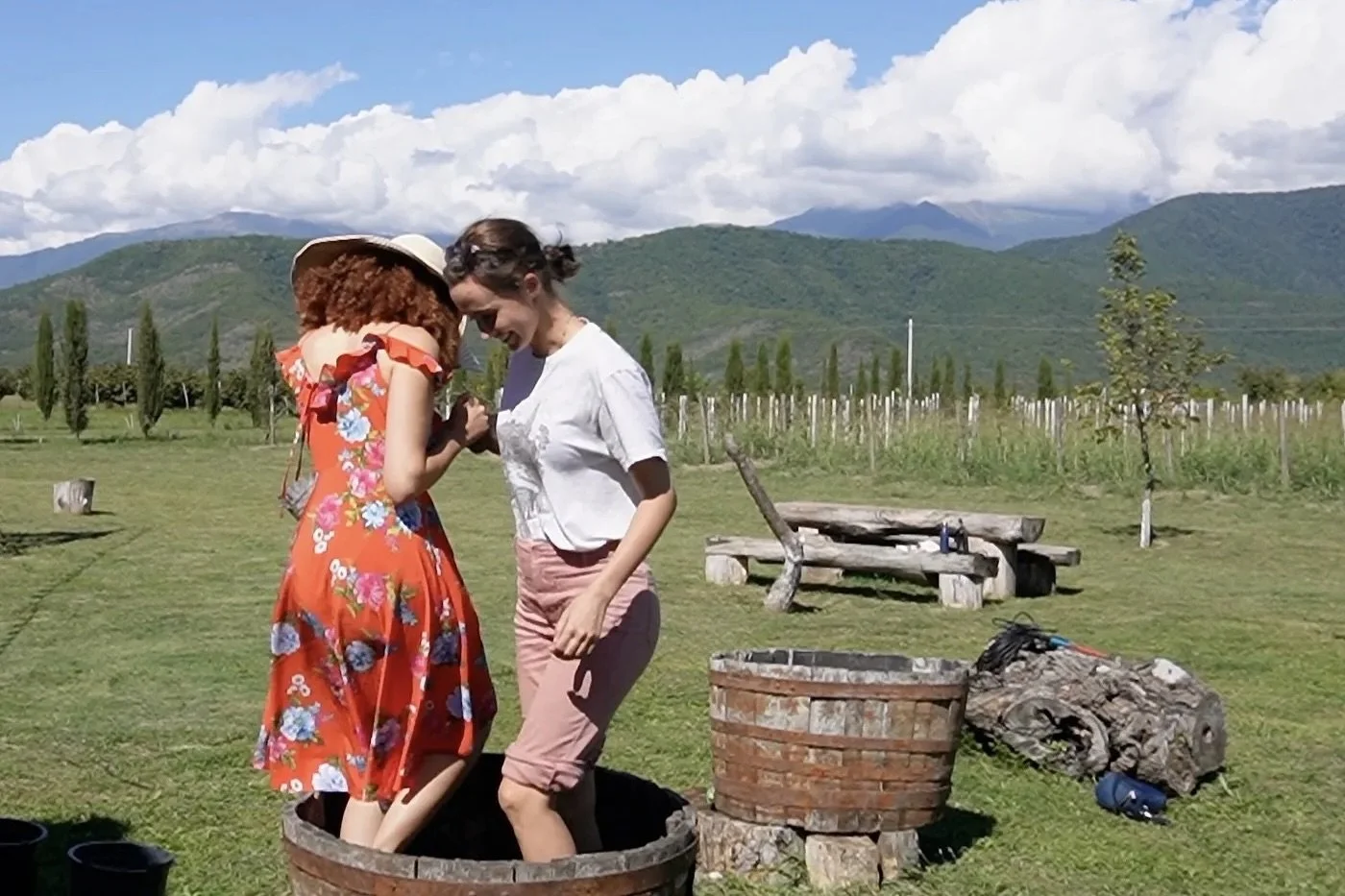
STEP 3: STOMP
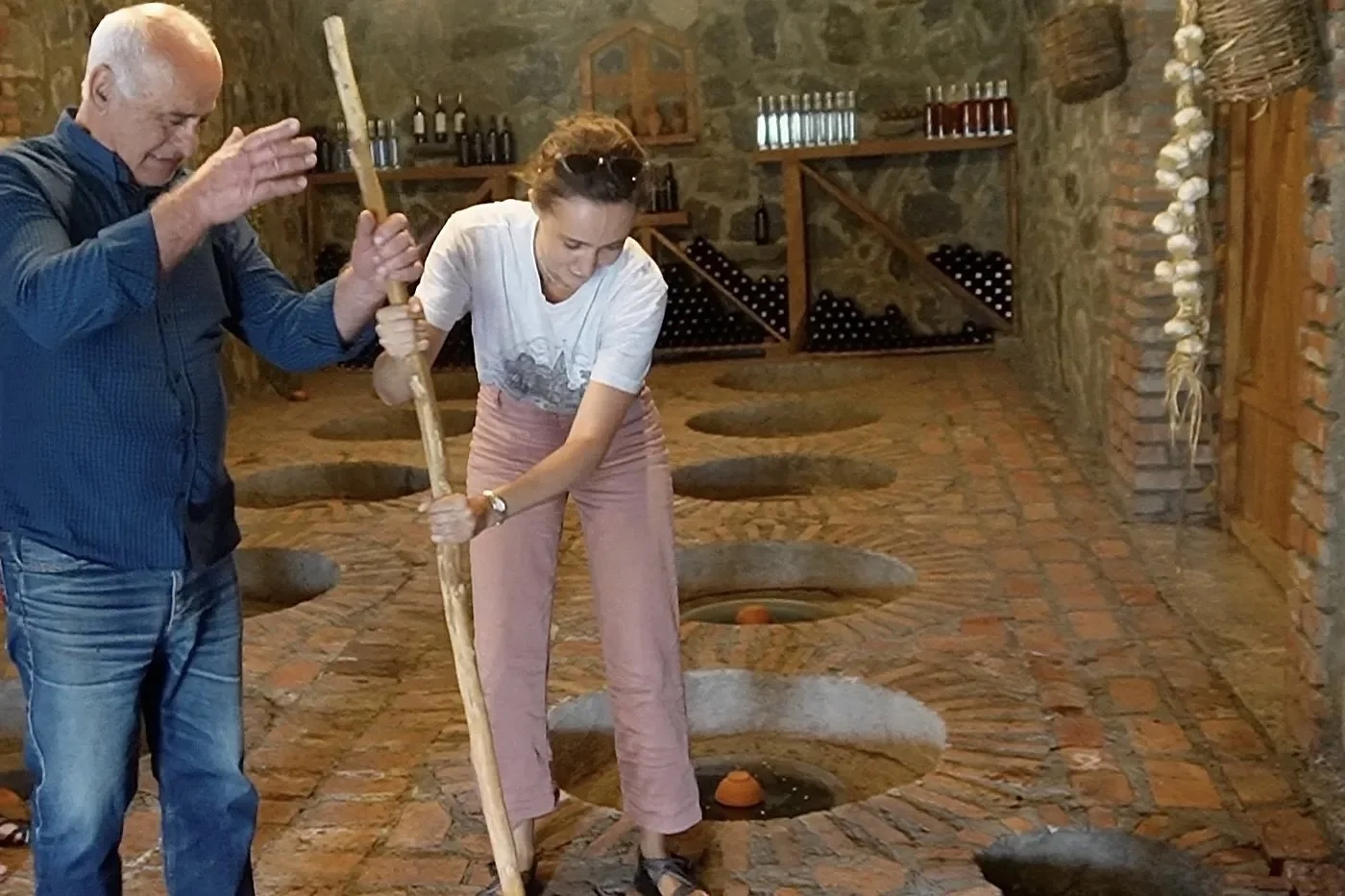
STEP 4: STIR
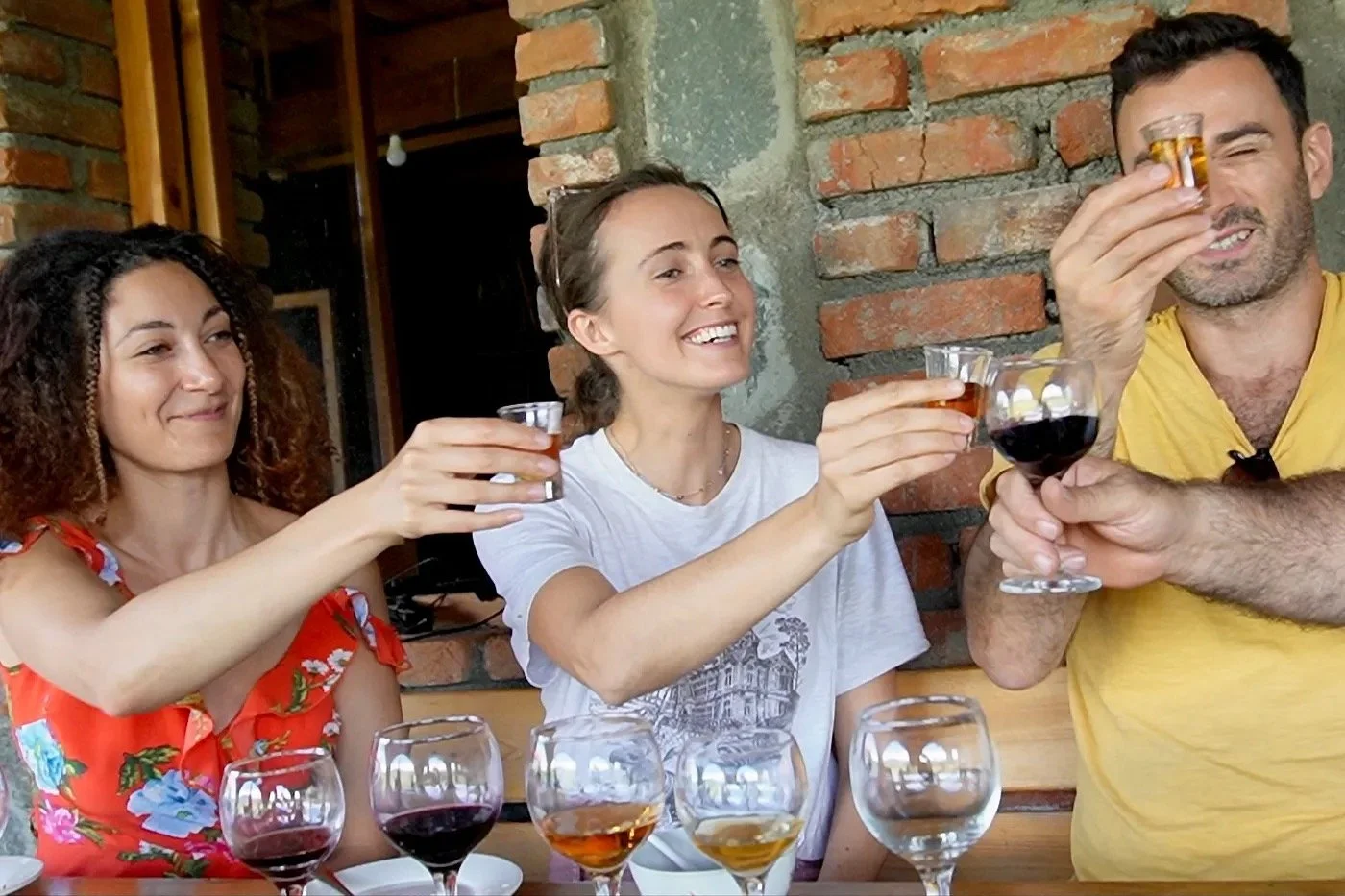
STEP 5: SIP
Inside those underground clay vessels (step 4) is where the first grape was ever fermented.
And it’s no joke!
Making wine is an around-the-clock job that was described to me like early parenthood. Both require middle-of-night wake-up calls: one to calm the stirring child and one to stir the fermenting child.
I’d had one or two glasses of “Qvevri” wine before this, but it wasn’t until this point that I’d really appreciated it. Winemakers like Jemali and his son treat the process with the upmost reverence. They extend the metaphor of grape cultivation and apply it to every aspect of their own lifecycle. After all, this generations-old practice runs through their blood (I’m talking about the craft and the wine).
I made a YouTube video showing the entire cycle.
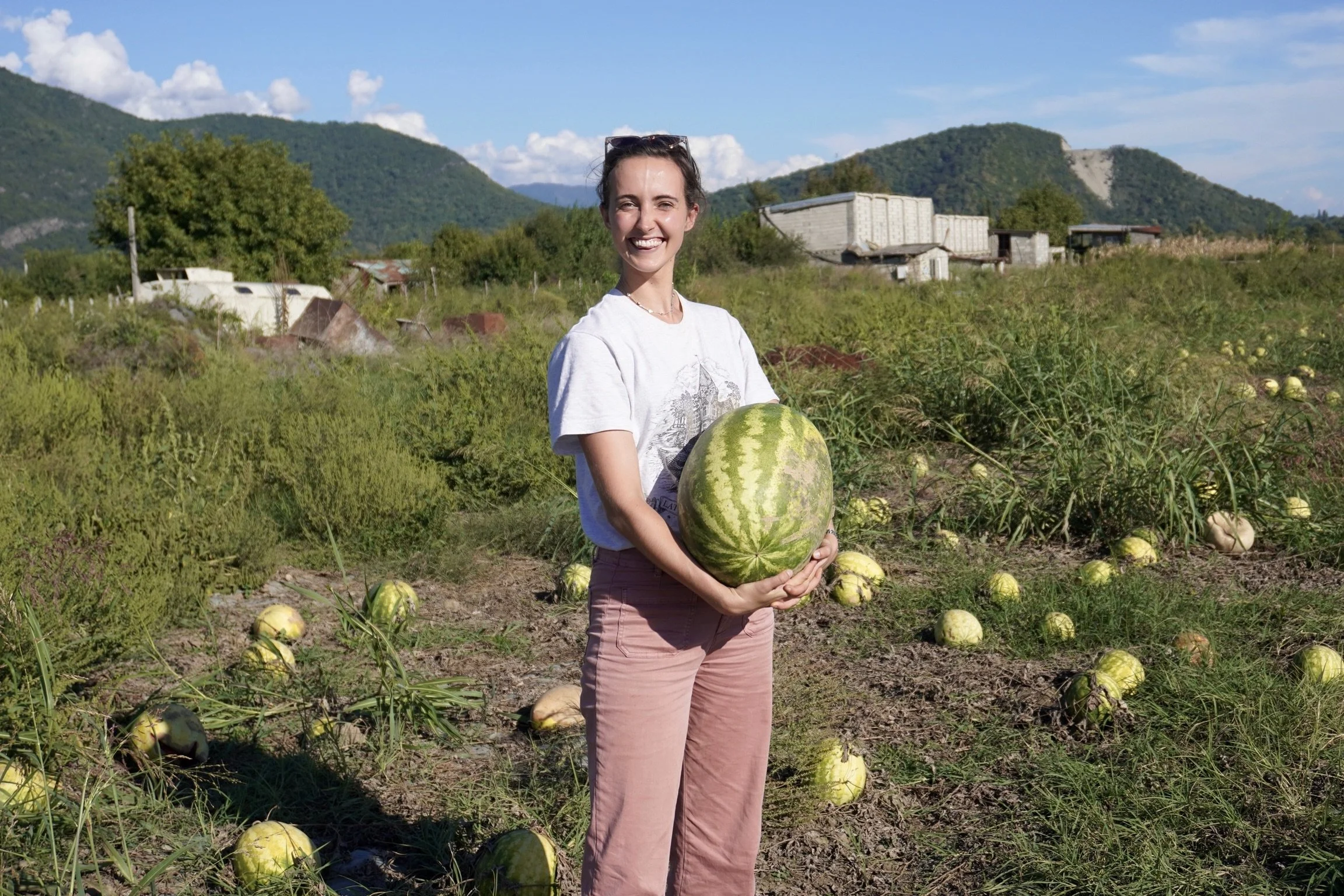
Did I mention there’s a watermelon patch too?
The sweet and sour side of winemaking today
Unfortunately, the livelihood of traditional winemakers like Jemali is being threatened by the relentless march to industrialization.
What should be a level playing field for sustainable grape-growing is being tipped in favor of scale and profit. No surprise there.
The Georgian ruling party has distorted the grape market, with the largest shares of state subsidies often flowing to politically connected industrial producers. In other words, corruption.
Export volumes remain heavily concentrated in markets like Russia. This creates demand for high-volume and cheaper wine, constantly reinforcing the pressure of quantity over quality. Competition from high-volume, low- cost wines puts financial pressure on smaller wineries like Shaverge.
It’s a classic case of agribusiness and political self-interest undermining the integrity of one of the world’s most ancient and ethical food systems. I wish I had the answers here, but what I do know is…SUPPORT YOUR LOCAL FARMERS!
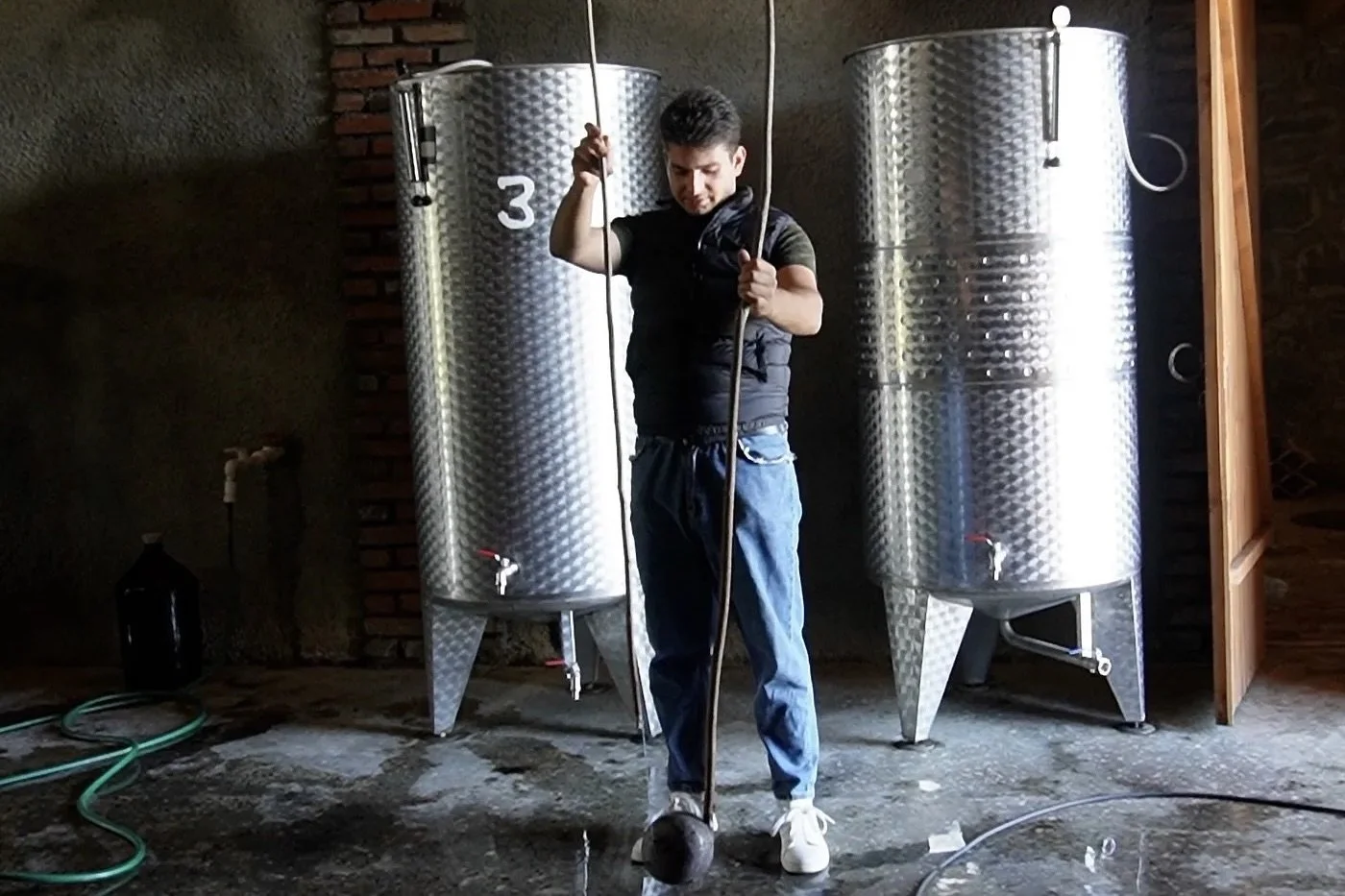
Giorgi displays the traditional method of drawing the wine from the Qvevri while leaving the solid sediment (known as chacha) undisturbed at the narrow bottom.
Unfolding feminist truths
After the festivities, I spent a few more nights tucked in the mountainside with the family.
One heartfelt evening, while folding khinkali, Keti opened up to me about the struggles she faces in a highly conservative village. Her experience is that of a progressive Georgian woman constantly fighting outdated expectations and traditions. Like the grapes, you could say that she’s developed a thick skin.
I respect the HELL out of Keti. She is a woman fiercely rooted in her values, managing to be both firm and gentle. That strength, she confessed, did not come naturally. It was a self-possession forged after moving to Shilda for her marriage. She simply refuses to let anyone rob her of that identity or drag her back into the patterns designed to keep women oppressed.
Keti represents the plight of village women everywhere pushing against the walls of double standards and contradictions. They fight against constant sacrifices made in the name of “selflessness” and compliance with restrictive societal rules. All the village women I’d come to stay with would share her common thread of liberation.
No matter how magical this land may be, it is impossible to separate from the patriarchal roles that dominate. I felt incredibly heavy saying goodbye to her.
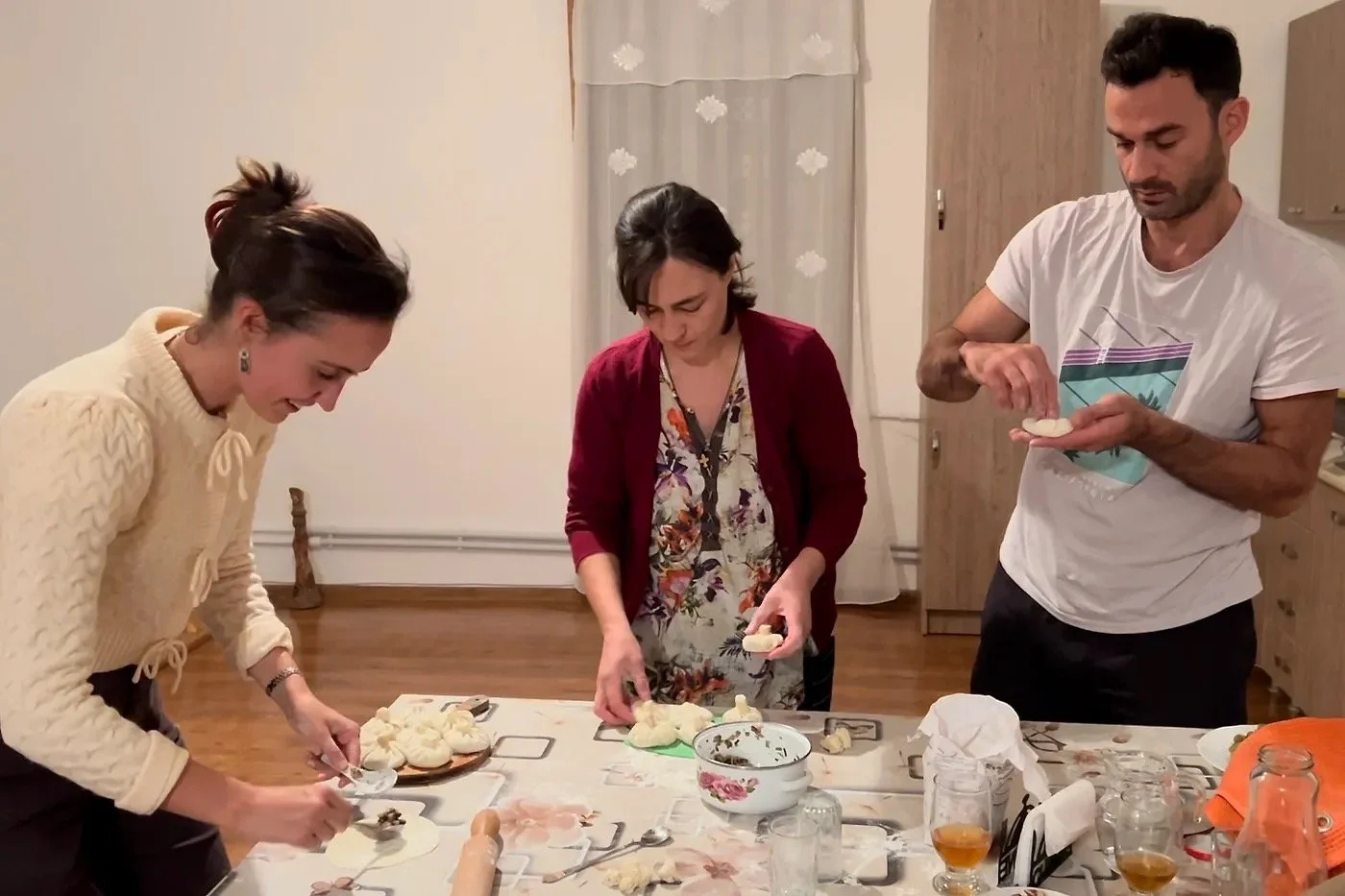
Keti casually folding ten khinkali in the time it takes me to prepare one.
Keti’s House will start accepting guests next year again. So yes, I highly recommend that you visit her oasis in your lifetime. And that you ask her to teach you how to neatly fold khinkali. And that you savor the golden colors of the Qvevri wine. And that you stomp bare foot on grapes (even if you’re stung in the toe and now a little bit of that future wine contains your blood).