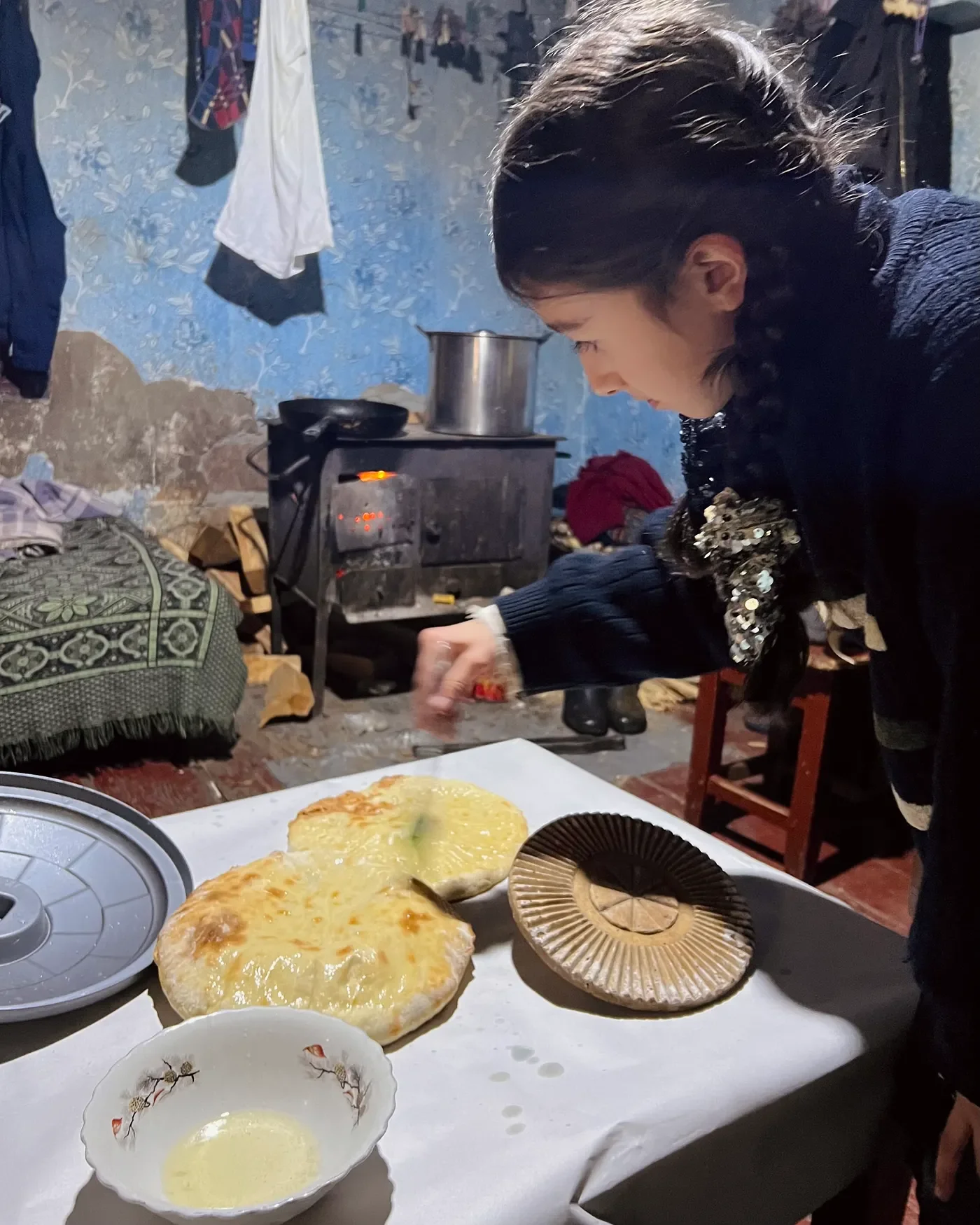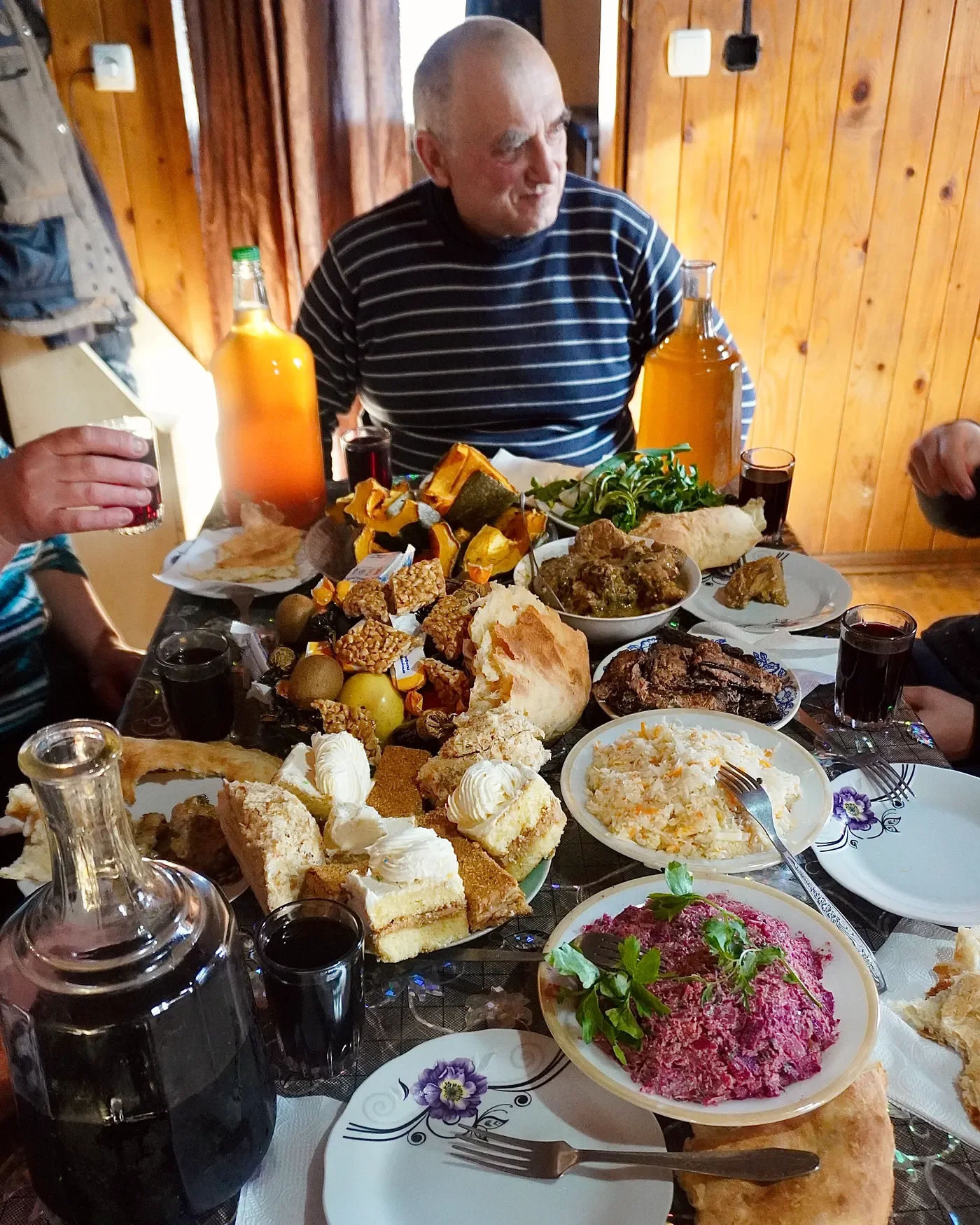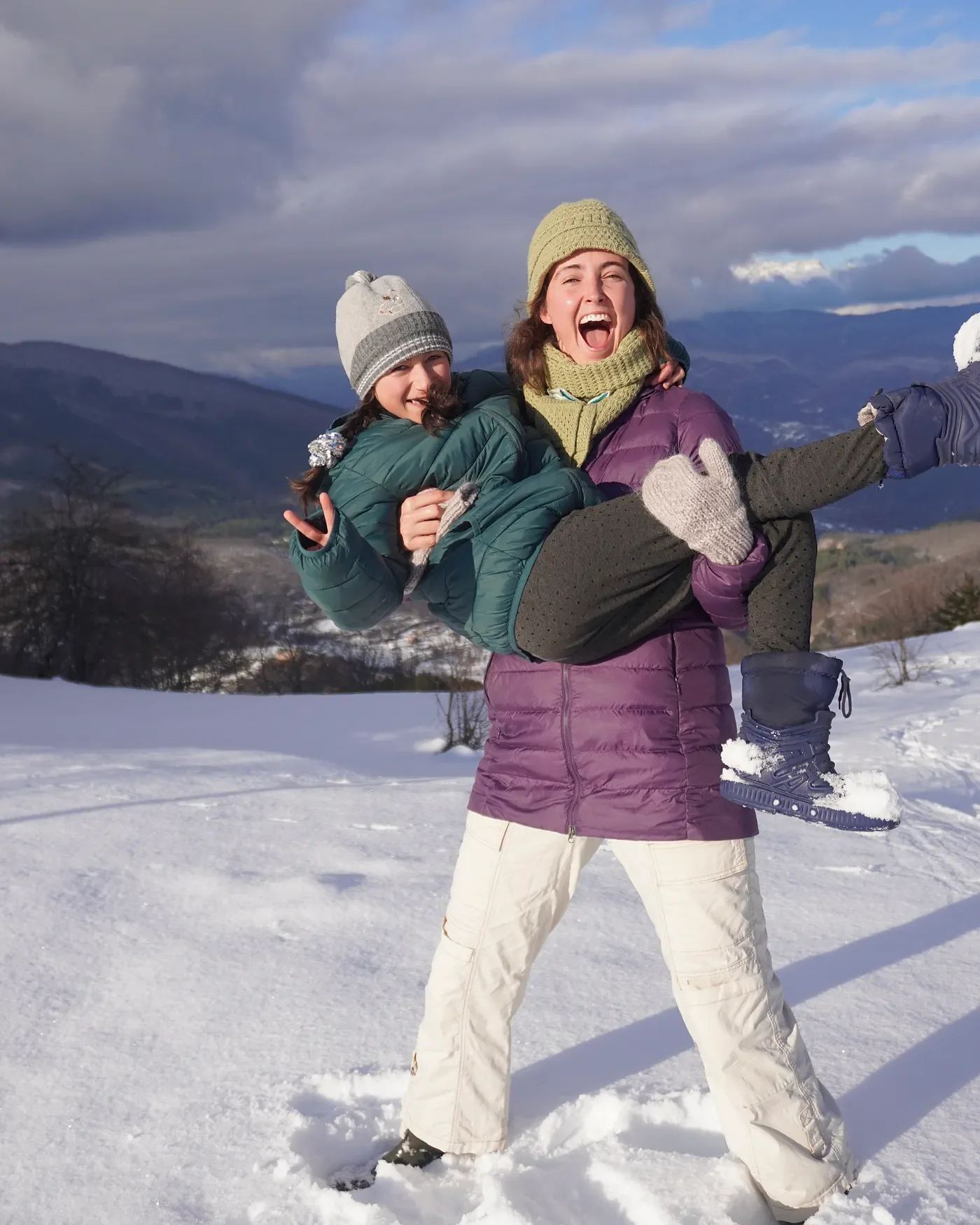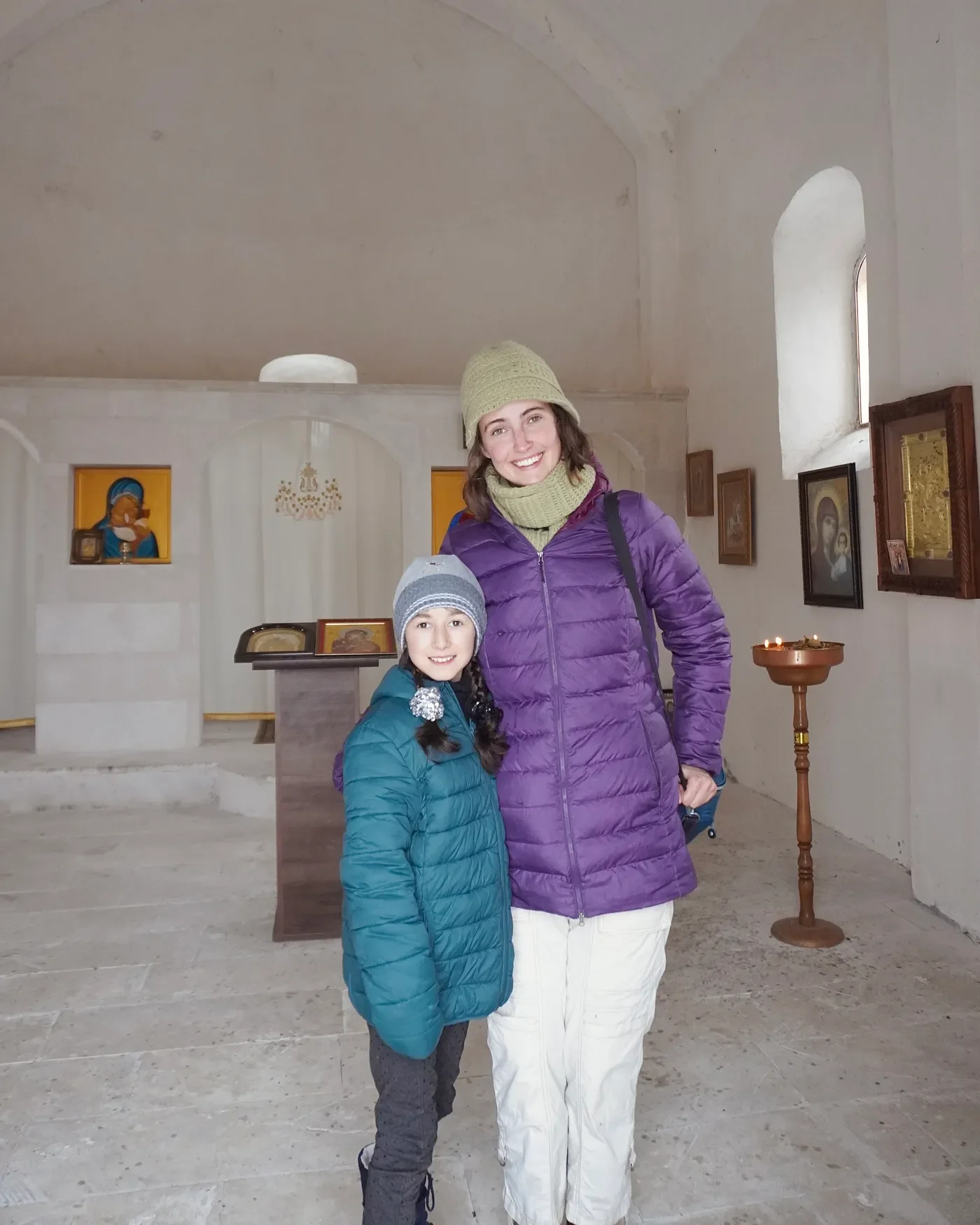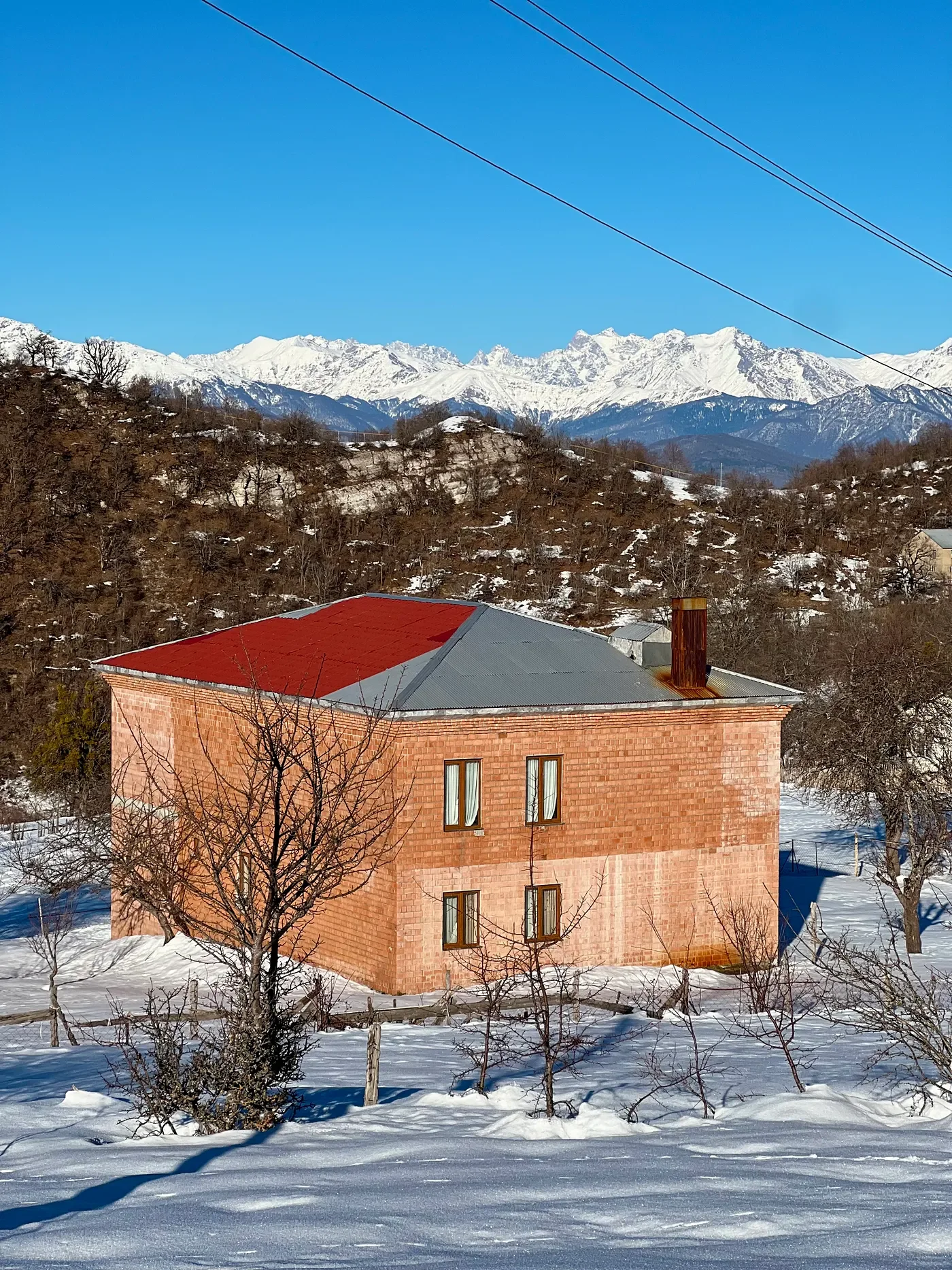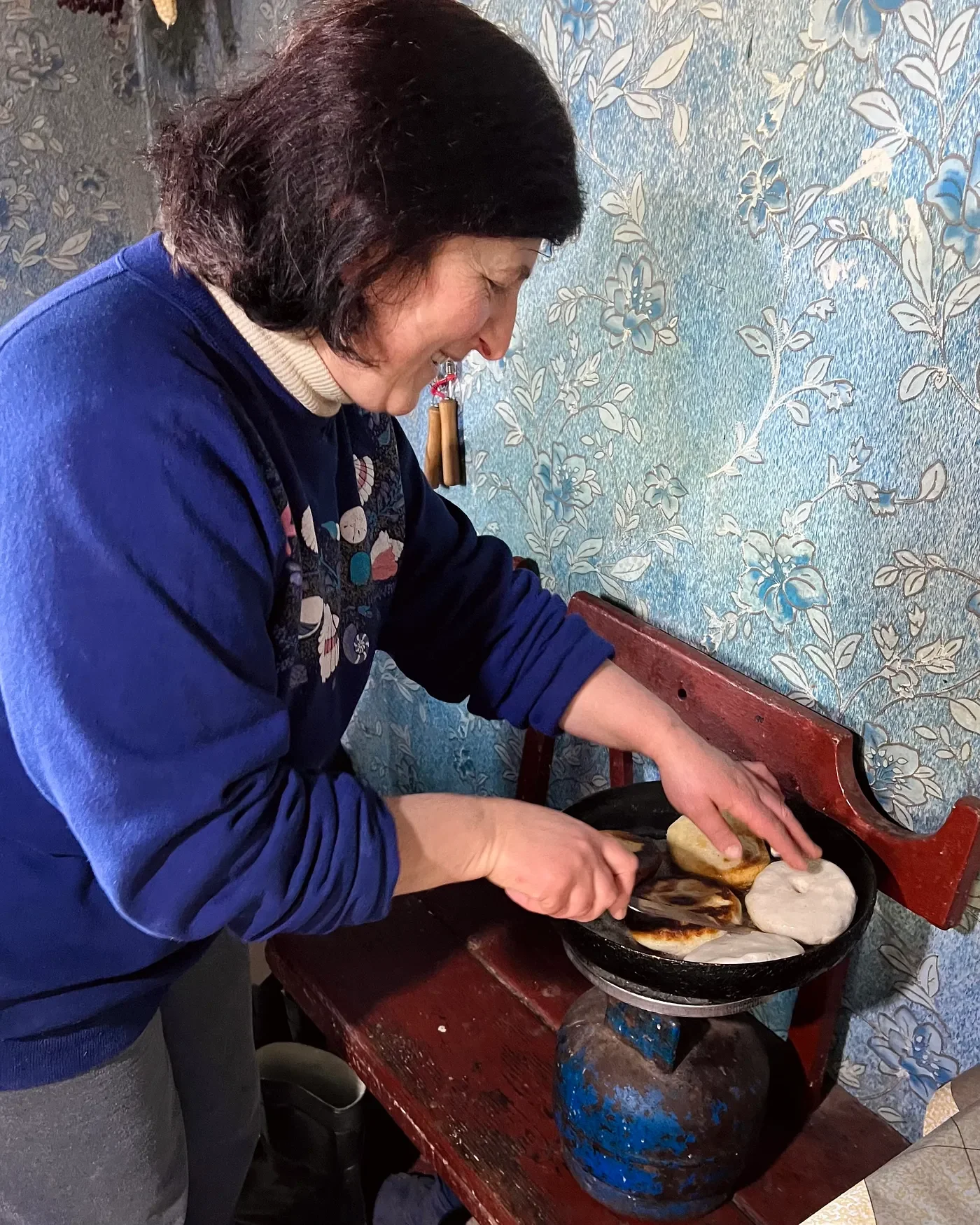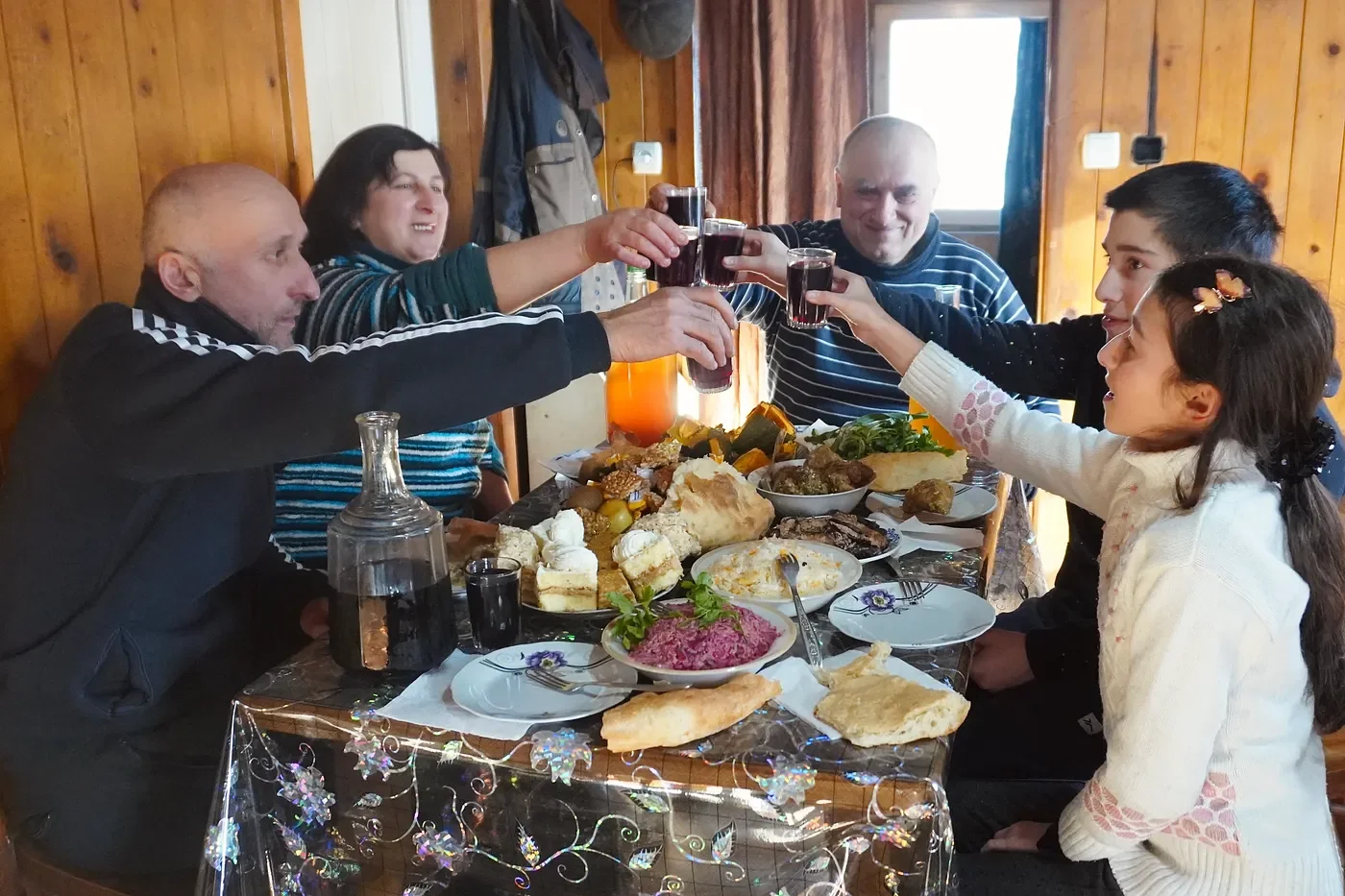
If wealth were measured by the amount of nourishing food on the dinner table, then consider this the richest family in the world. Paata (middle) treated us to his self-produced Khvanchkara wine, made of the beloved grapes that grow only in the Racha region.
“Am I from Mars or have I landed on Mars?”
December 29th, 2024.
“Be careful,” were the parting words of each friend I said goodbye to at the 30th night of uninterrupted protests on the Black Sea city of Batumi. Let’s just say that traveling to the coniferous forests of mountainous Racha is not one of those places that the US Embassy would approve of during the winter season. Nor attending the protests. Good thing I don’t need their permission.
In a sea of rivaling marshutky (minibuses), I tracked down the one heading in the right direction. I handed the driver 15 Lari ($5) and chose my seat wisely. Riding the marshutka is bound to be eventful, but a 7-hour mountain-bound journey with multiple transfers is another story (one that could include a flat tire on a packed van if you get the full experience).
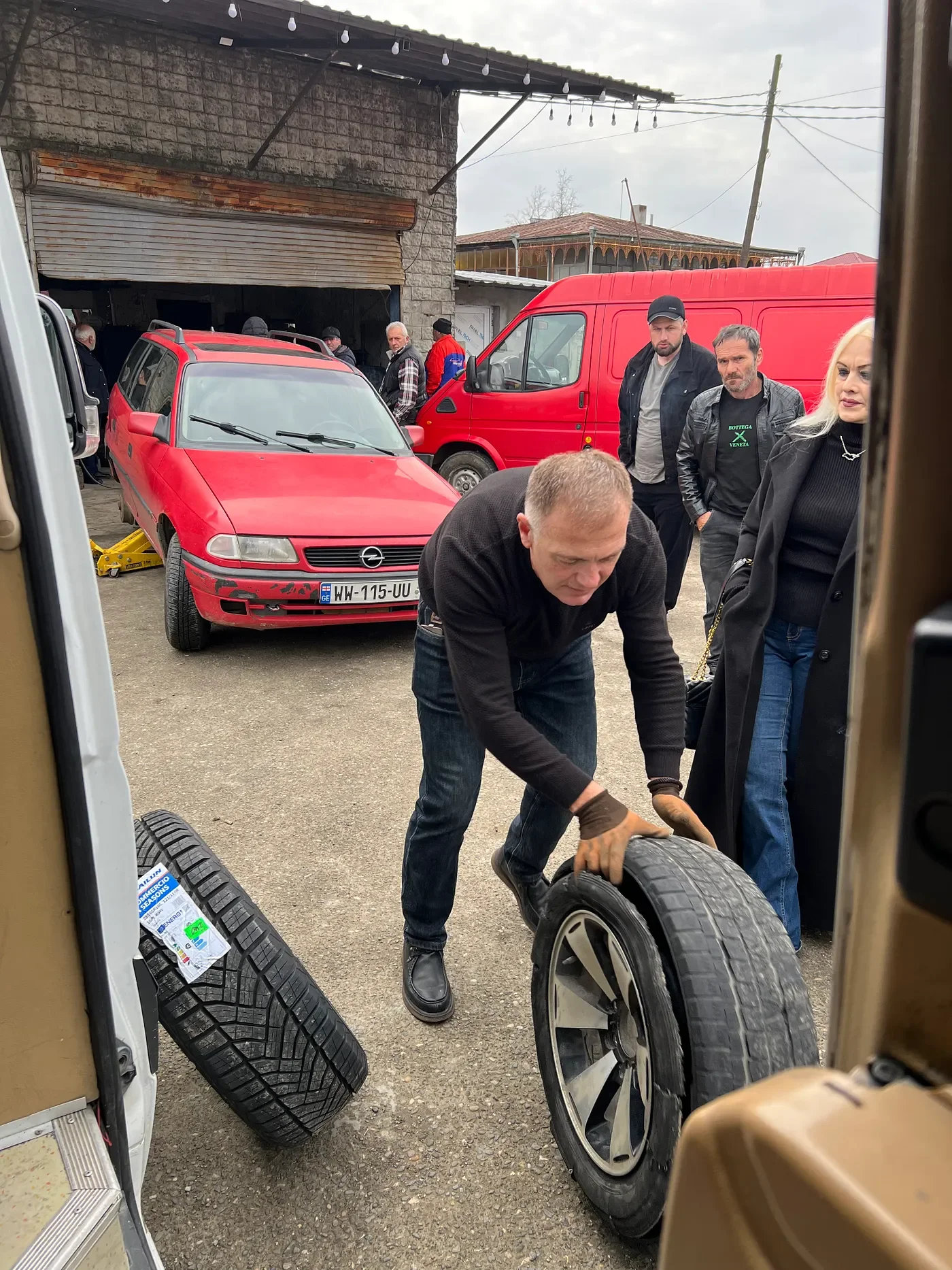
The spare tire would soon be stacked on top of a wooden crate of mandarins in the seat behind.
As we finally hit the mountain, our upward ascent began to feel more like the anticipatory incline of a rollercoaster. Michael Bublé’s buttery voice turned to static through the speakers and cigarette smoke filled the van. Smoking while driving is a privilege reserved only for the driver. It helps him focus while navigating the serpentine roads. “Slower, slower” (ნელა, ნელა) I heard his buddies urge from the 3-person front bench while he fumbled to answer yet another phone call. On the gas pedal he pushed.
I also started to push something (out of my head): the statistics of flipped vehicles that inevitably mark another winter season in the Caucasus region. Wedged between a cliffside and breaking mountain snow from the rocks, the intrusive thoughts of avalanche would ping my head like the falling pine cones I’d learned about through the documentary film. (More on the extraordinary nature of those pine cones later)!
My biggest regret though? Forgetting to put on my fake wedding ring that morning :,)
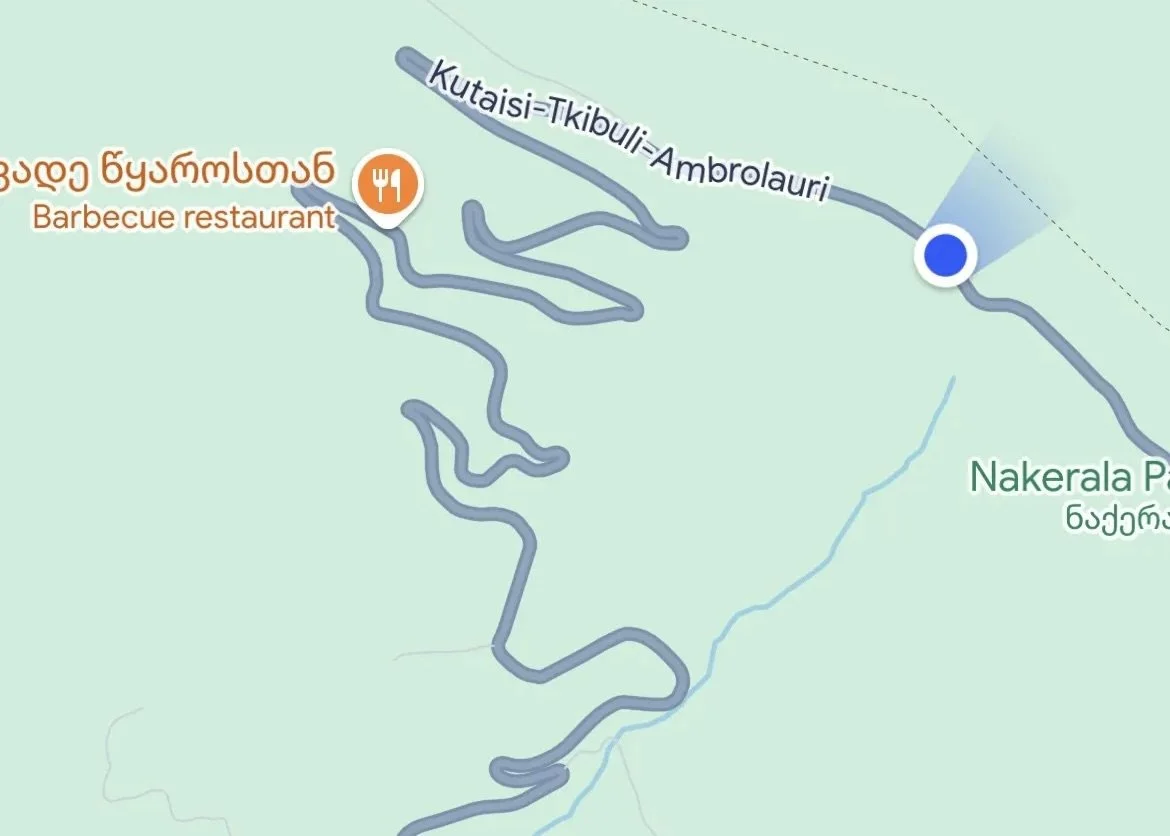
Whiplash from these 90-degree turns in the mountain left me feeling sick while the local next to me played sudoku. The driver was incessantly honking to warn other cars that we were whipping blind corners at an ungodly speed. Sorry mom.
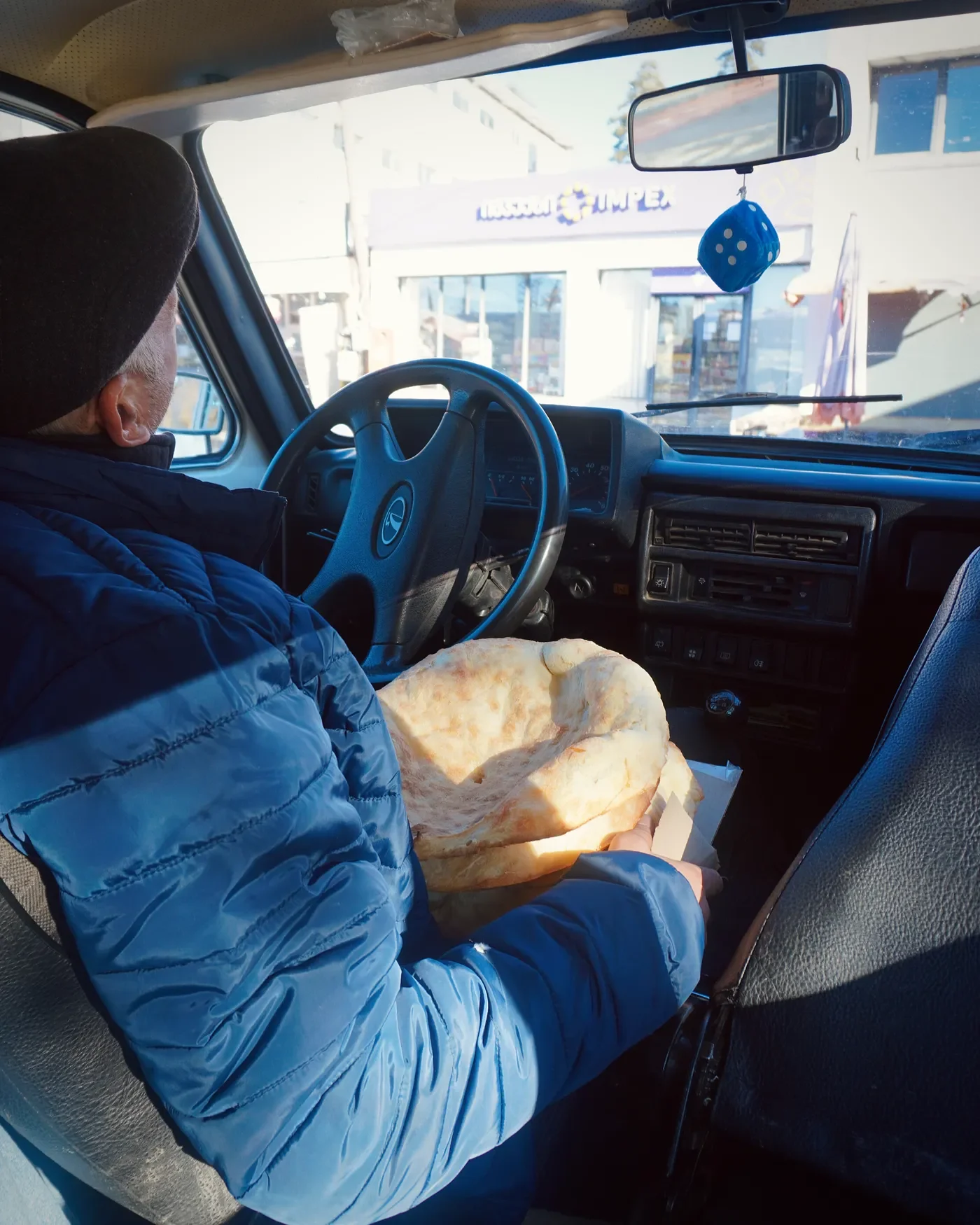
Like an intervention from the Orthodox icons hung above the driver’s rear-view mirror, the minibus was intercepted 20-minutes before its final destination. The van door slid open unexpectedly to reveal a silhouette against the reflection of blindingly white snow. “Li-li, Li-li!” my name was exclaimed while my bags were swiftly unloaded and an unknown hand was extended to help me down. The bus of locals had already been eyeing me with curious stares, but this was the scene they would tell at dinner. Before the automatic door could shut all the way, the marshutka had already disappeared around the next bend. Next thing I knew I was sat in the back of a Soviet-era 4x4 Lada Niva.
Avto was in the driver’s seat. That’s where he’s been since the age of 13. In bumper-deep snow, we took the fork in the road and chugged upward at full force. My head hit the roof with every dramatic bump as I sat, in true Georgian fashion, unbuckled. Foot to floor was the only way to counteract his old friend — hydroplaning. Speaking of old friends, we spontaneously picked up a villager along the ascent as he stood roadside. Turns out it was actually his cousin Evo, I learned as Melania climbed into the backseat to make room.
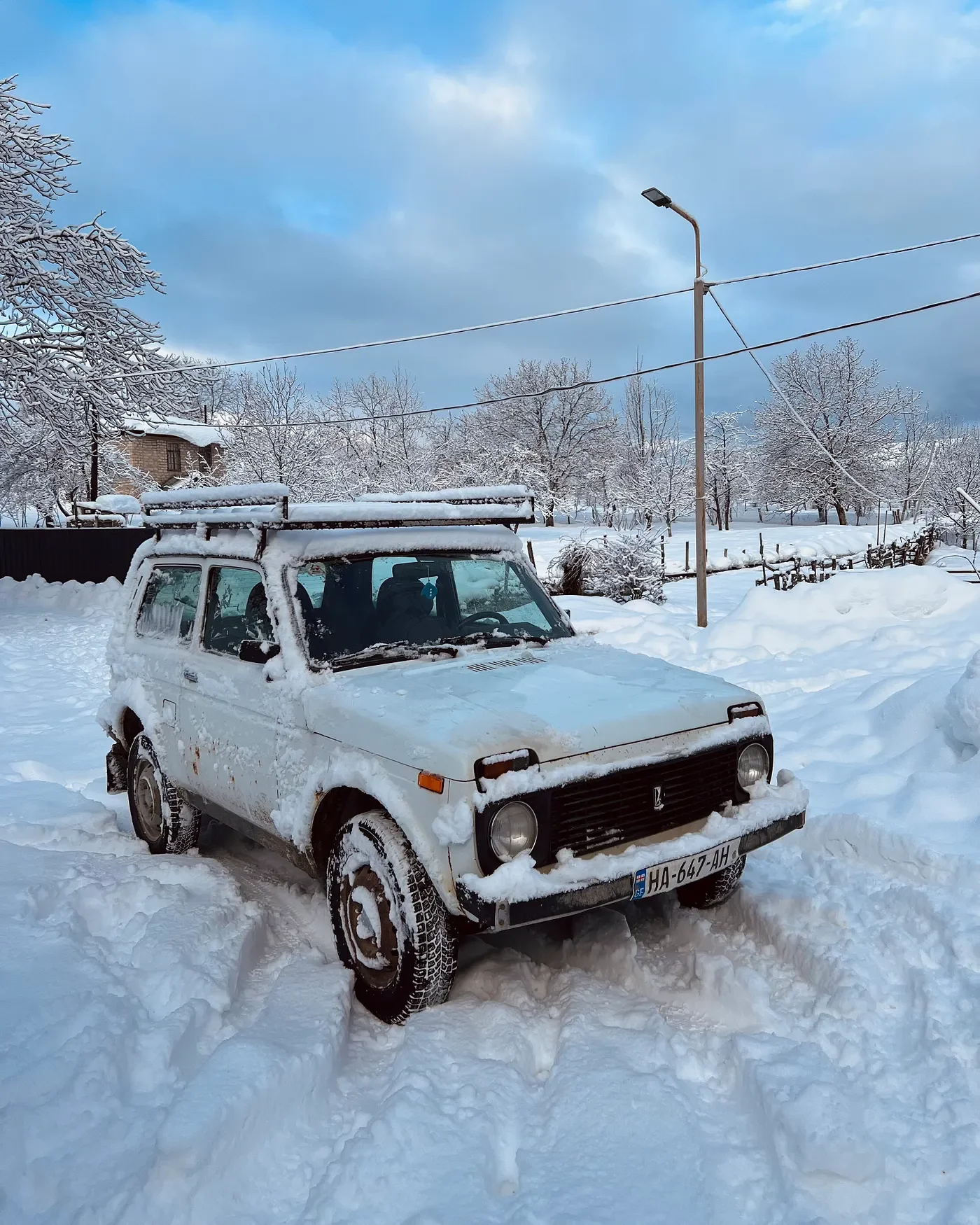
“I’ve never even been to Racha, but I’ve heard it’s beautiful” — the response of almost every Georgian when I’m asked how my holidays were. (That’s because they don’t have a car that can survive these conditions nor a driver willing to risk it!)
Like a scene from a cartoon, Avto aggressively spun the steering wheel in both directions just to keep the car going straight. I was clutching too tightly to revel in the horizon of cascading Caucasus mountains that revealed themselves through the window — the same mountains admired by all the old poets and artists and authors and armies I’d read about.
Without passing a single car, we miraculously arrived in the village. “Does your mother even understand where in the world you are right now?” Melania asked in disbelief as I finally entered the living room.
Before this is mistaken for some kind of human trafficking story, I should introduce you to my Georgian family.
Life and Death of a Christmas Tree
I felt called to support my Baltic people when I learned that the makers of a film were coming from Lithuania for the Batumi International Film Festival. My decision was last-minute, so I hopped on my new bike and arrived at the theater in record speed. It was late September so I was still fresh to GMT (‘Georgian Maybe Time’). I didn’t yet understand that this culture is also always running late.
Meanwhile, to reach Batumi, the Kobakhidze family had made the reverse journey that I just described. Avto, Melania, Gabriel, and Tekla: I sat unknowingly behind them in the theater during the screening of Life and Death of a Christmas Tree. Arturas Jevdokimovas’ exposé revealed the Racha seed to “Danish” Christmas tree pipeline. From the opening scene that took place in their living room, emotions of joy and fury circulated through the audience as we watched the Christmas tree industry unfold before our eyes.
After the film, I felt a resounding urge to visit these heartbreakingly beautiful forests someday. Little did I know, I would soon receive an invitation! After the screening, I was invited to join the director, producer, cast, and friends for dinner on the Black Sea. It was on those shores that I received an invitation to visit their remote village during the holiday season. I would be their first and only “fan” from the film!

“The cone-harvesting of Nordmann firs is a major source of income in the mountainous Racha region of Georgia, with 80% of European Christmas trees grown in Denmark from hand-picked Georgian seeds.”
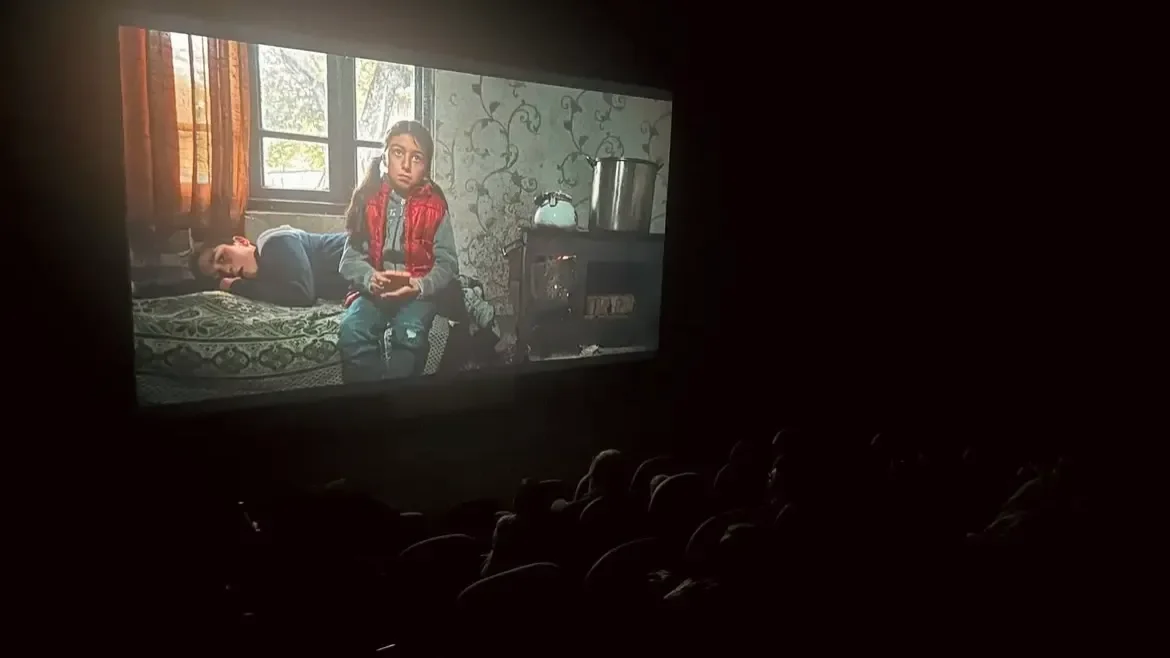
Tekla and Gabriel in the opening scene of “Life and Death of a Christmas Tree.” You can watch the trailer here.
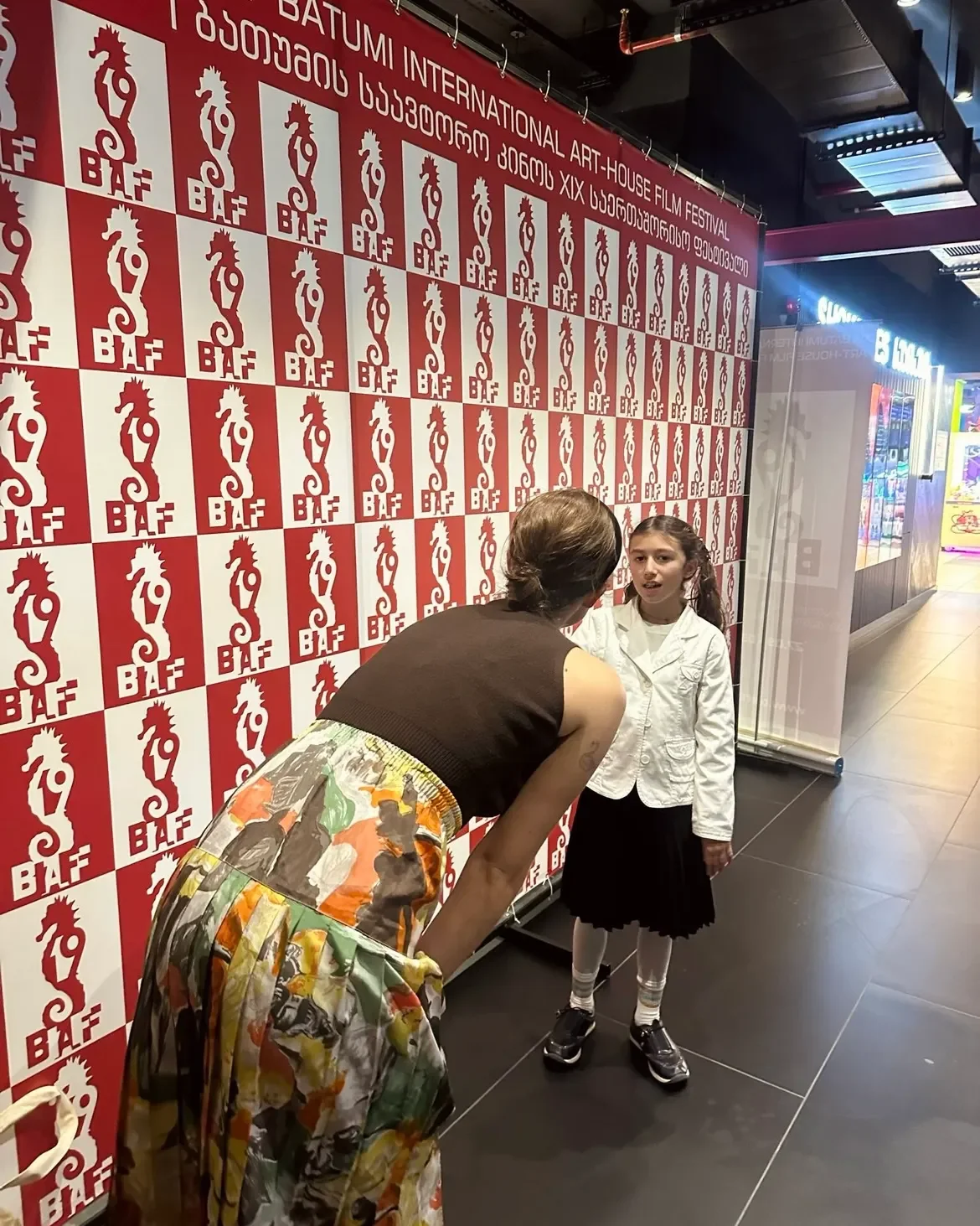
Couldn’t help but introduce myself to Tekla & Gabriel after the premiere in Batumi. Just look at them! They’d recently traveled through Vilnius, Riga, and Tallinn screening the film.
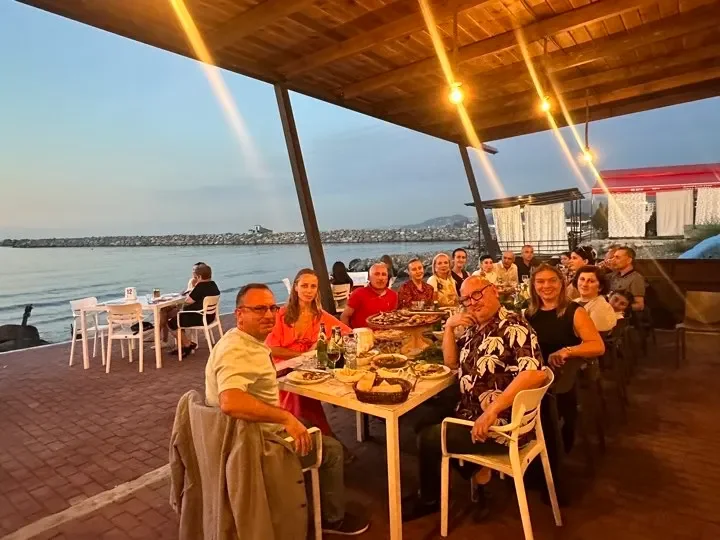
Dinner with the team following the screening
“The height of a tree is not measured from the ground, but from the roots”
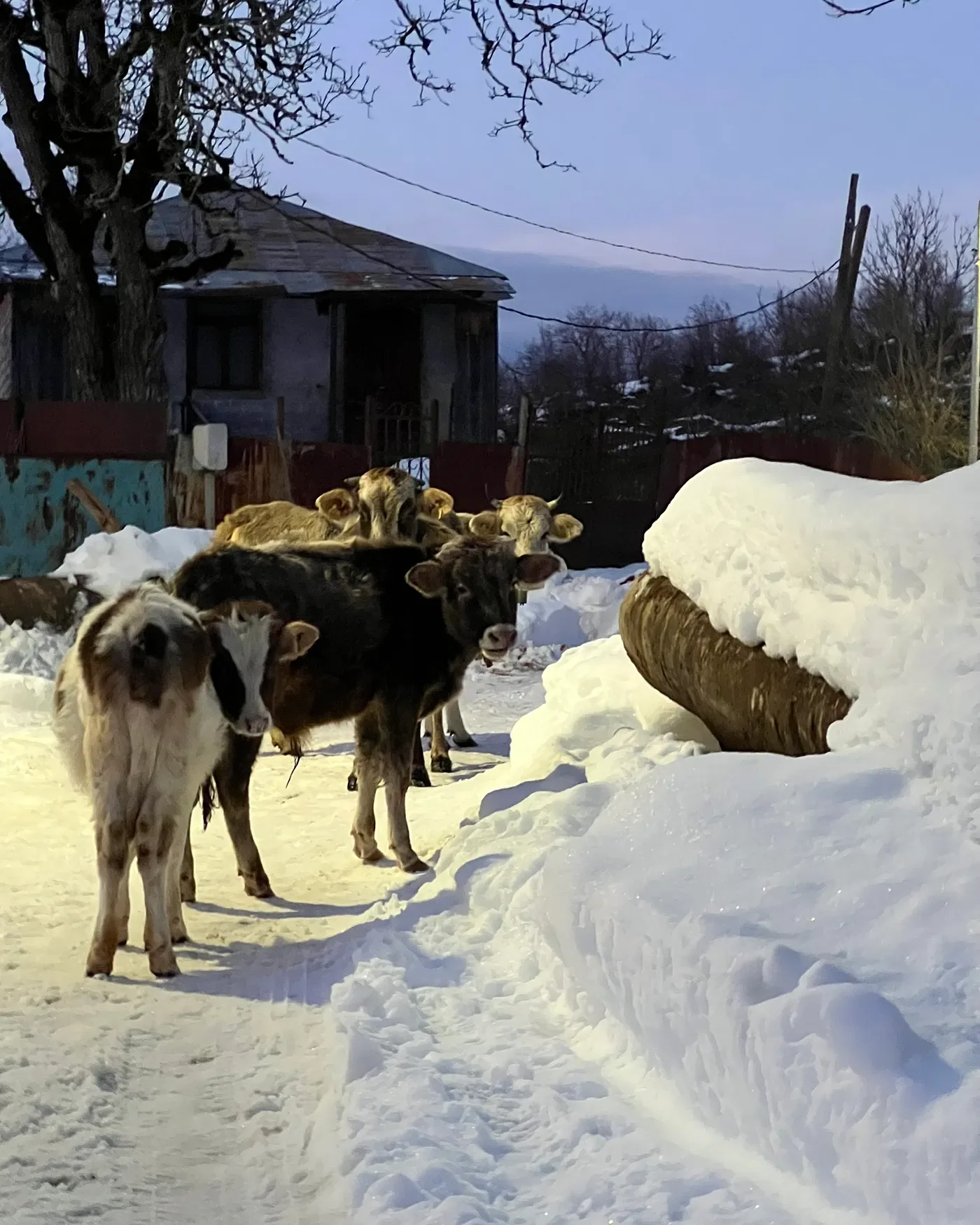
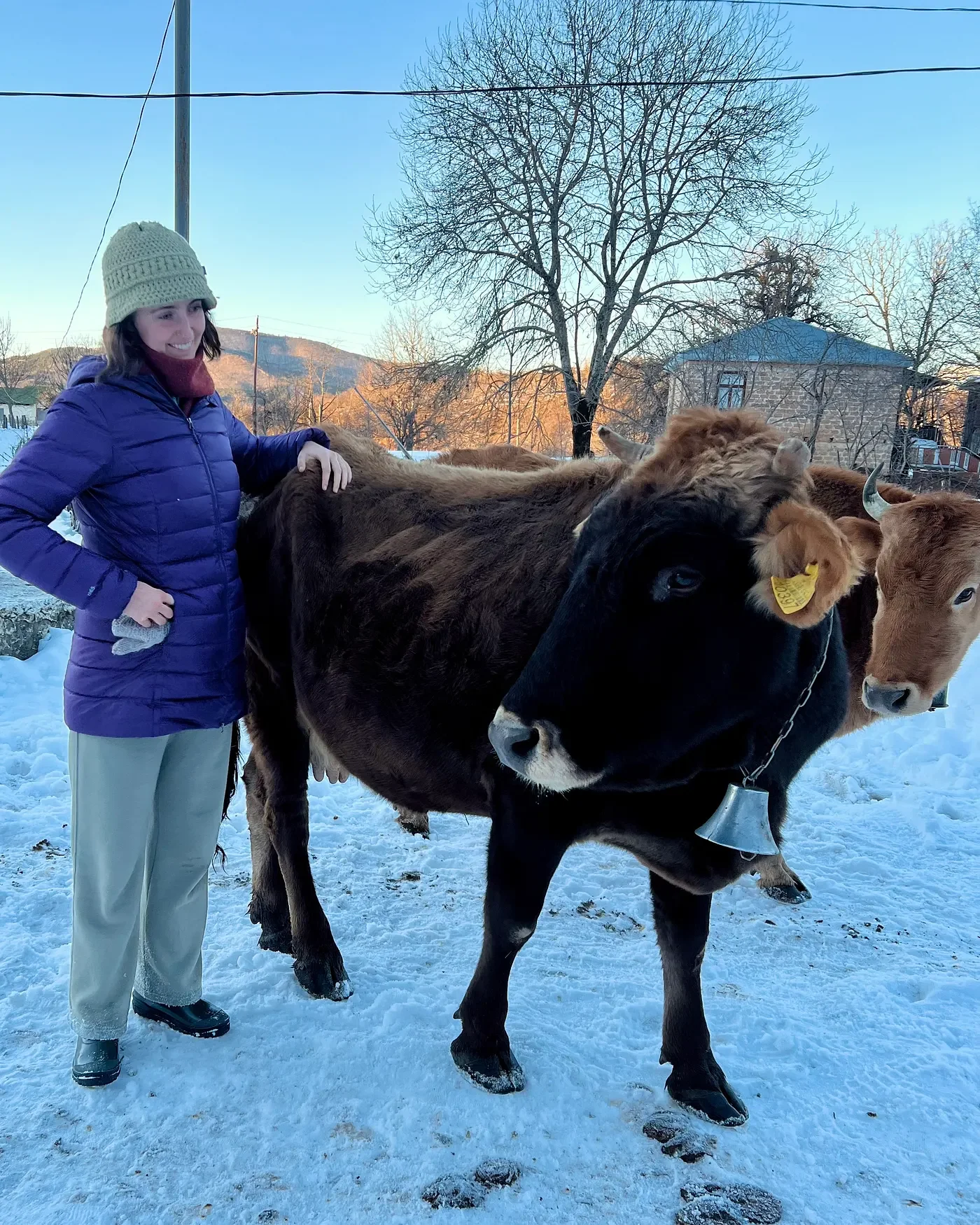
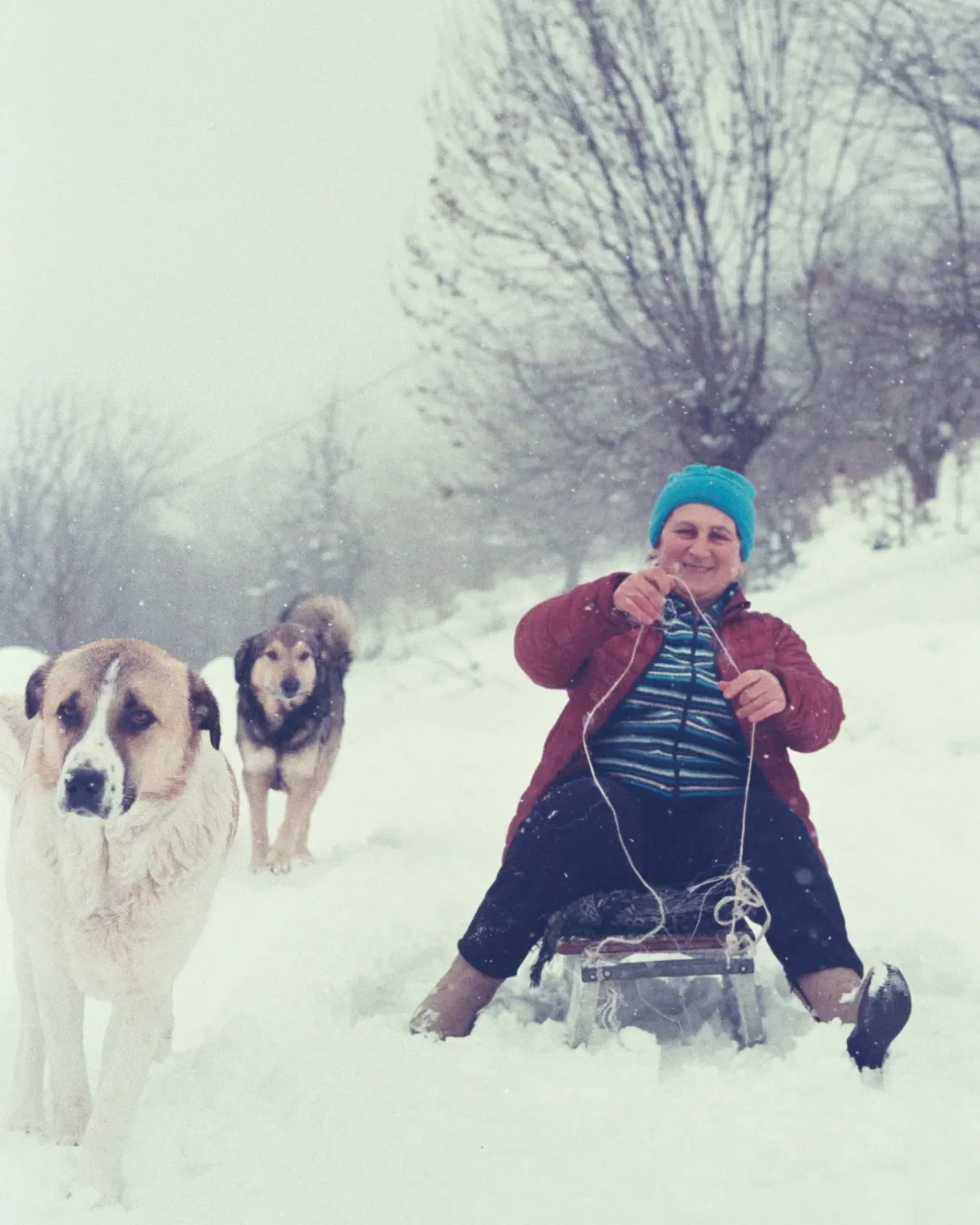
Not a single stray dog lives in the village of Upper (Zeda) Tlughi. If you know Georgia, then you know that this means something. Instead, the neighbor’s white horse laps water from the creek while a small herd of cattle stretch their limbs.
Situated high in the rolling mountains, it’s not named ‘Upper Tlughi’ for nothing. Even Google Maps fails to acknowledges its existence — giving credit only to its Lower (Kveda) counterpart. But where there’s a Lower, there must be an Upper.
“We are closer to the sky here. During winter, the snow hits harder but feels softer. During summer, you can see the Black Sea from Mt’a Satsalike. During harvest, the vegetables taste divine. The soil is something special” (adding that tomatoes elsewhere are a major disappointment) — Melania, my Georgian mom!
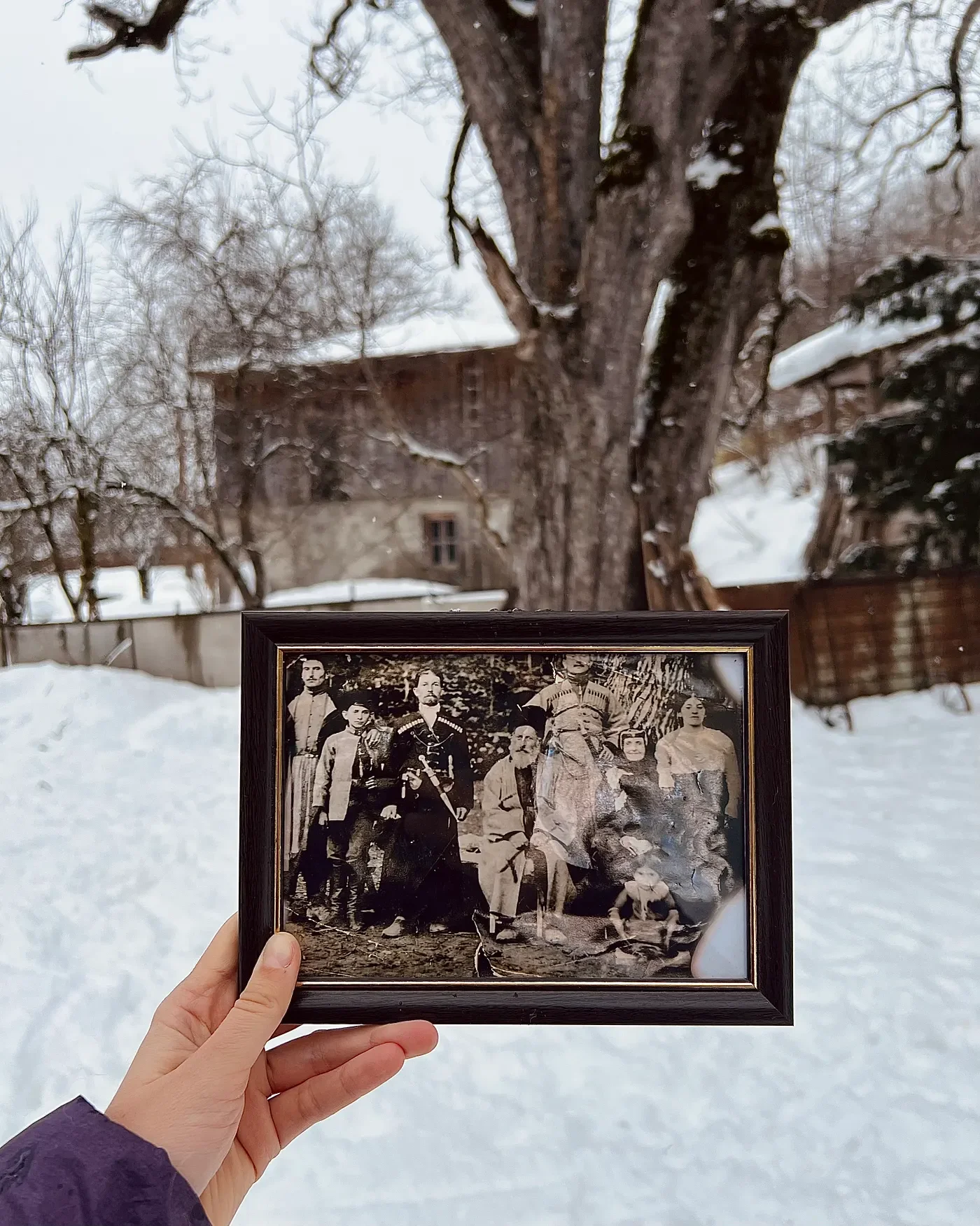
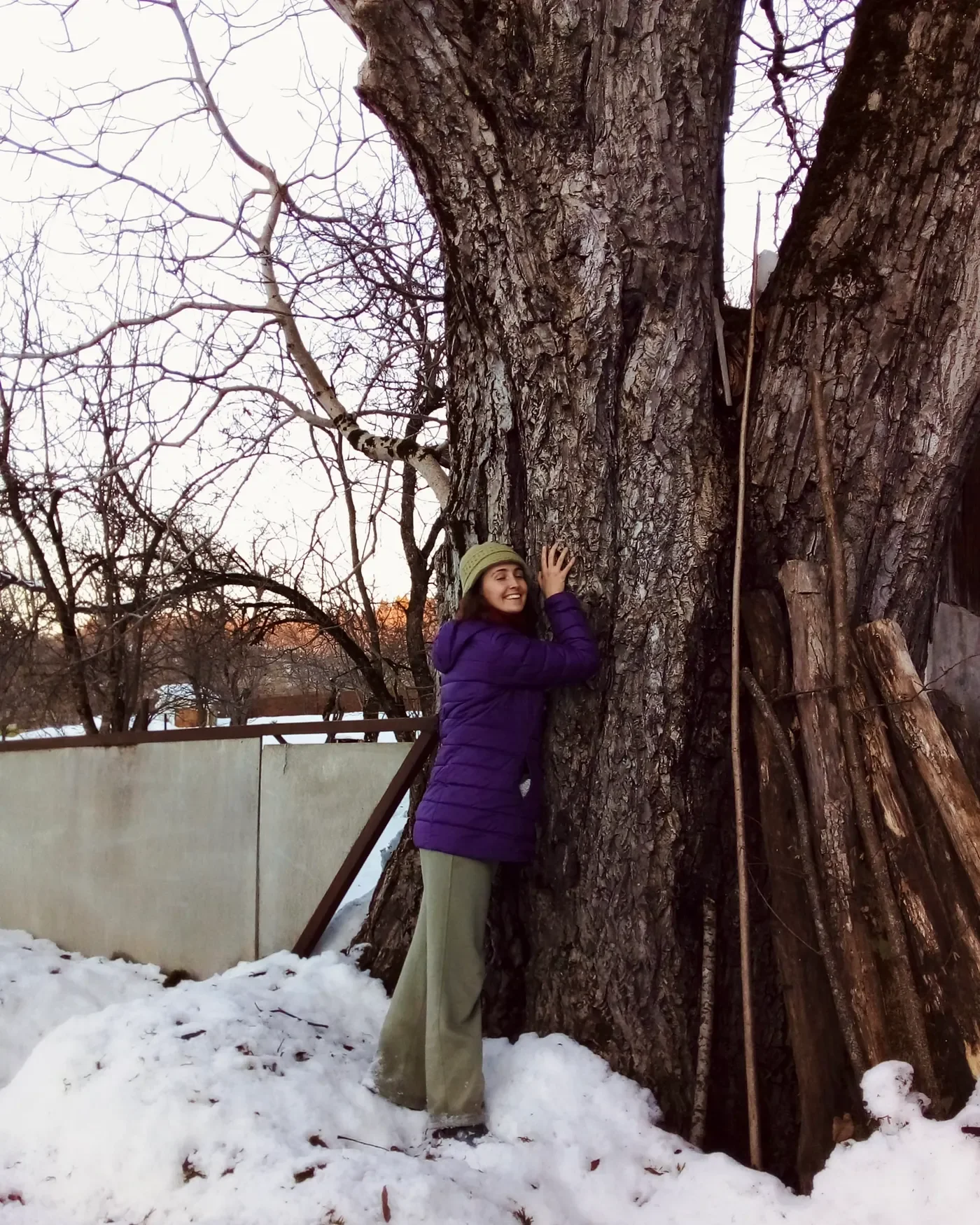
Pictured here, in front of this 300-yr-old walnut tree, is Avto’s great-great-great grandfather in the year 1917
In the wooden home next door lived Avto’s grandfathers and great uncles; its single roof kept 28 heads warm and dry all at once. Melania would remind me of this tremendous fact every time we trekked past. But as the Kobakhidze men got married, their wives would naturally request a more…peaceful space.
New homes were thus built next door, including the current abode they live in — built in 1933. Needless to say, the Kobahidze bloodline runs deep through the veins of Upper Tlughi.
Life and Death of the Christmas Tree (in real life)
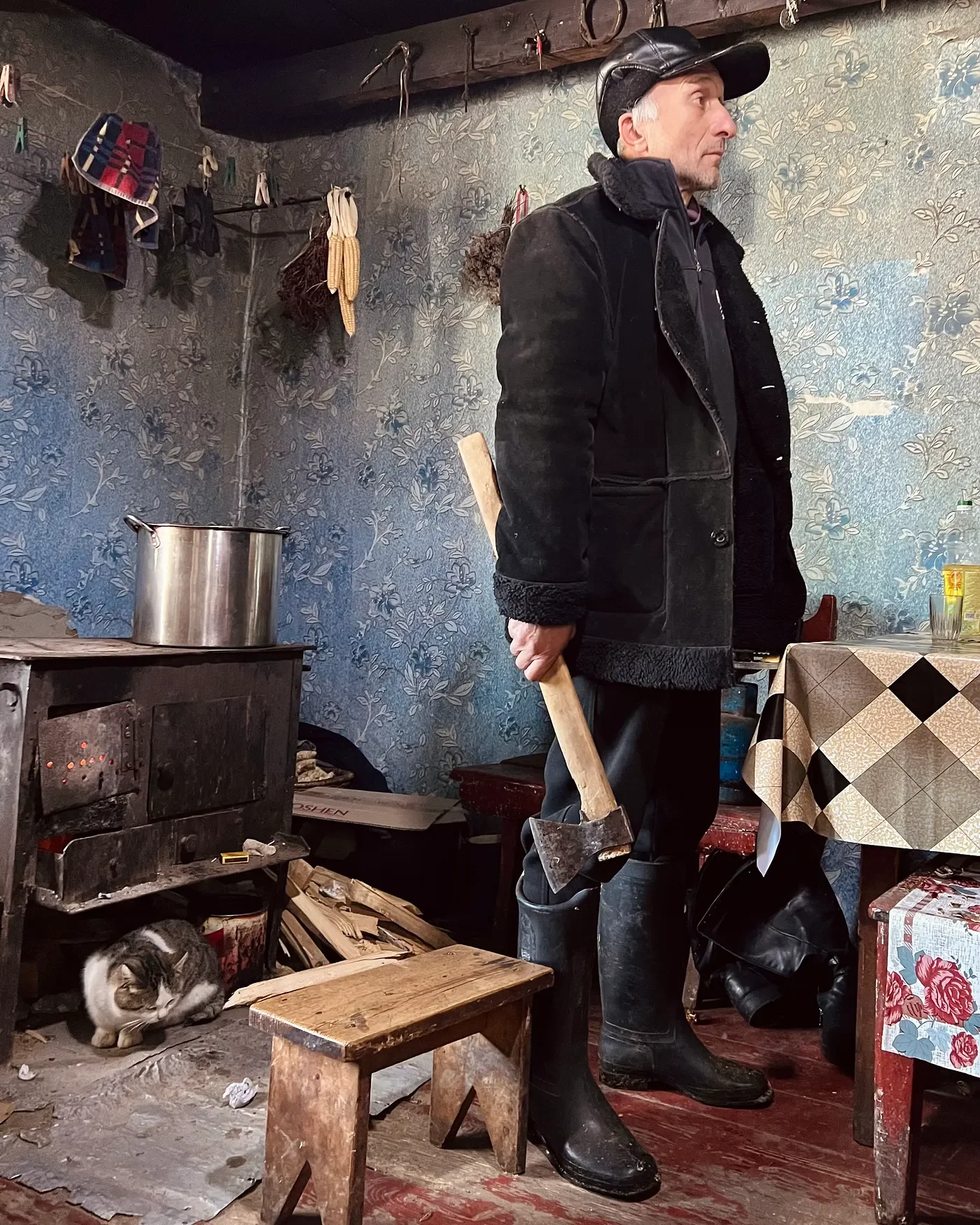
December 31st, 2024. “Are you ready for the forest?” I was asked as wool socks and waterproof boots were handed over to me. I thought the answer was yes, but mother nature was quick to humble. Tiptoeing atop the untouched snow was a precarious game: at any moment, the surface tension would give out and next thing I knew my foot was swallowed in knee-deep snow. It was a comedic scene that we all fell (literally) victim to — hooting and howling every time it happened.
The long journey across shallow rivers and along abandoned villages was mesmerizing. Nothing could have prepared me for this intense beauty. Landscapes have always felt impossible to write about, both in their grandeur and the cathartic release they evoke. “How do you say heaven?” I asked as Melania hummed a tune. სამოთხე, she sung back to me.
Moments later we stumbled upon a crime scene: splattered red blood sparkling in the white snow. “Fox,” said Melania. “Wolf,” corrected Avto after taking a closer look at the animal tracks — the only sign of life around us. Poor rabbit!
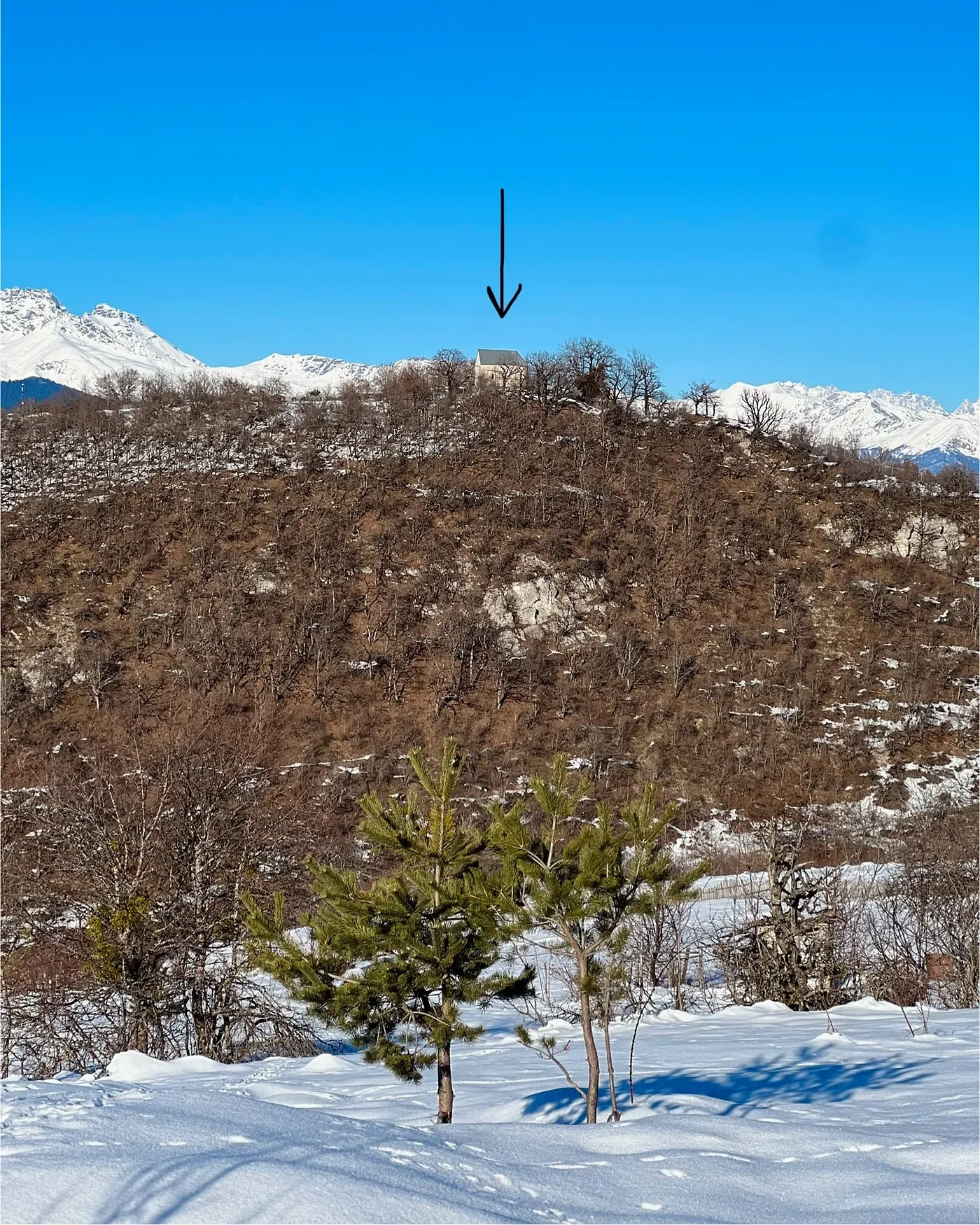
Apparently, I didn’t learn my lesson here because a few days later, when everyone was busy at home, I decided to “sneak out” (as Melania likes to call it). I let my intuition carry me up a big hill and ended up at the breathtaking cemetery overlook (which I later learned is where most of Avto’s ancestors are buried).
About half an hour later I was confused to see that Melania, huffing and puffing in an unzipped coat, had found me by following my footprints. She sighed with relief as she approached me. It turns out that they’d all been screaming my name from below but I was too far to hear. “The wolves are out on the hunt during the winter months. When there is nothing left to eat in the forest they come to the village. Even in broad daylight.”
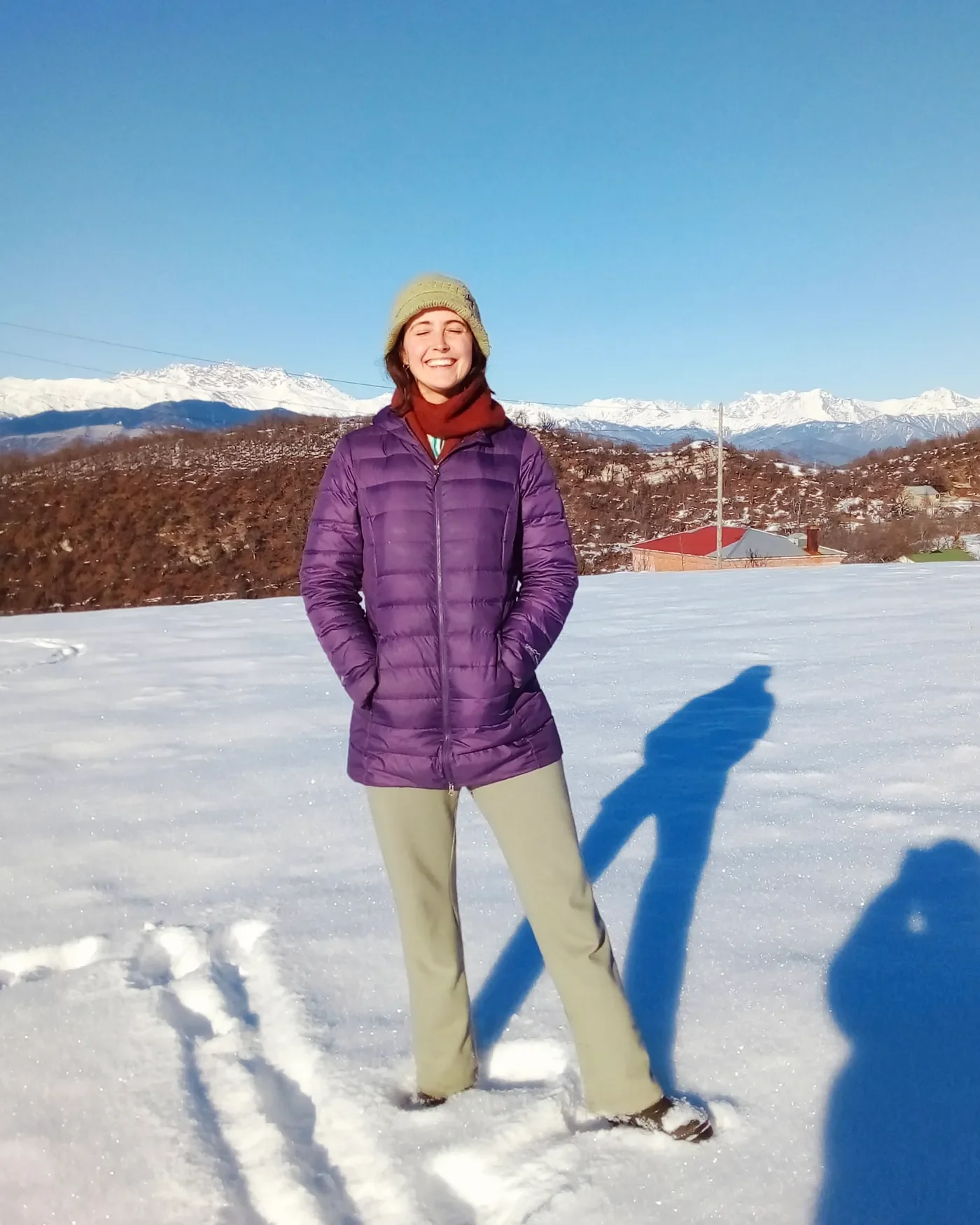
Melania snapped this photo to alert the villagers that I was found alive. “Lilly was nearly eaten by a wolf,” she would later describe to anyone who would listen. “Imagine if my guest was swallowed by a wolf! Don’t do that again, Lili!”
I couldn’t help but find this rescue mission to be a little dramatic…until stories of local wolf attacks would be purposefully inserted into casual conversation the following days. Oops!
Like the wolves, we were also on a hunt. For a Christmas tree. The dogs were alongside to ward off any other lurking canidae. Because Georgia follows the Orthodox (Julien) calendar, Christmas was still around the corner.
We passed another small village where dozens of cottages stood but only one was spitting smoke from its chimney. These uncanny, liminal spaces became a reoccurring theme throughout my time here. It was as if families abandoned these homes overnight and left for the city. Perhaps because that’s exactly what happened.
Melania witnessed this exodus and recounted it with regret: “there used to be 12 families in total, 24 people total.” She counted each person by name on her hand and described this time as though it was a bustling society. Today, her children only have each other left to play with.
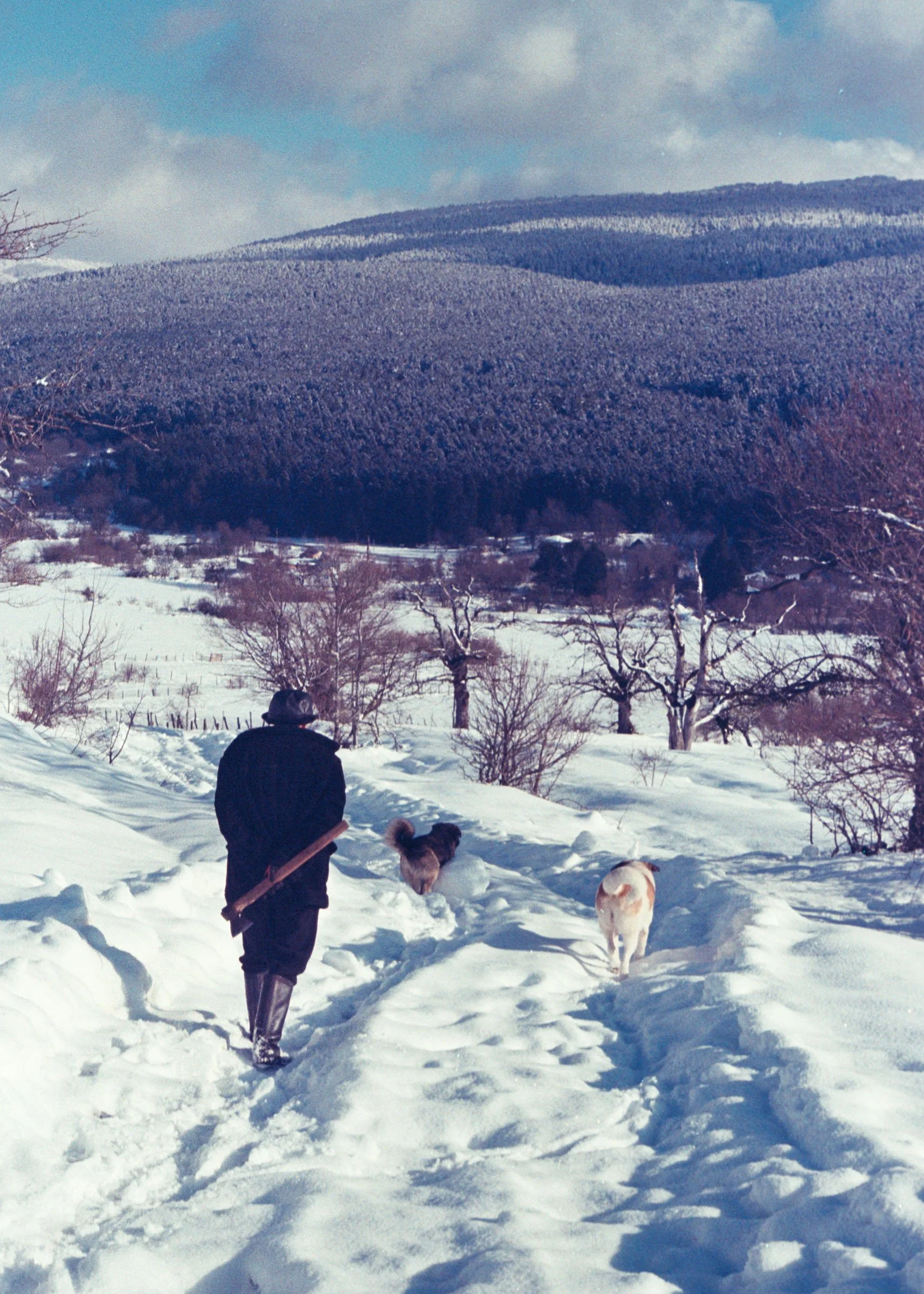
“We are offered a window into life in one remote village, where the school only has three pupils, housing is basic, and Orthodox belief is the only bulwark against existence’s rough unpredictability”
After about an hour, we finally reached the base of the forest. Before the canopy of fir needles could shield us from the intense winter sun, the crunch of our footsteps seized as Melania stopped me. “Listen,” she said as a surreal sense of silence filled the mountain air. “This sense of peace is what keeps me going.”
It was the all-encompassing kind of peace that people read books about and visit ashrams to access. The sheer magnitude of this wooded landscape and the solitude in which we existed was chilling. And yet, as I looked back at the abandoned village, I couldn't help but wonder if this silence was a symptom of absence.
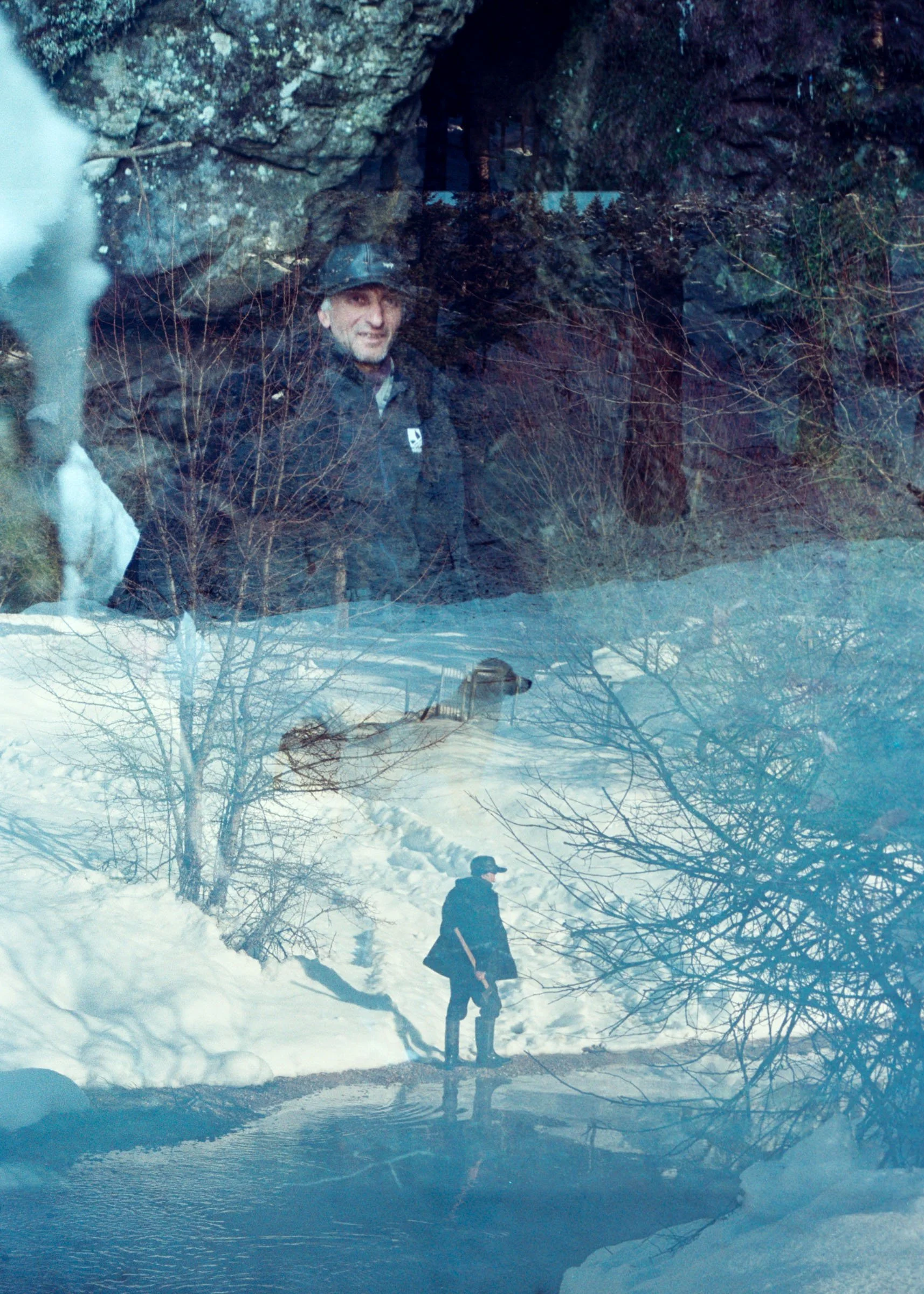
Every autumn, Avto harvests the precious pine cones.
The forest is where I have accessed the deepest sense of peace and presence. Every week, no matter the season, I would embark on a forest bathing ritual while living in Latvia. But the forests in front of me were of a different essence— hauntingly beautiful and utterly enormous. I imagined how their offspring were currently sitting in a majority of Europe’s living rooms. I recalled the dozens of Racha men who have lost their lives in pursuit of the precious cones while climbing these giant firs to make that happen. Goosebumps.
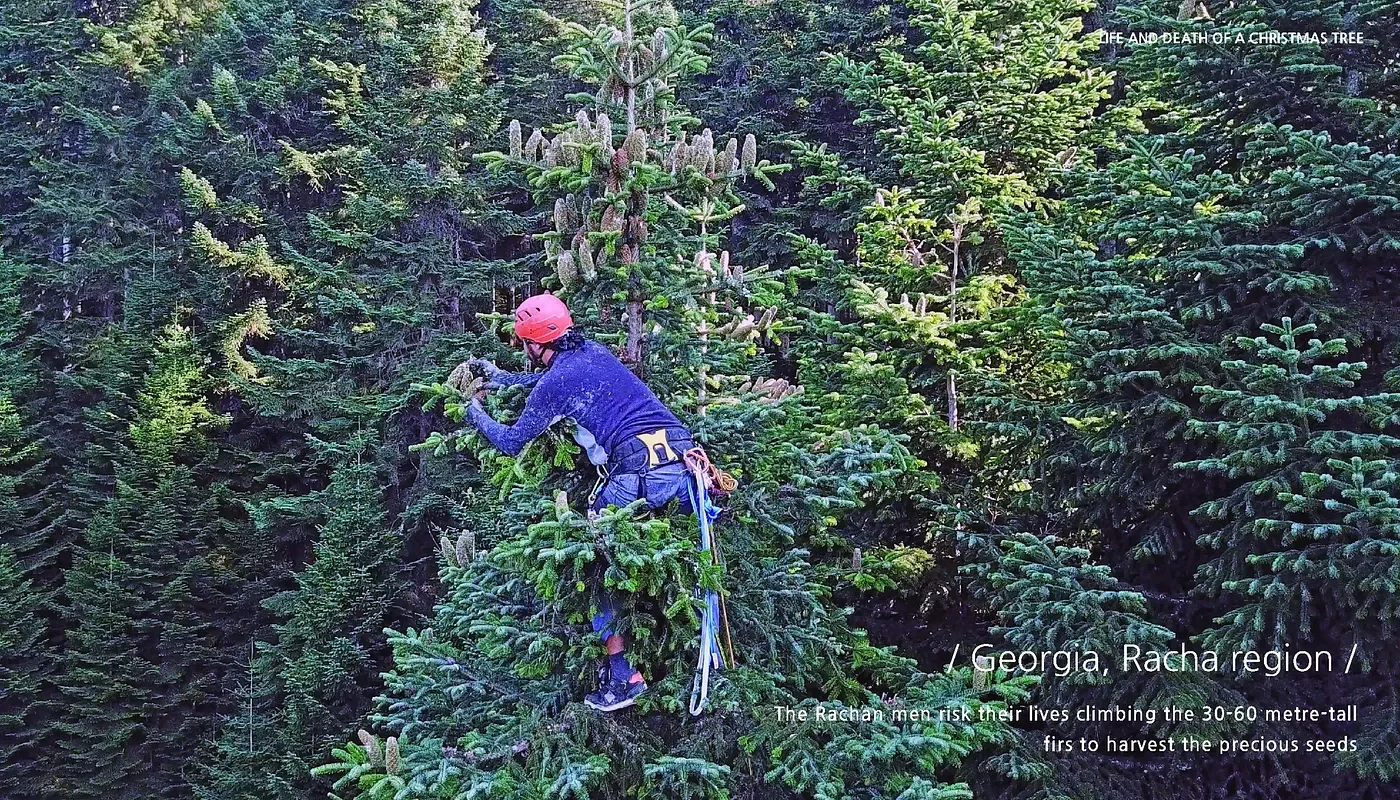
“The dependence of locals on this business for survival means crews keep scaling these massive trees for the annual harvest despite frequent falls and deaths. Even great care and protective equipment cannot prevent a treetop from breaking, and the danger is a constant shadow looming over the community.”
Charades Everyday
I wasn’t sure how long I’d be staying in Racha. We hadn’t even talked about it before I arrived (probably because I didn’t actually believe I would make it in one piece).
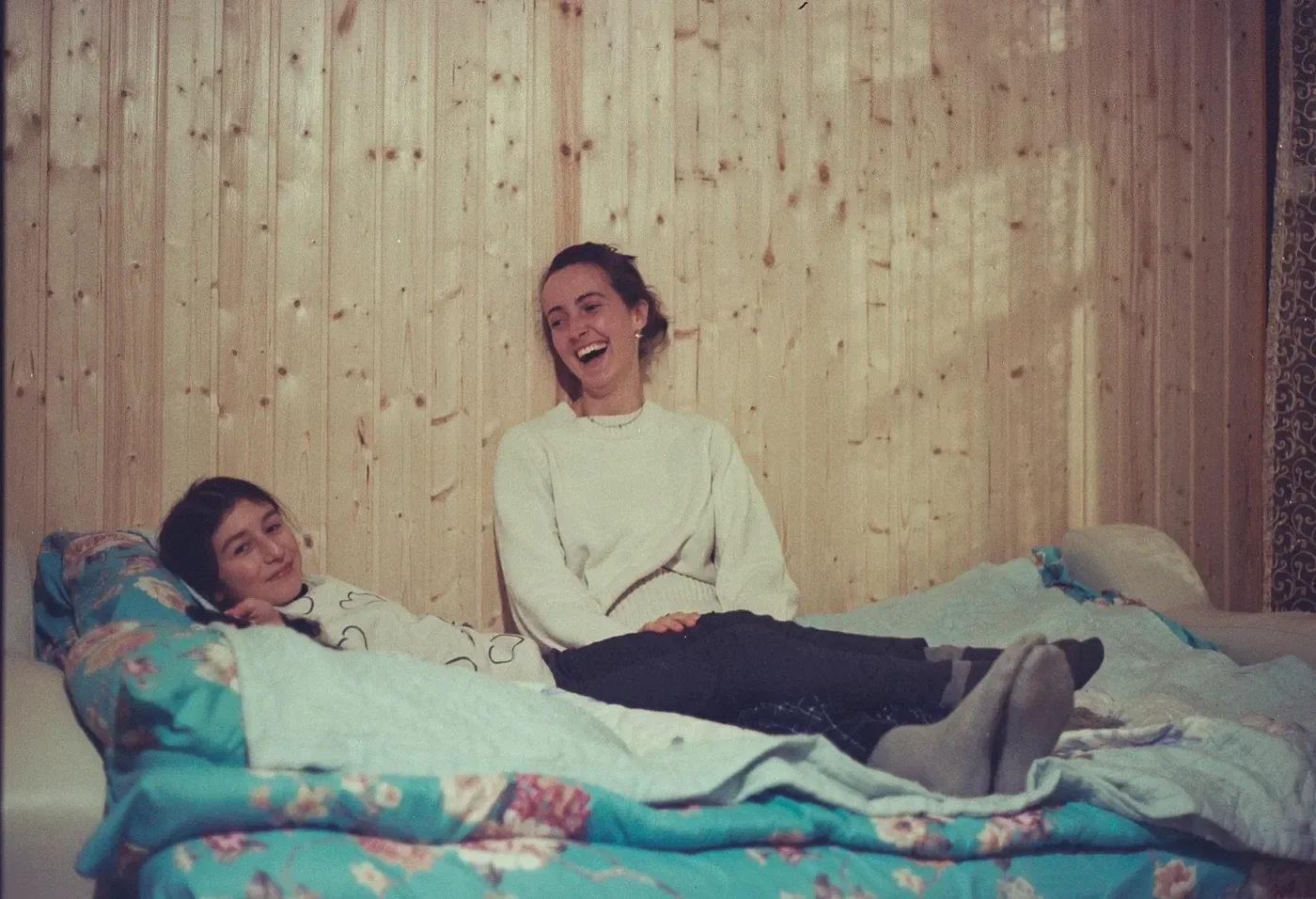
Nevertheless, this information seemed irrelevant to the Kobakhidze family, as they were ready to host me indefinitely. Very soon three nights would turn into five which turned into eight. We treated each night like a slumber party, laughing from adjacent bedrooms until it was “reeeaaally time to go to bed now.”
Each night, Melania and I spent hours at the fireplace exchanging stories in broken Russian interspersed with Georgian vocabulary. From across the room, she would suddenly exclaim, “Tekla! How do you say…(როგორ ამბობ)?” 12-year-old Tekla would proceed to translate her mother’s Georgian into English which I would then convert back to Russian which Melania would repeat before continuing her story.
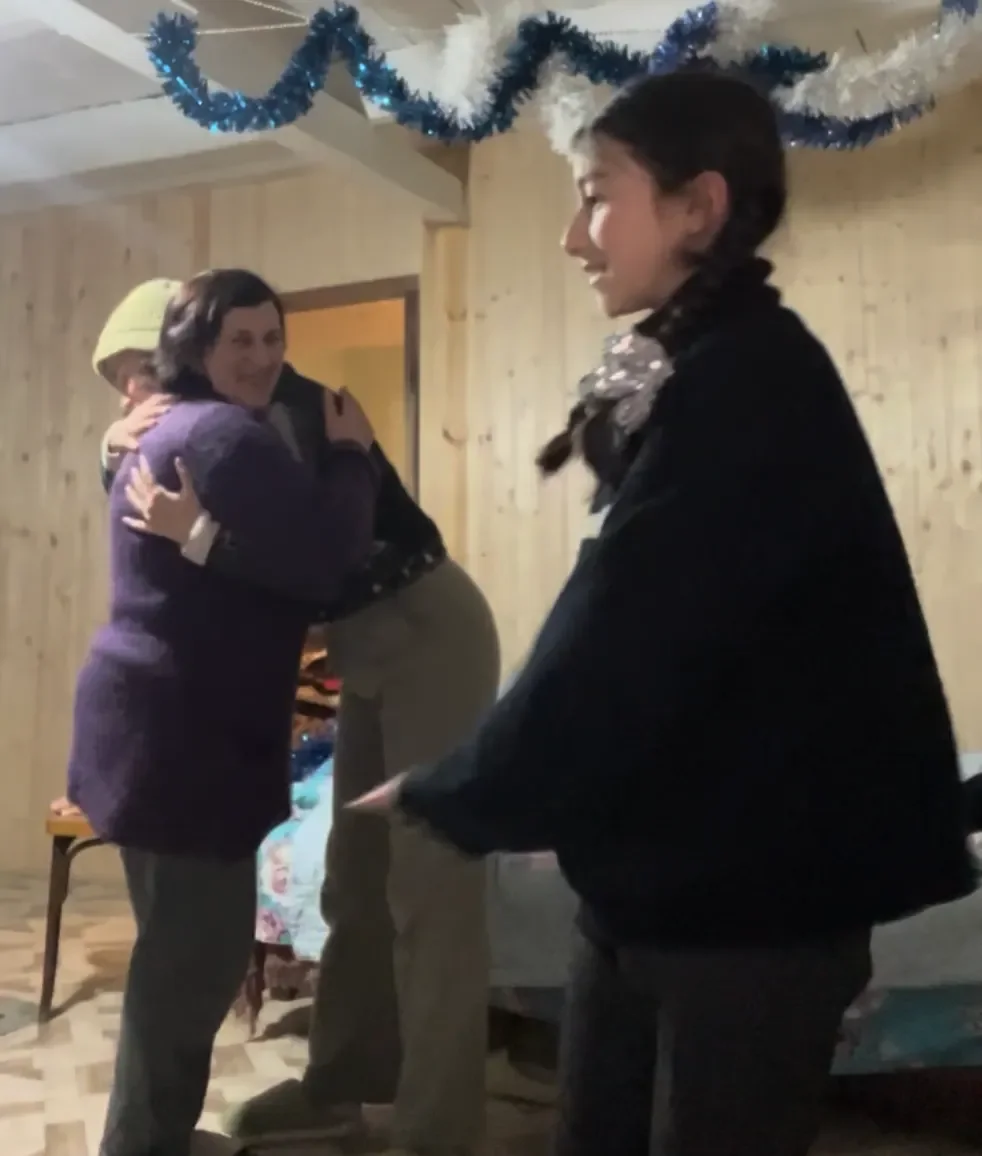
When we’d eventually hit a dead end in our communication I’d find myself swallowed in a mama bear hug followed by a fat kiss on the cheek.
Without one common denominator language that united us, we resorted to interactive techniques like dramatic charades — the kind that made the dog’s ears perk up from our sound effects. Nuanced thoughts would require the magic of Google Translate, but we overall tried to avoid the technology. By the end of the week, I came to understand and anticipate all the quirks of our unlikely communication chain.
One story, pieced together using the techniques above, describes Melania’s first experience with wine at age 2:
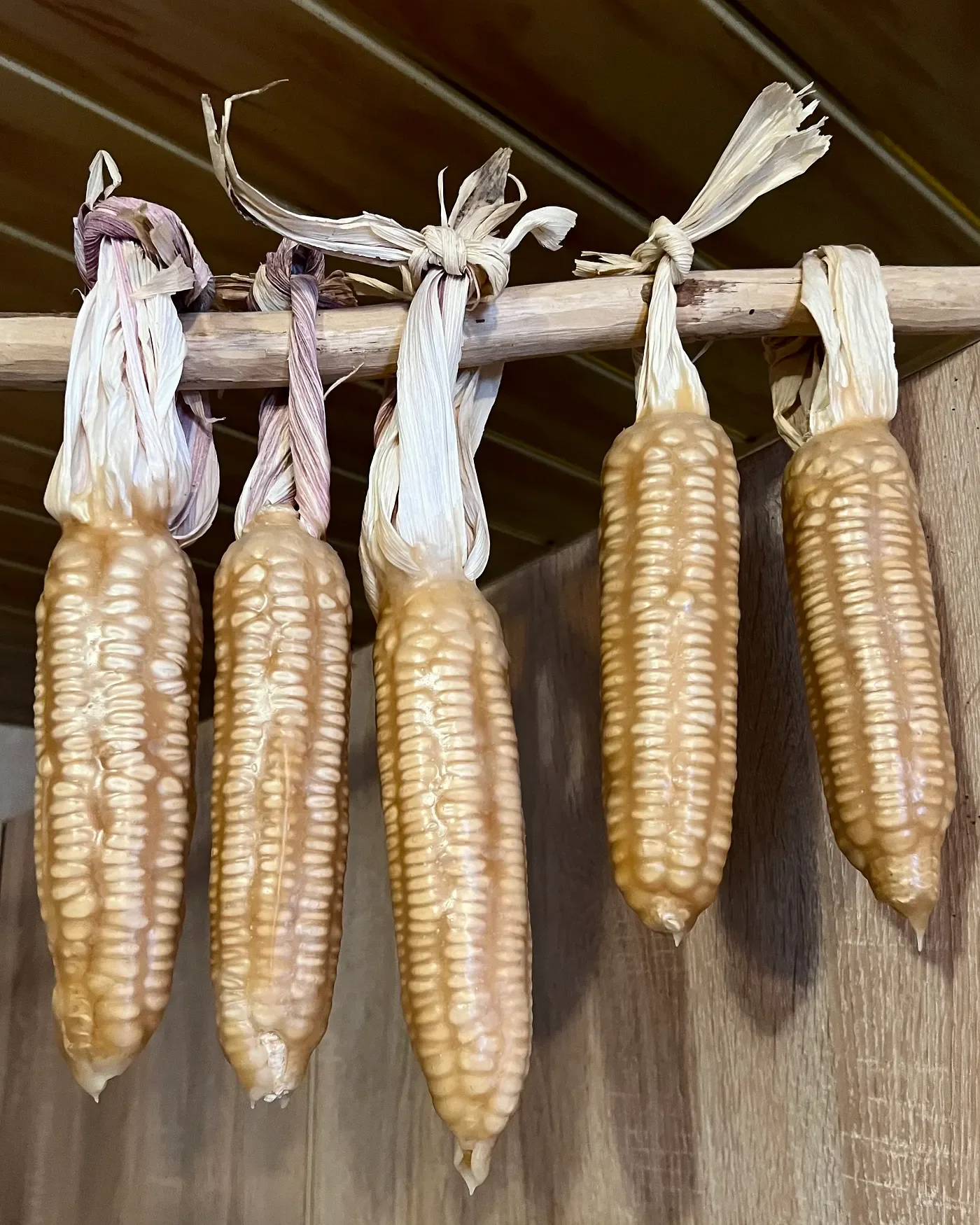
“Mom went out to fetch drinking water from the drinking well. Paata, my 5-year-old brother, decided it would be the perfect opportunity to finally taste the mysterious purple liquid stored out of reach. He put me on his shoulders and up the wardrobe we climbed. He had one sip. But I went for it. It tasted just like juice [referring to Khvanchkara’s semi-sweet taste]! Mother returned with water to find a drunk toddler stained in purple lips. No hospital was needed, I just slept it off.”

The same wine that got Melania drunk at age 2, stored on the same wardrobe. გაუმარჯოს!
Words have always been my safe haven, but Melania proved that love supersedes them. Witnessing her confront our language barrier with nothing but humor and self-irony (самоирония) has since left me leaning more into language gaps than shying away. Living abroad provides no choice but to practice this every goddamn day. My fear of grammar mistakes and perfect articulation is dwindling. I express myself through my energy. Nothing is that serious.
On that note, the dinner table presented a comedic crossfire of languages. I must admit that the line between passion and anger is fine in spoken Georgian language. Every evening, without fail, Avto’s eyes would suddenly lock with mine as he began to tell the stories of stealing (or rather “borrowing”) the neighbors’ horse as a child. His eyes would widen and his voice would rise so high as though this could instantaneously activate my understanding of Georgian. (And I think it actually kind of worked)!
Needless to say, by the end of every meal, my stomach hurt for two reasons: a) laughing too hard and b) eating too much.
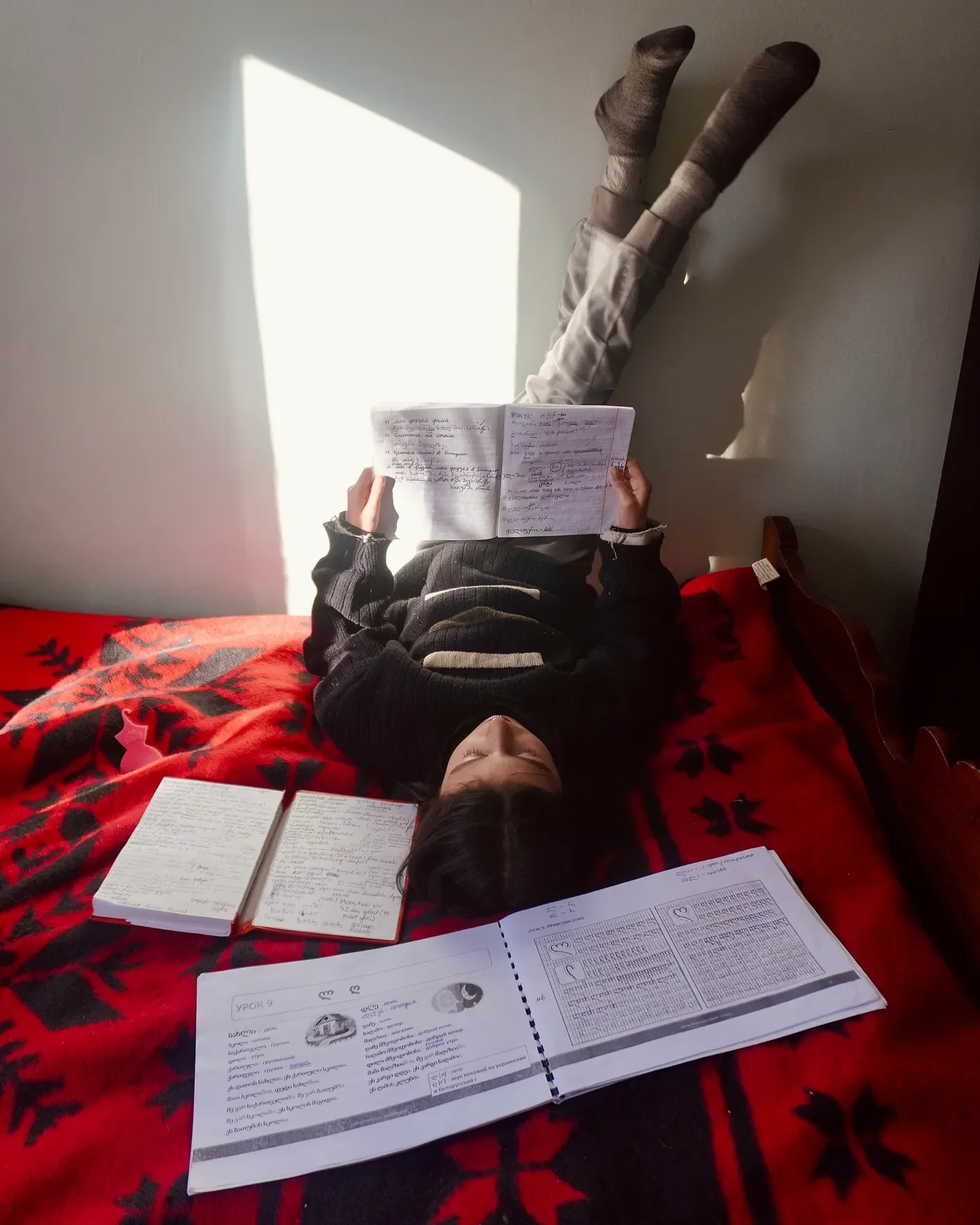
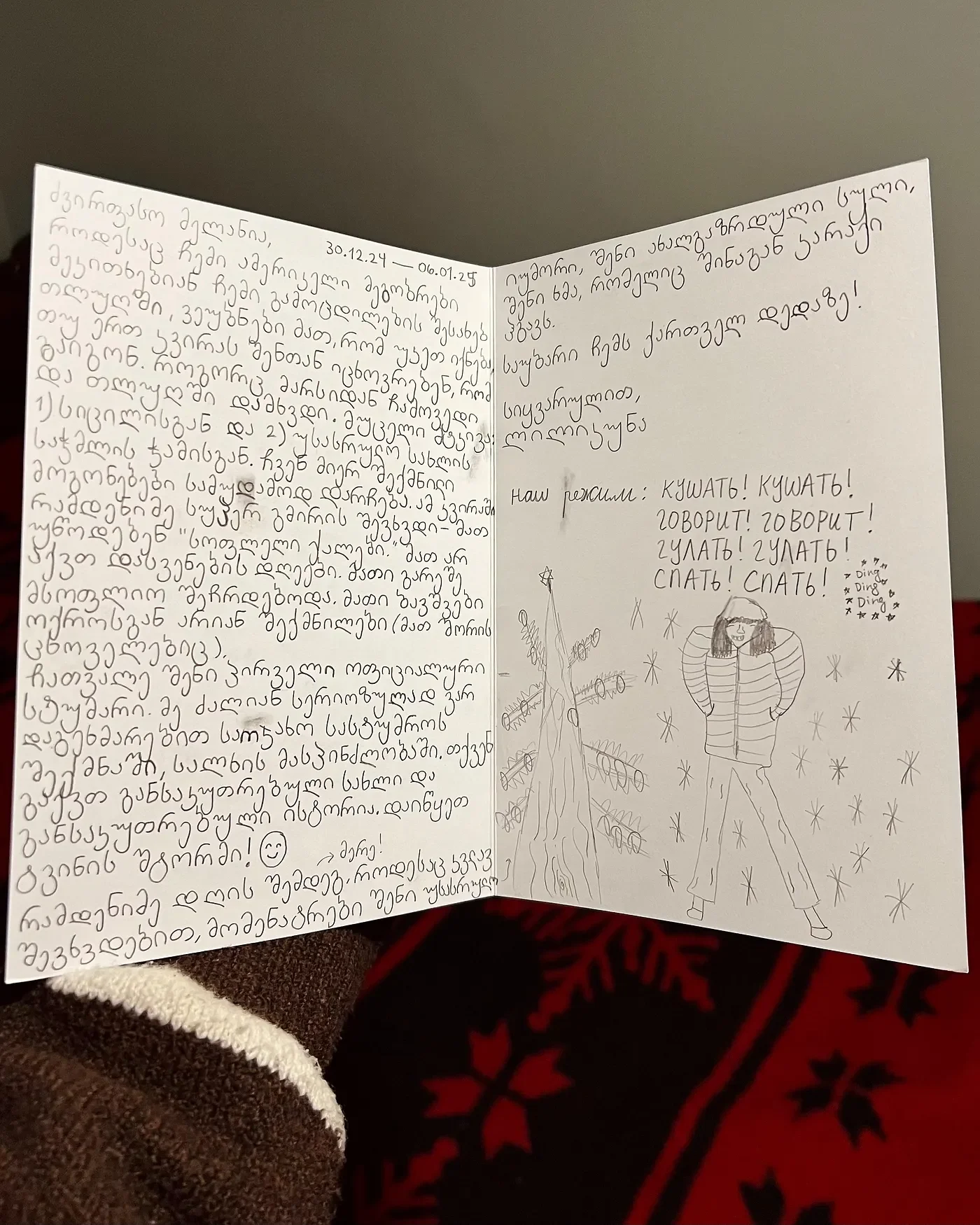
Tekla took my Georgian learning to the next level with private lessons. Here she is checking my homework, correcting it when I confused ჯ and კ, when I messed up my verbs, and teaching me how to say გილოცავ!
January 2nd is Bedoba, Georgia’s Day of Luck
Bedoba was the first holiday I added to my calendar back in September after learning about it through a Batumi local. As we walked circles around the lake, he explained that the word bedi translates to luck or fate. Georgians believe that whatever you do on the 2nd of January is a movie trailer for your upcoming year. I found this fascinating and made a promise to myself in that moment that I would participate. So let’s see!
January 2nd, 2025.
The wind was knocked out of me again but not because of whiplash this time. It was the magnificent view of the Caucasus mountains that did it as we rounded the bend. Like a reversed parade, candy was thrown by villagers into the open window of our Lava Nida as we made the treacherous journey down. This happened routinely at every fork in the road, as it is essential to spread candy and kindness on this fateful holiday.
We were on our way to visit Melania’s brother in their childhood home near Ambrolauri, a small city that sits in the shadow of the giant mountains who played tricks on me throughout the day: from bright white to icy blue to cotton-candy pink, they would constantly evolve in color depending on the sun’s status. It felt like a simulation.
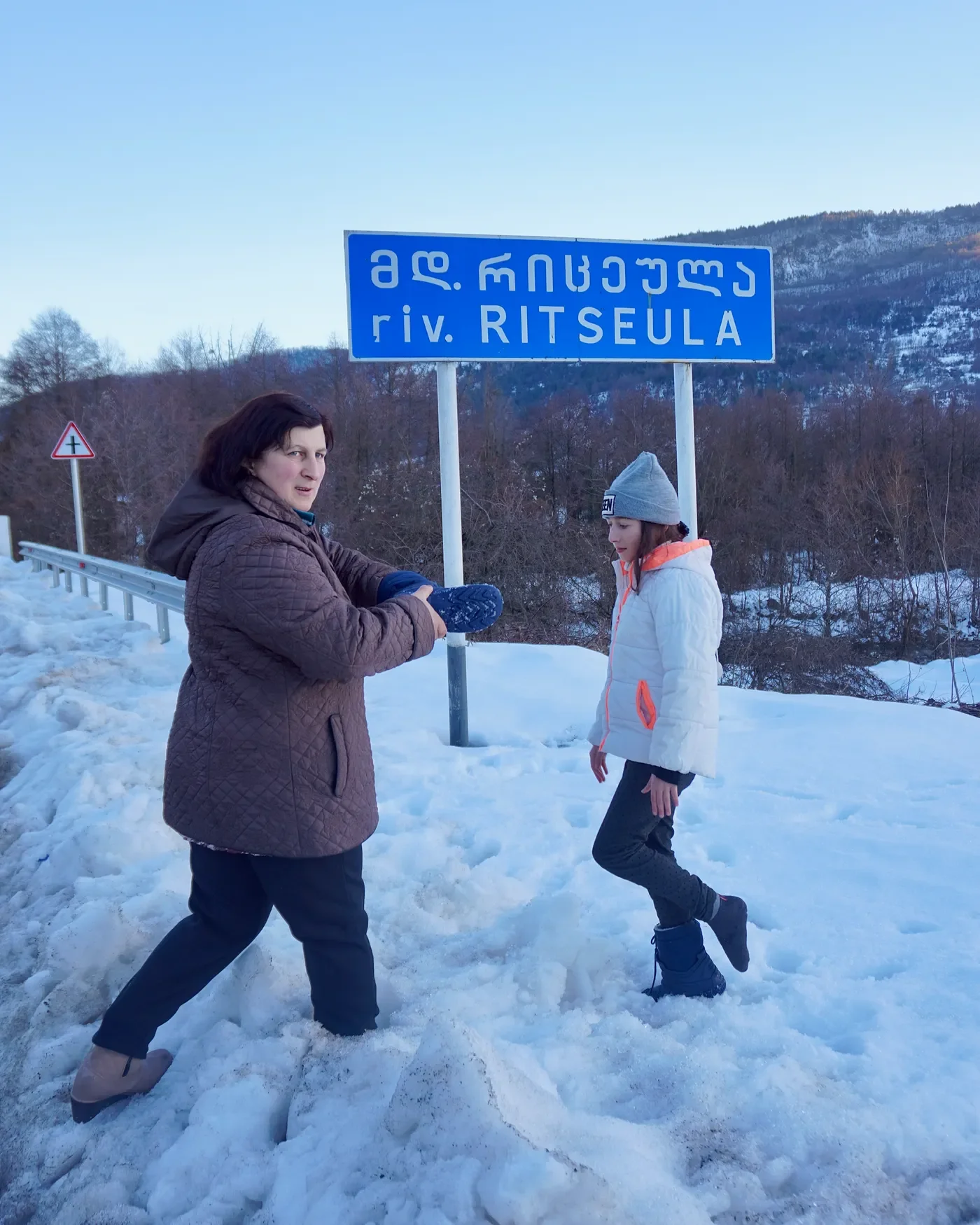
Removing snow from Tekla’s boot at the base of the Ritseula river where Melania spent 99% of her childhood. She could almost hear the sound of her late mother’s voice calling her in for dinner.
Georgians also believe that the very first guest who visits your home after the New Year is responsible for bringing prosperity and luck that should last the rest of the year. Mekvle is the name for this “first-foot” guest with a high-pressure job. Thus we adorned ourselves in smiles as we skipped inside of the wooden home surrounded by bare grape vines. Paata, Melania’s brother, was waiting inside.
We were greeted by a table so abundant that our plates were hanging off the ledge for dear life. Georgians have a special word to describe this kind of feast: supra. My glass of Khvanchkara (handmade by Paata) was refilled incessantly, as one toast led to the next — for peace, for God, for those no longer with us, for our children, for our parents, siblings, guests, to our homeland, to health, friends, neighbors, the saints. I may as well have kept my arm raised the entire meal.
There are books dedicated to the art form of Georgian toasting culture. But it’s even better if you get to experience this boisterous phenomenon yourself!
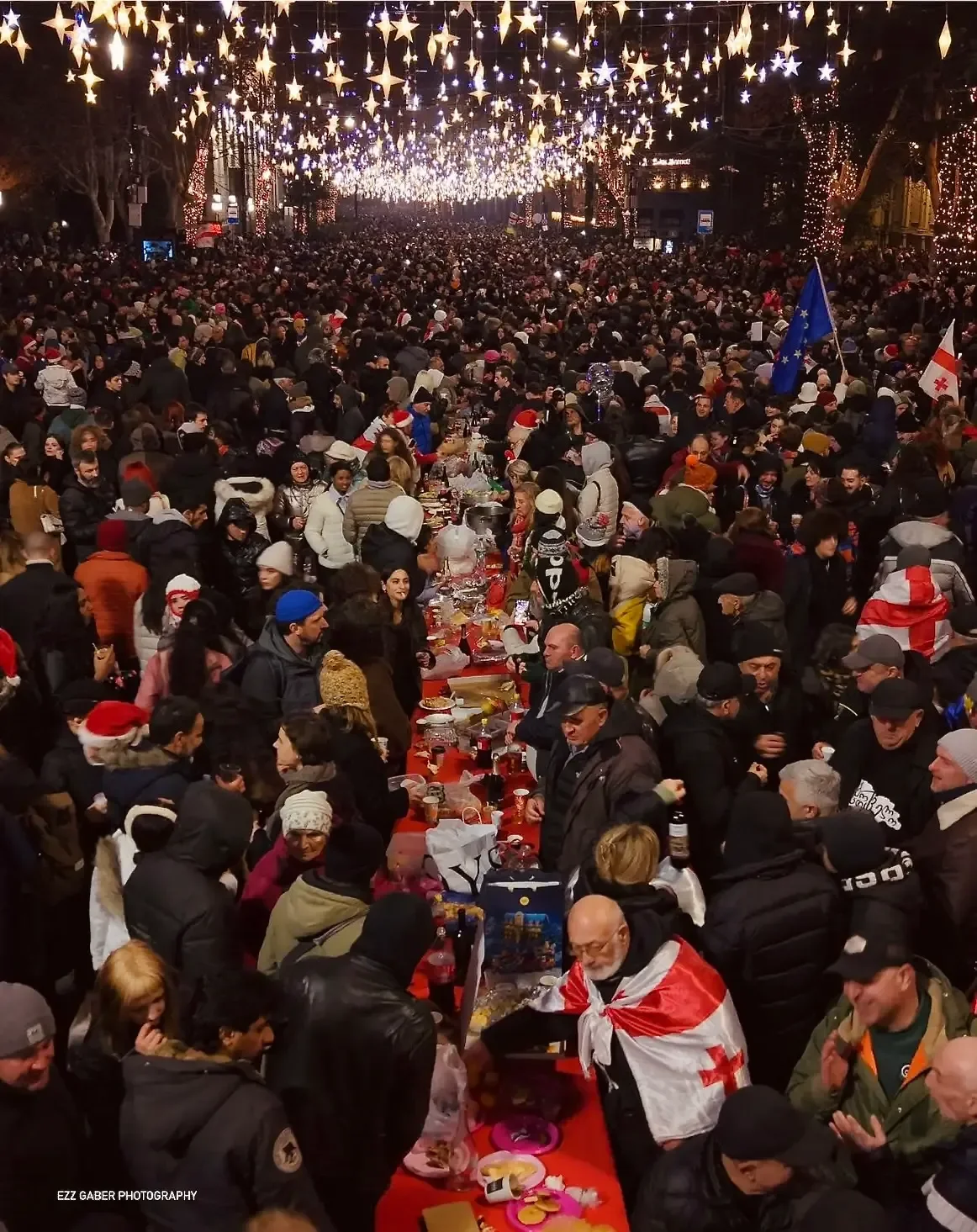
Thousands of protesters set up the largest supra in Georgian history to celebrate New Year’s Eve together on Rustaveli Avenue.
While we feasted, it was impossible to ignore the simultaneous intense civic unrest taking place across Georgia. One toast, which took on a completely different tone than the rest, was dedicated to “the integrity of our nation.” Thousands were out on the streets, protesting October’s rigged parliamentary elections, delayed EU accession, and for the release of political prisoners. Georgia has been fighting for freedom from the imperialist chokehold of Russia, increasingly in alignment with their own government, for longer than I’ve been alive.
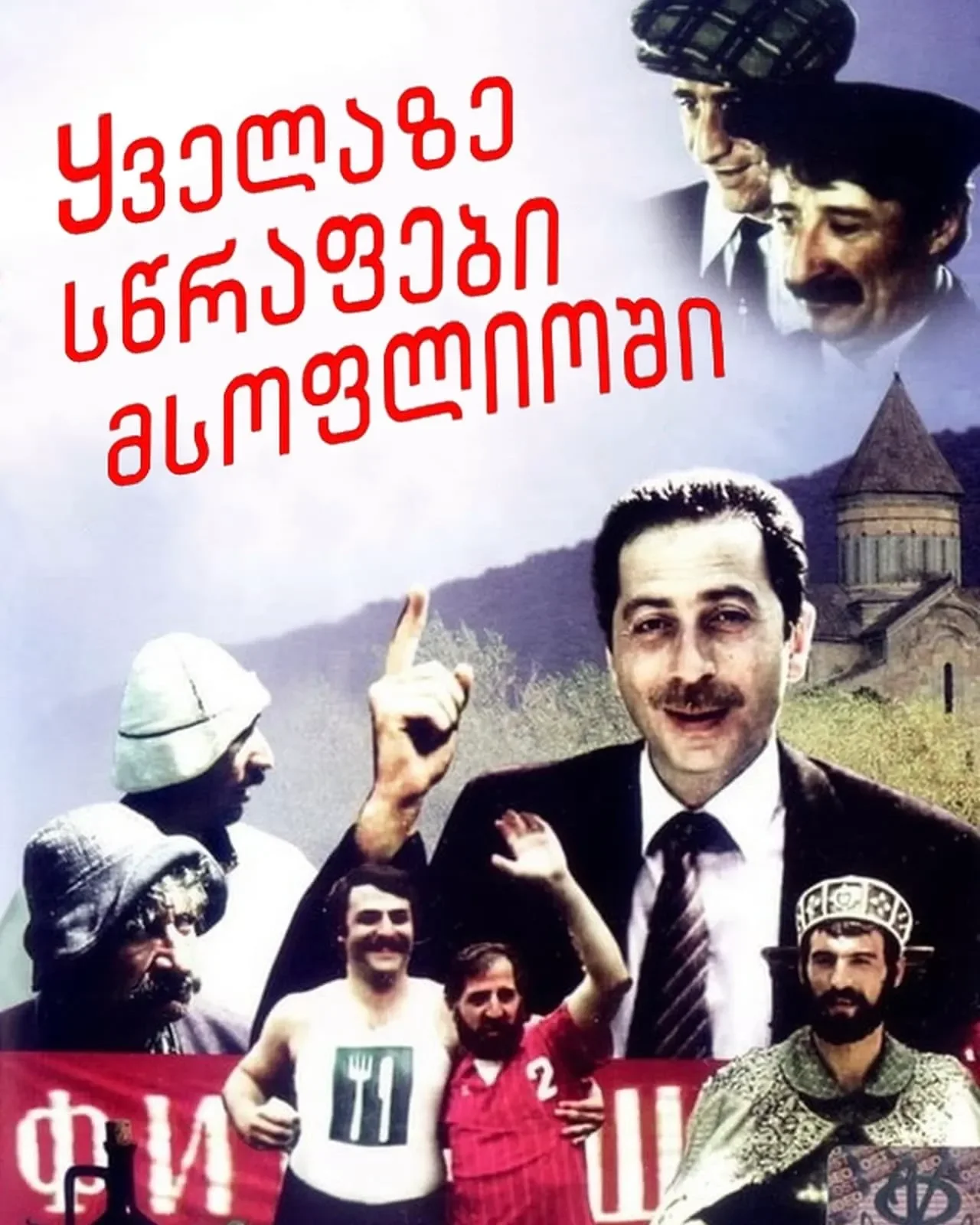
“The Fastest People in the World”
Later that evening, Paata would quite literally fall backwards out of his chair from laughing so hard after insisting that I see the renowned comedy depicting stereotypes of Rachvelians. They’re slow and they're okay with that! With Tekla’s help, we picked Paata up from the floor as he continued to laugh, completely unbothered. Watching this film in a room of Rachvelians is a once-in-a-lifetime experience.
Endless Invitations
“I have a guest,” Melania would proudly announce to anyone who called or crossed our path. To host a guest is one of the most honorable things to do in Georgian culture. In fact, this was one of the first phrases my Georgian teacher taught us in class: სტუმარი მყავს (“I have a guest”). I can confidently admit that, by the end of my stay, I’d been invited into the home of every surrounding neighbor who remained.
On New Year’s Day, we traced the cow’s steps to reach the nearby home of village school teacher, Pikria. As she set the table, I noticed every iconically Georgian detail lining her shelves — including the ancient Georgian Christmas ‘chichilaki’ tree whose spiraled shavings would be symbolically burned on the 14th of January.
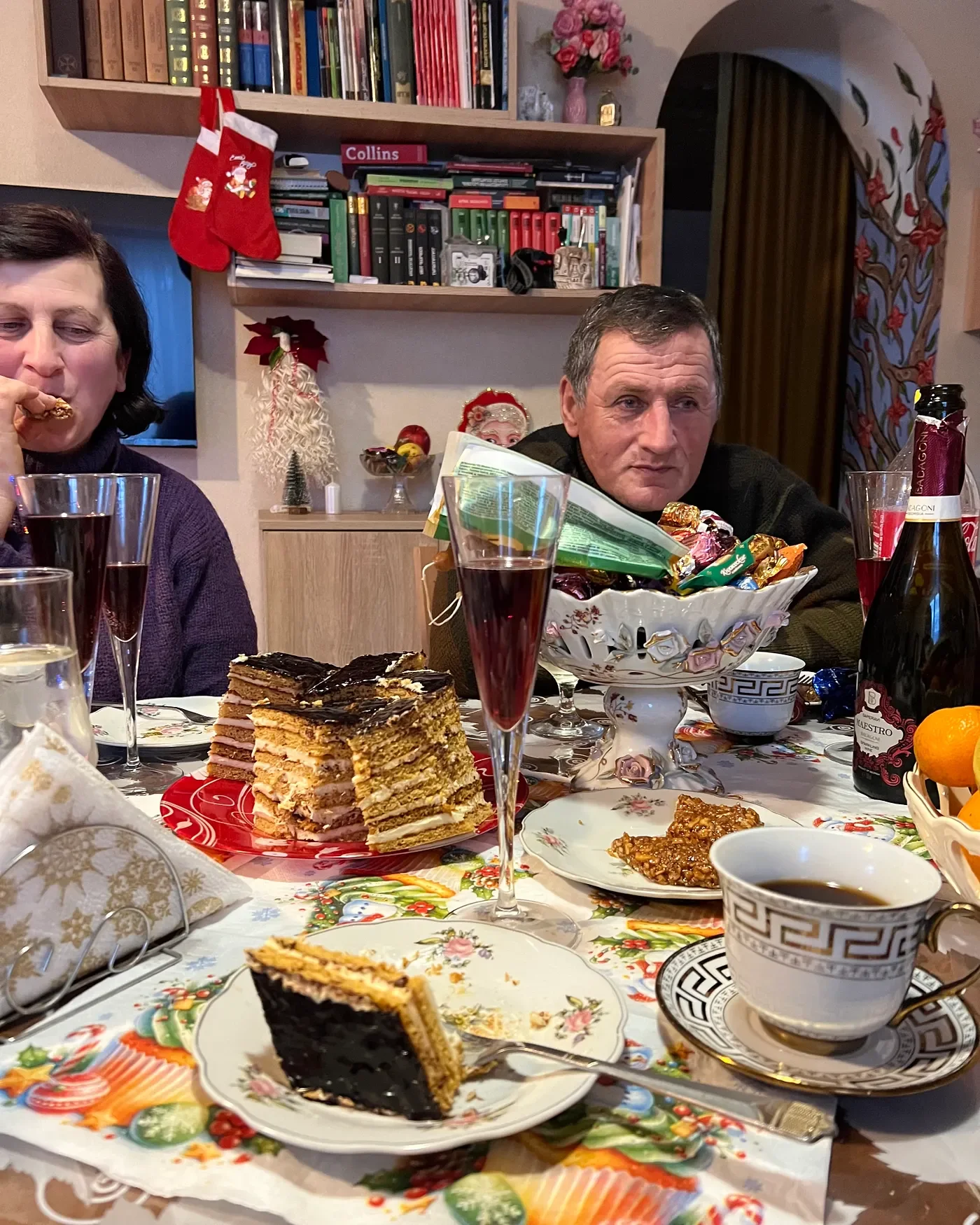
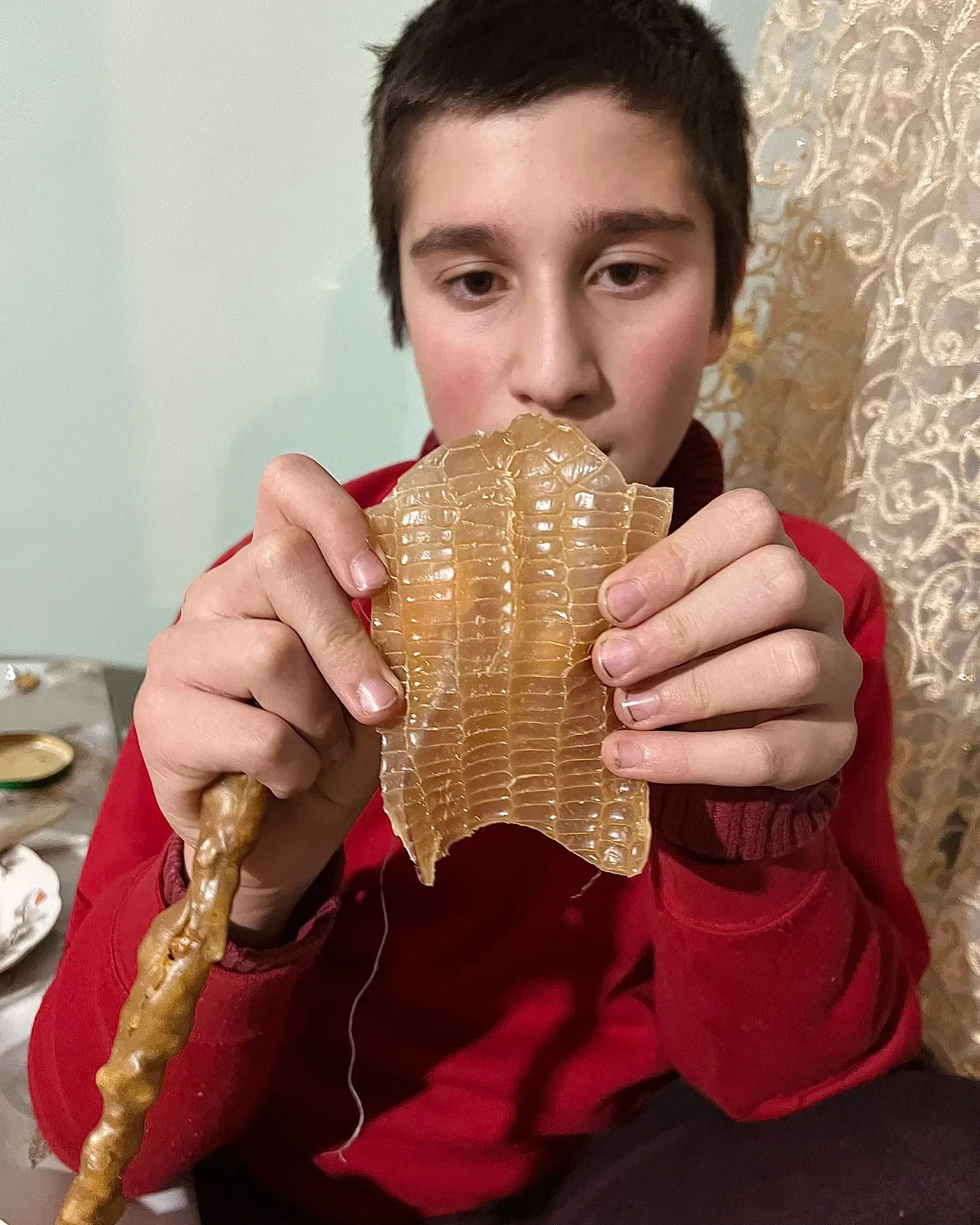
The aftermath. Pikria would send me out the door with a fistful of handmade churchkhela (Georgian “snickers”) that had been drying above our heads.
I sat across her husband Dato, a ‘tamada’ (Georgian toast master) as he delivered each toast with originality, humor, and idioms that required an explanation. The legend of King Tamara’s beloved Urtkheli’s tree was told to me for the first time. Eventually, he nominated me to be the ‘Alaverdi’ meaning that I was also designated to make toasts. Let’s just say my arm was sore by the end.
I did not realize that it was possible to live more isolated than we already were, but our visit to Nino and her husband proved me wrong. We packed a plastic bag of mandarins and candies before traversing through the thick snow and changing elevation to reach their remote cottage.
Despite our unannounced arrival, Nino greeted us as though she’d been waiting for days. The farm animals also orchestrated an orchestra of hoots and howls to make their hello heard. As we congratulated them on the New Year, Nino absolutely insisted that we come inside — using nothing but a loud voice and the tug of our arms to pull us in.
It felt like the ultimate juxtaposition when we entered their modest cottage only to find Prime Minister Irakli Kobakhidze’s undesirable face plastered across the small TV. Even on the untouched mountain-side, the Georgian people were nervously watching the unraveling of events on Rustaveli Avenue.
As I sat on their couch-bed, Nino whipped up a table in a matter of minutes. Suddenly that table was being lifted from across the room and placed directly in front of me! Now would you look at that — Georgians really insist that, as the guest, you don’t move a finger.
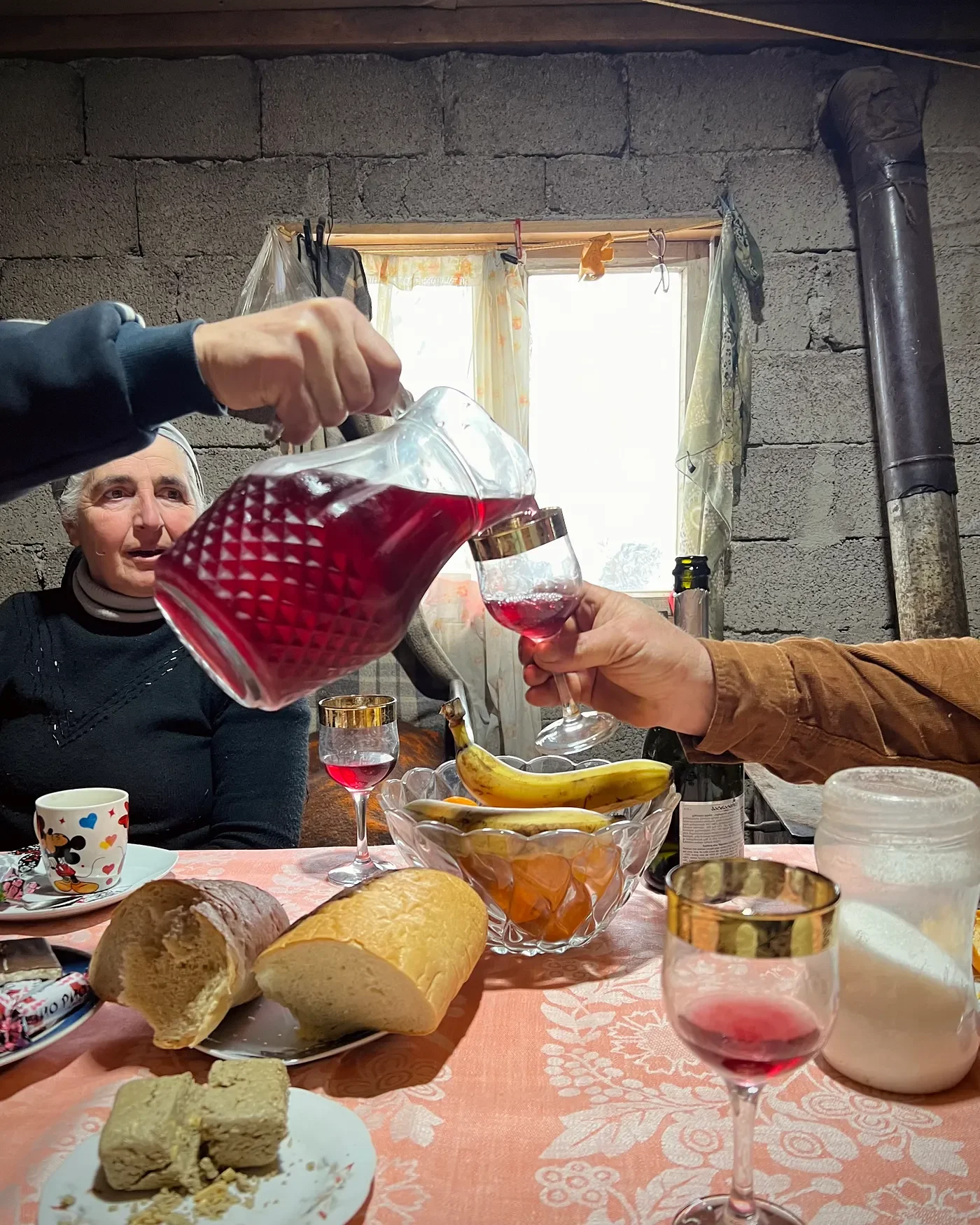
My most vivid memory as a guest, unexpected in this case.
They didn’t have much but everything they did was sitting on that table — shared with a side of love and laughs. I was caught in the crossfire as the women screamed at each other across the table and the men screamed across the other, replenishing each other’s wine glasses. If you’d been listening from outside you’d imagine there were 12 of us inside. I must say, the perk of living so remotely means that you do not need to control the volume of your livelihood.
Georgian Art
Instead of paintings, Rachvelians hang pig carcasses on their walls. That’s what I learned when entering the home of Iveta and Zviad. But these aren’t just any carcasses, these are soon-to-be RACHAN HAMS (ლორი)!
Pig breeding is one of the main farming directions in this region. Rachan ham is a shining example of high-quality modern gastronomical heritage prepared using ancient traditions, experience, and all four elements: earth, wind, water, and fire!
For other vegetarians, I will spare the details of the incredibly involved process that I learned about from the first-hand experience of village boys who turned into men after preparing it for the first time. Consuming this truly one-of-a-kind dish is a rite-of-passage — a golden ticket — and in moments like this I will relinquish my vegetarianism. How my body reacts is another story.
The dishes of mountainous Racha are considered unique, and food prepared by a native Rachvelian is something spiritual. Ask a local and their first question will be if you’ve tried this delicacy yet. Your answer will tell them everything they need to know about you.
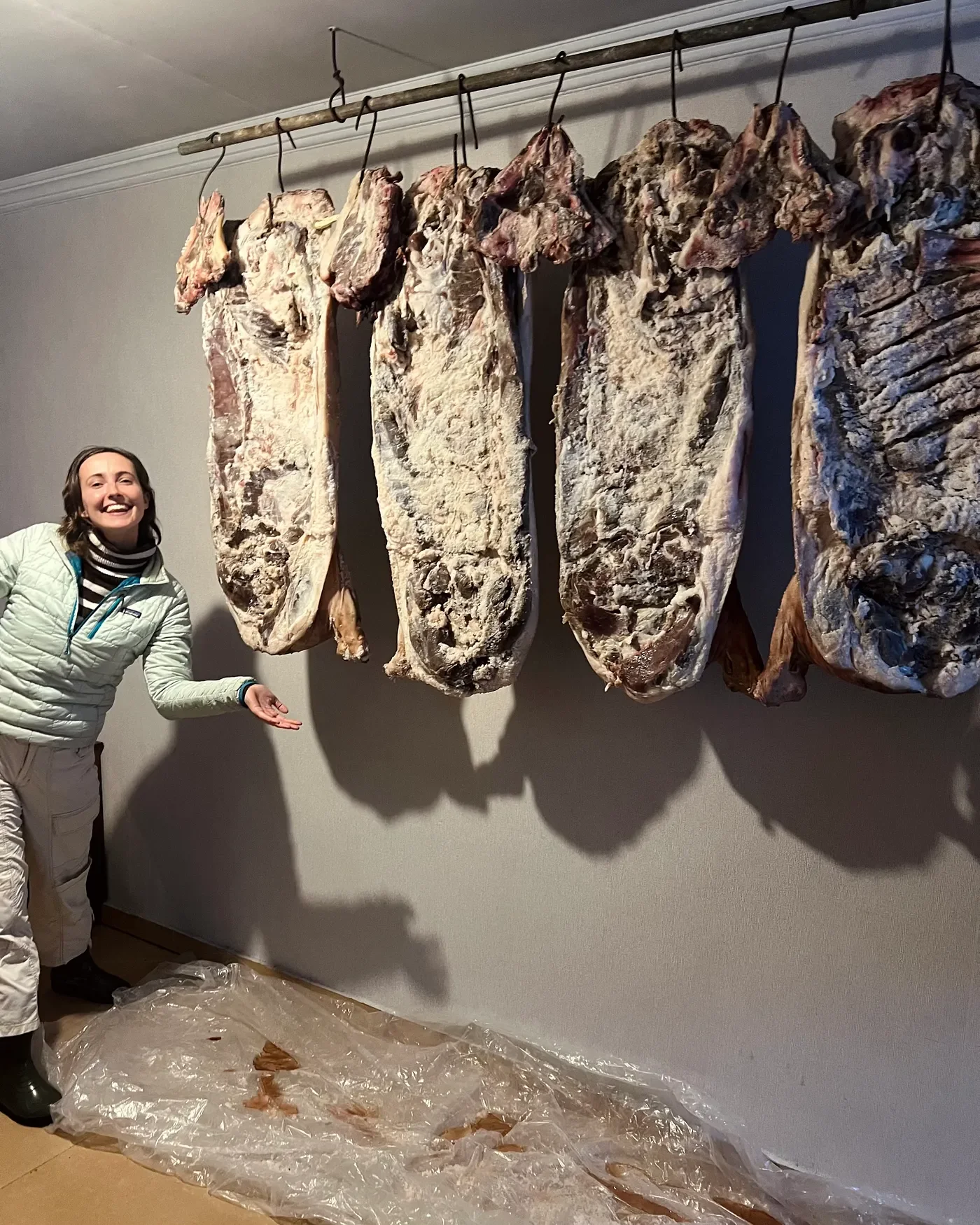
Across Georgian gastronomic culture, Rachan ham holds a coveted place. “The salt prevents it from smelling up the place,” I learned — confused at first as to how it could politely hang two meters from the dinner table.
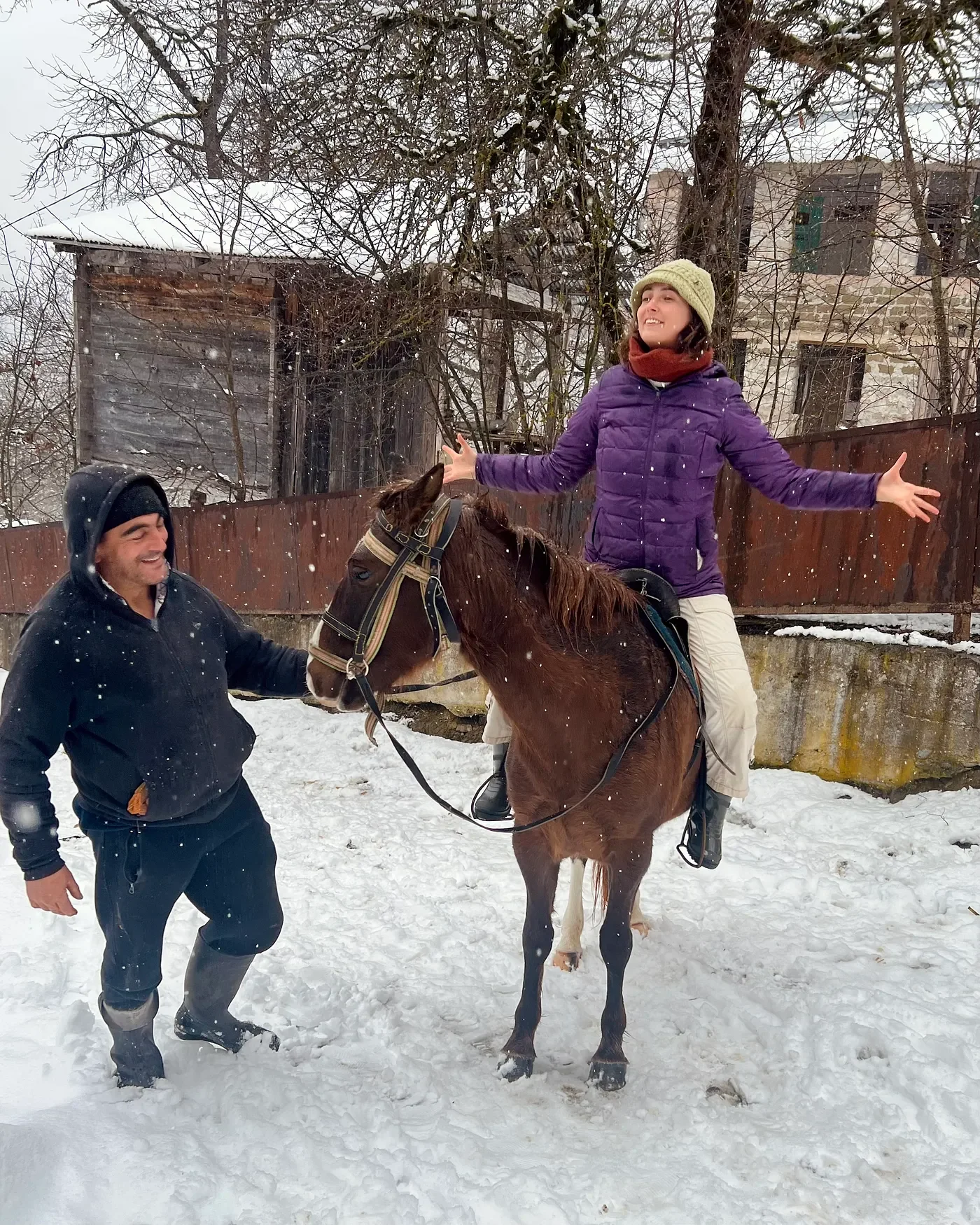
“Do you want a ride?” Zviadi asked before proceeding to guide me through a real-life snow globe on his horse named ხვიხვინა while Melania chased us down for a video to send to my mom.
Who is the village woman?
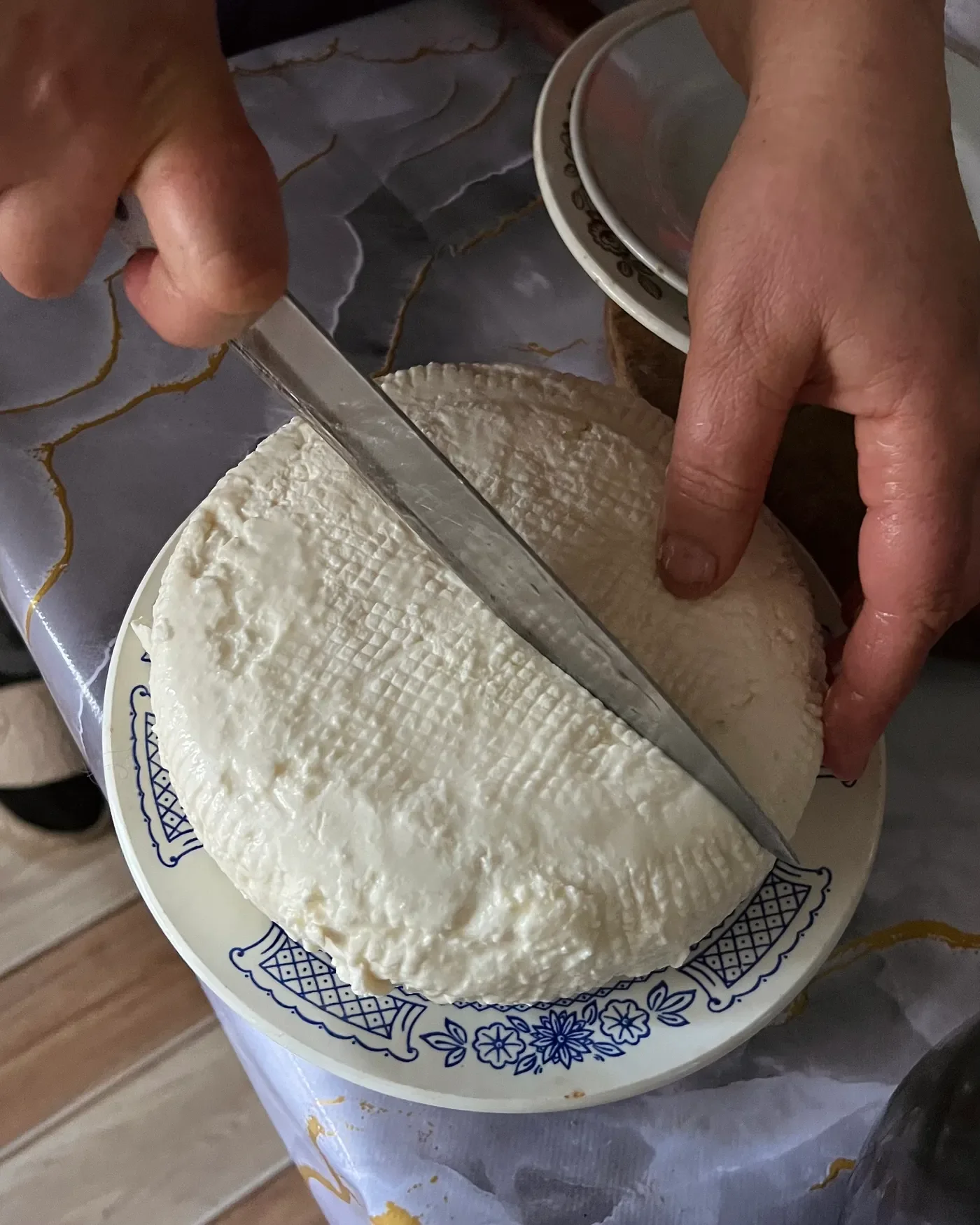
Her hands are plump and calloused, used to milk the cows and churn the salty cheeses that grace every supra table. Her heart is made of honey, the same kind she collects from the 2,000-bee sk’a (სკა) starting in May. Her laugh is the infectious kind that sends you spiraling into tears and not because the joke was that funny. Her crow’s feet are defined by the summer sun while tending to rows of burgeoning vegetables. Her soul is young and innocent, permanently 10-years-old if you were to ask.
While clearing the breakfast table, she hums the melody to her favorite hymn მამაო ჩვენო. You close your eyes and listen from behind the wall when it evolves into singing. After washing the stack of dishes, she is already setting the table again. You’re convinced she has a third arm as she carries an ungodly amount of cups and bowls in one go, opening the door with her foot and closing it again behind her. “I’m not even hungry,” you think while gobbling the plov kept warm on top of the fireplace.
You begin to wonder how she manages it all and then you hear her say:“Time. There is no time left for myself.”
The village woman has absolutely no days off. She does not close her laptop and leave the office like a city woman might. She wakes up with the rooster. The first thing she feeds is the fire, then her animals, and finally her children. Some might argue that these are all her children. Everything requires her care and nurture to grow and thrive.
There aren’t any restaurants for take-out. There isn’t even a grocery store in the vicinity. Instead, everything is made at home. “100% natural,” she likes to remind you while placing lobio, pickled cabbage, and kama mushrooms in front of you. The seat closest to the hearth is reserved for you as the guest.
For dessert follows layered cake and puréed fruit leather (tklapi) and compote made from a red fruit that doesn’t translate. If wealth were measured by the bounty of quality food on the table, then hers would be the richest family in the world. With a sparkle in her eye she jokes, “Women everywhere would be free if the family didn’t have to eat.”
Behind her ravenous sense of humor is a survival mechanism. “The reality of life in the village would be too gruesome without humor,” she says to you one morning. This comment instantly breaks your heart once you understand what it means. Of course she is referring to the brutal reality of village life — bleak in prospect.
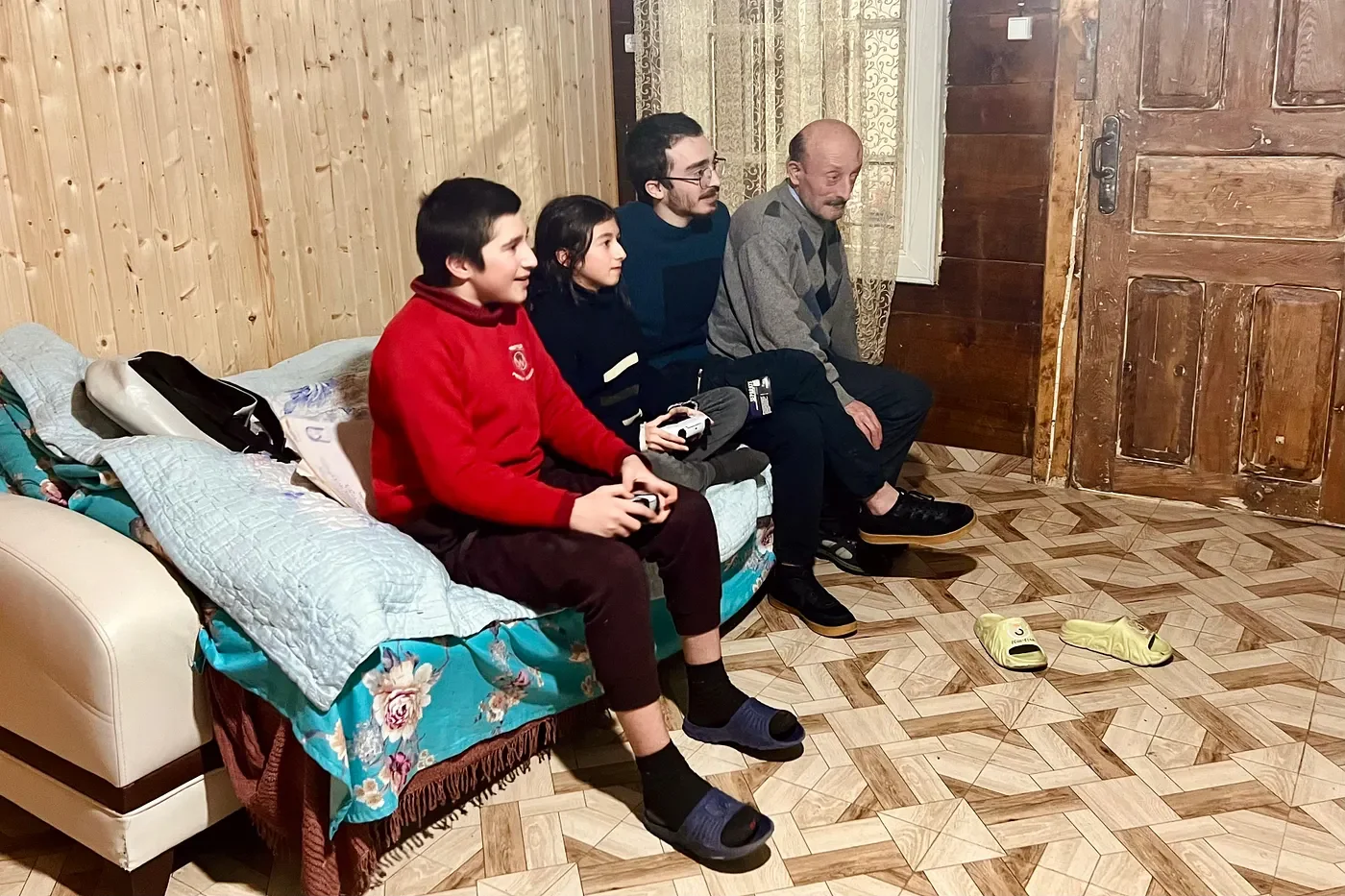
Her children are the only children left in the village. Nearly every other family has moved to the city in recent years, selling their farm animals and abandoning their generations-old cottages. The local school enrollment is down to just three now. What will happen once they go to university is a question that nobody wants to answer. This fact is ever-present in the liminal spaces: hills meant for sledding left untouched and stones meant for turning sitting idly in the creek.
As you follow behind the village woman, strategically stepping in her knee-deep footprints, she points to the preserved cottages of her neighbors:
“That home? Empty.
That home? Empty.
That home? Also empty.”
The silence is loud. The silence is absence. But she points out the peace.
“Bad, bad” she repeats under her breath every time she remembers. “There are no young women left in the village,” she says while stroking your hand — calloused yet tender — summoning this to change yet knowing it impossible. You later understand why she is so sad to send you back to the city; why she sheds a tear in the process.
And at the end of a long day, she takes off her blue hat and inhales deeply before sitting by the fireplace. She is strong — seemingly unbreakable — but glimpses of her cracks come to the surface at this hour. You learn of her hardship; how it gets lonely in the village. You learn about her first experience in an airplane last year — how this trip to the Baltics divided her life into two parts. You learn about her dream to learn German and play piano. You are surprised to learn that she too lived in the capital city for some years, before forces beyond her control led her back to the village.
You meet the village woman once-in-a-lifetime if you’re lucky.
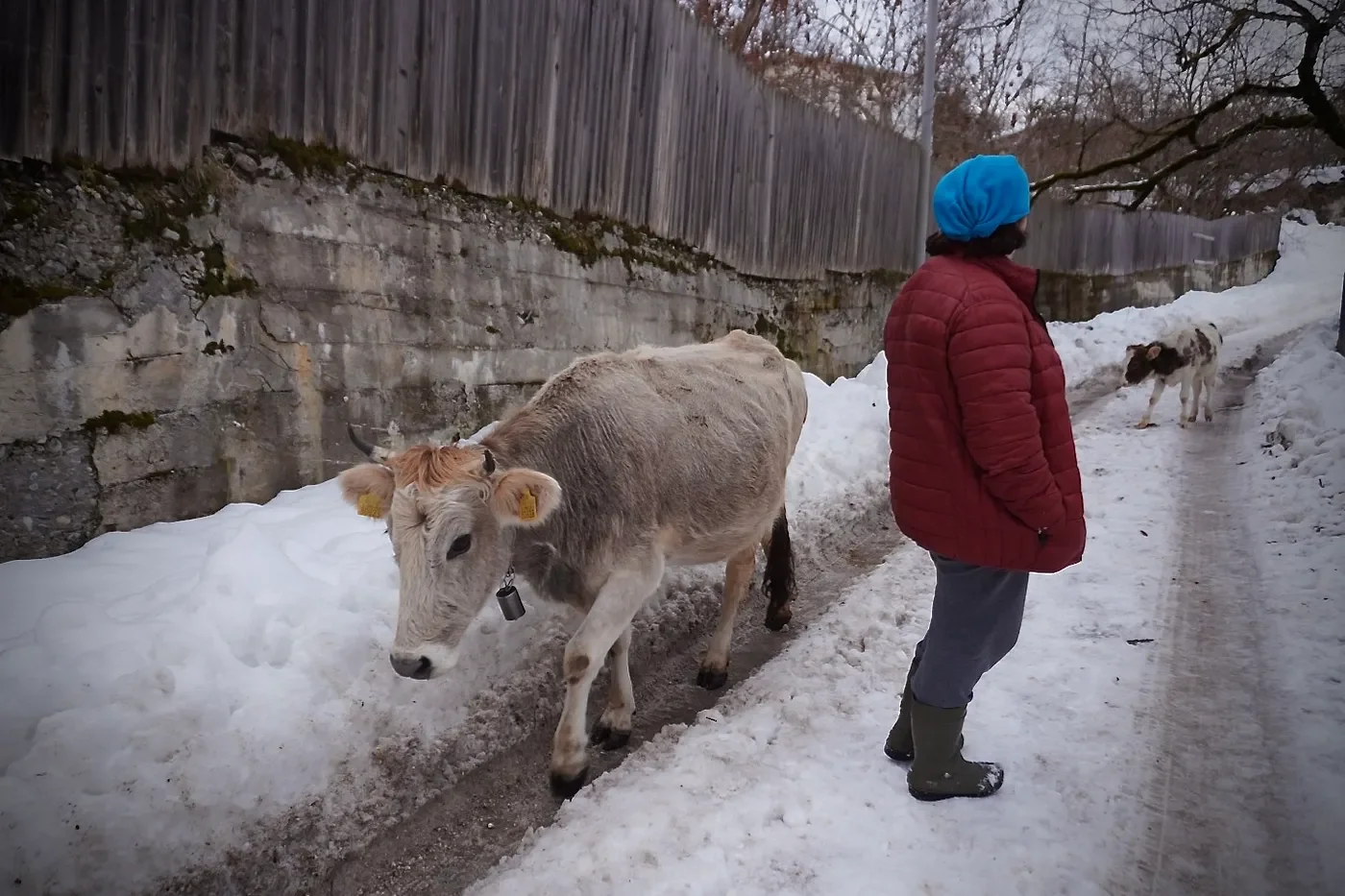
The village woman.
Enchanting
It was as if the snow-covered branches were taking the shape of this word as I plummeted back down the hill in the same fashion I’d arrived. It had been over a week and it was finally time to return to my “city life.”
Tears were shed in the process of intercepting the marshutka in full-circle fashion. Perhaps a reminder of all the others who have left the village for the city before me.
Through the window, I stared at a million snow-covered pine trees — the same ones depicted in the film that brought me here. Not only did I recall the surreal sense of peace that Melania stopped me to experience before entering the forest, but I felt it fill me again.
I thought about the most poignant word I learned during my time in Racha, which has no translation of course. “Sheni chirime” (შენი ჭირიმე).
“Your pain is my pain. Your grief is my grief. Your death is my death. I would take your place in all of it. I would trade places with you.”
That’s how it was best explained to me by different villagers throughout the week. Tapping into this unwavering union and sense of commitment they share with one another has unlocked a new understanding of the Georgian soul. The struggle is collective and the collective memory remains grief-ridden but hopeful.
And just like that, when I looked through the window again, flowering palm plants greeted me. Just a few kilometers ago, we’d been whipping through the icy tundra. Two hours later, palm trees waved hello. I laughed when I thought about how nobody will believe me. Not even I believe it.
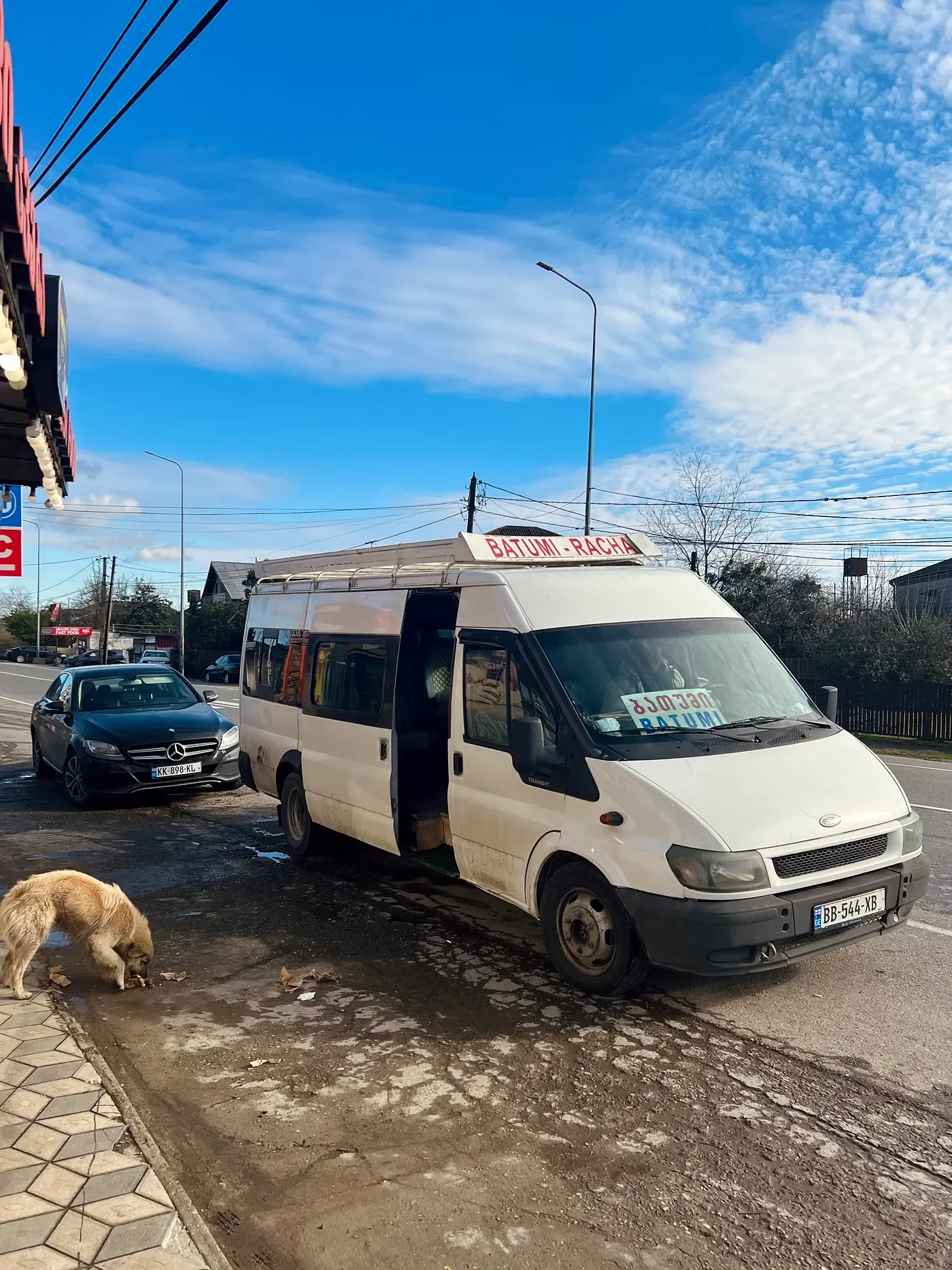
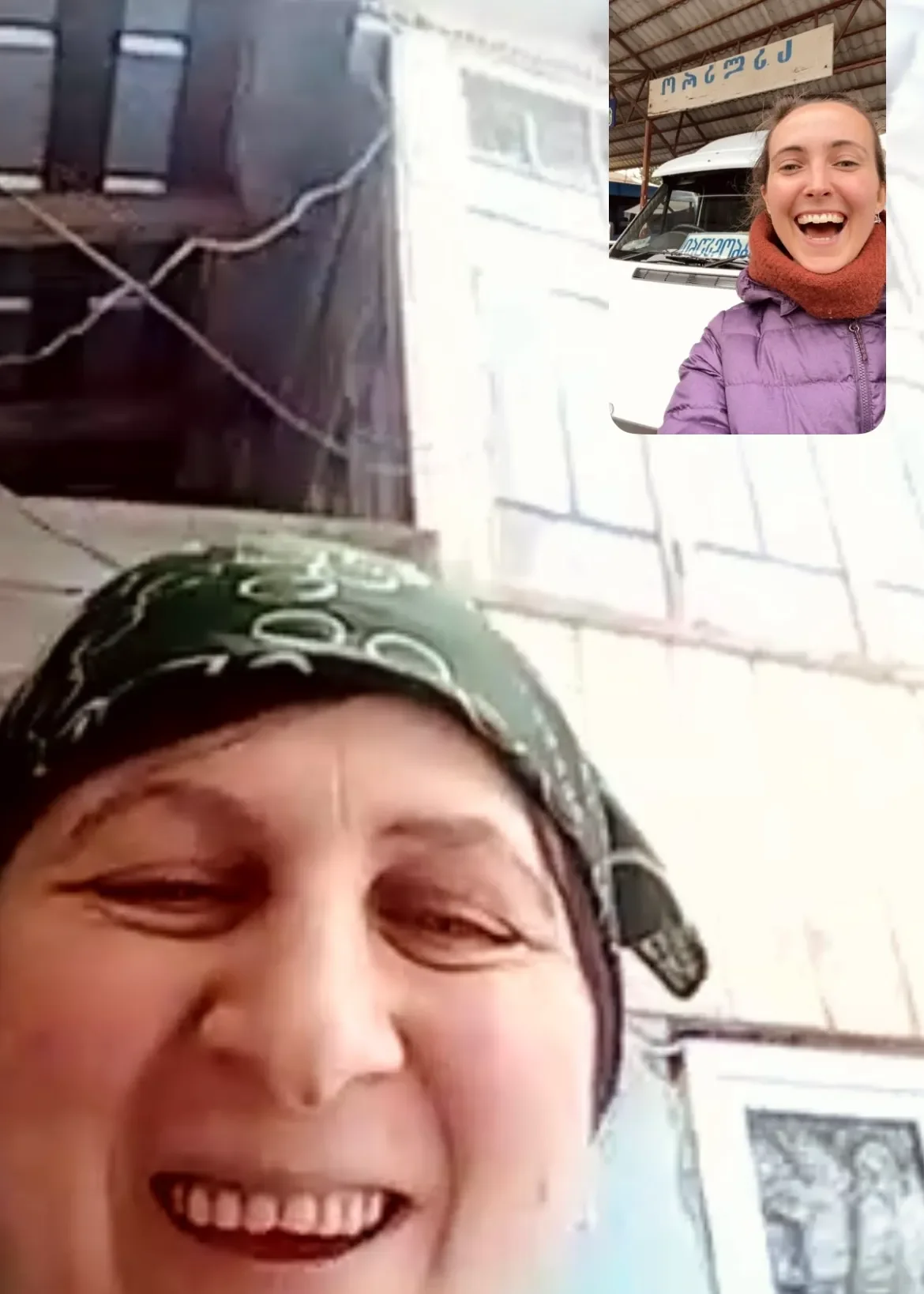
Avto’s brother has the contact of every marshutka driver as they are all his former classmates. Investigation led us to learn there was indeed a direct Racha — Batumi marshutka running twice a week in the winter season. After some phone calls, he shared the news with a proud grin.
“In Georgia, a country the size of Ireland, people could ski in the morning, swim a couple hours later in a warm Black Sea, stand with their backs to some of the world’s most awesome mountains (the Caucasus have 12 peaks higher than Mt. Blanc), yet face an arid, desert terrain where former inhabitants carved towns into hillsides as the only shelter. Georgia contained one of the world’s most prolific and least known wine districts with tea and tobacco plantations thriving 40km from regions too cold even to grow tomatoes.” — “Georgia: In the Mountains of Poetry” by Peter Nasmyth
Photo Gallery