
August 2025
You can experience India from the back of an open tuk-tuk while negotiating the price, from the throne of a rickshaw while questioning the ethics of such a practice, or from the cargo bed of a truck while it carries green tea leaves to the factory.
You can hire a private taxi driver to increase your chances of survival in the megapolis of Mumbai or rest your tired head on an overnight sleeper train back to Goa. You can hitch a ride to the beach on the back of a scooter or hop on the vintage green bicycle you bargained for at the local market.
You can experience the multitudes of India from countless perspectives (and budgets!) But there is nothing quite like witnessing it from a motorcycle. In my case, on the back of one while Tor maneuvered the live-action Grand Theft Auto taking place all around us.
I was in a constant state of bracing for the next rooster crossing that would trigger screeching brakes. “Standard practice,” he’d say from up front. I thought being a passenger princess was supposed to be peaceful!
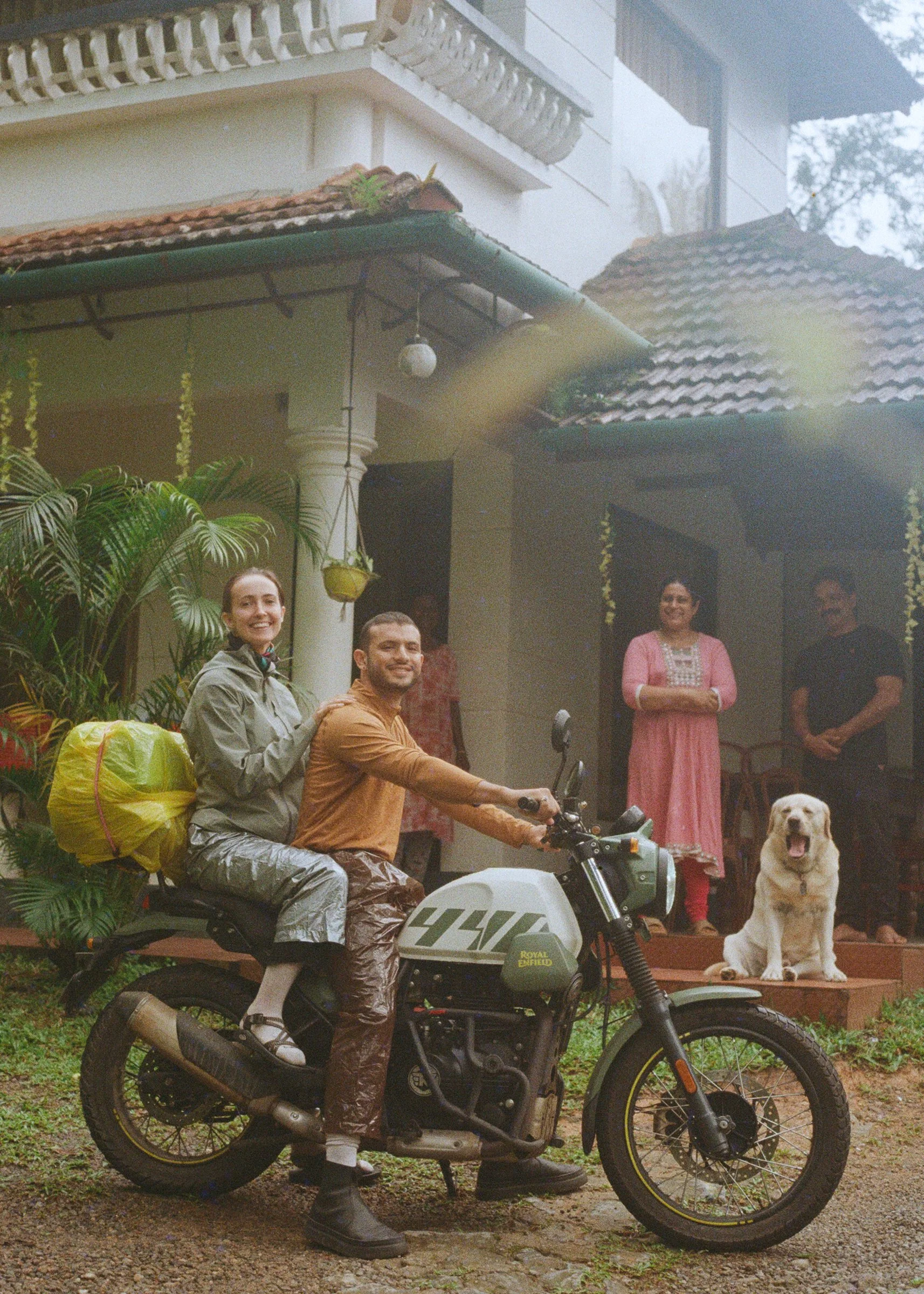
Backpacks? Secured. Monsoon pants? Secured. Helmets? OF COURSE. Seatbelts…? No such thing. Hold on tight.
To navigate such highly (un)organized chaos is no fucking joke. The sheer masses of bodies, of moving vehicles, of bulls, of stray dogs, of street vendors is simply impossible. Each one follows their own orbit, unfazed by a toe-crushing fate or near-death collision.
This level of traffic has been documented in countless documentaries and films, but there is nothing quite like finding yourself in the heart of the cacophony, looking oncoming traffic in the eye. It’s a high-stakes puzzle with absolutely no rules (especially on the roundabouts).
When he wasn’t fuming with road rage, Tor reached a total flow state. Anybody will tell you that this kind of driving requires an extreme degree of concentration, record-breaking reflexes, and eyes on the back of your head. You can assume absolutely nothing. Well, perhaps only the worst.
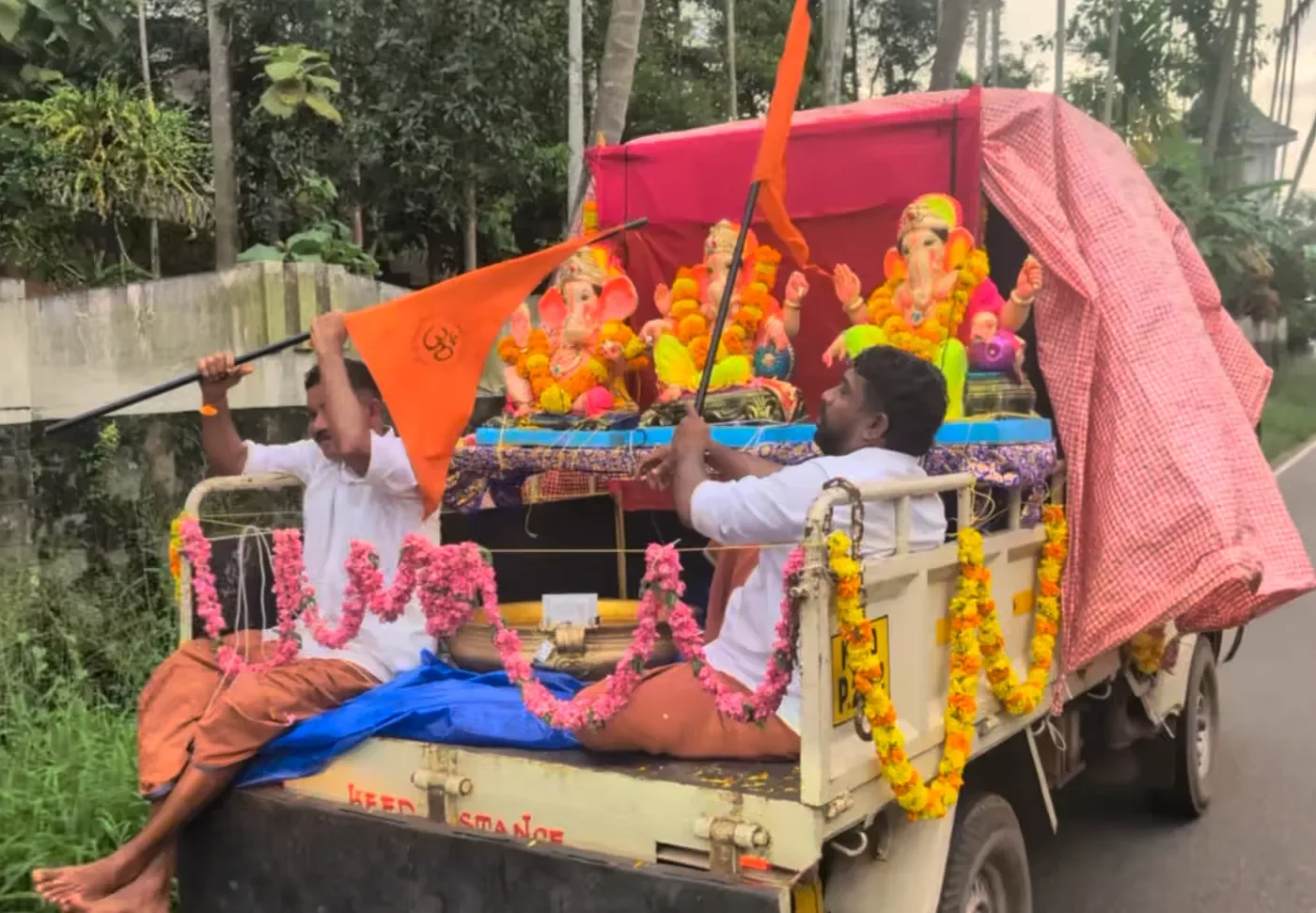
Maneuvering through a huge parade of decorated trucks celebrating the first day of Ganesh festival.
We’re reminded why it’s all worth it when we finally exit city limits and feel the first incline of incoming highlands. The fight-or-flight mode surrenders to a different kind of adrenaline: the thrilling kind. Totally consumed by the jungle soundscape, totally free to pull over at every whiff of fresh banana fritters, totally unobstructed from the endless labyrinth of cascading tea plantations.
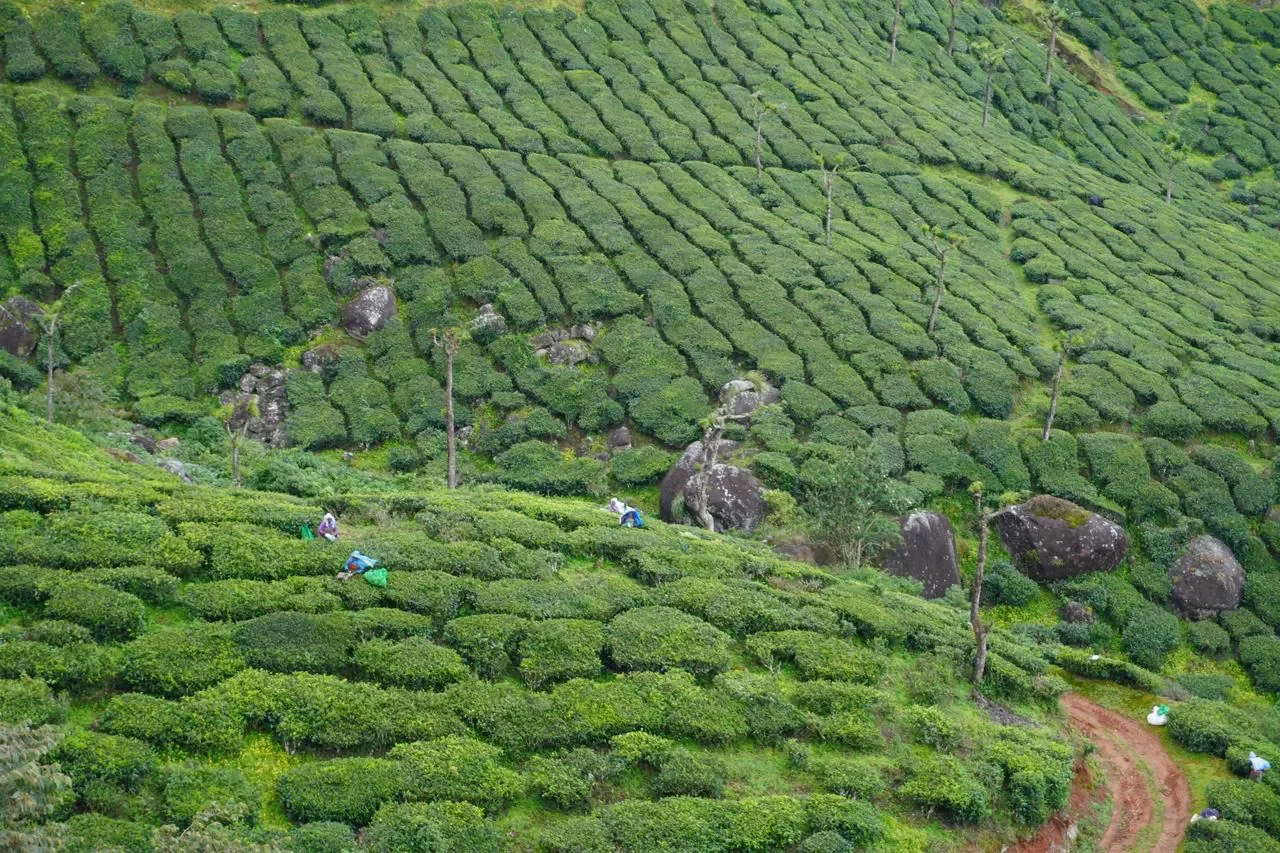
Unsurprisingly, it’s the women who do back-breaking labor in the green tea fields.
We zoom by uncles draped in gold-encrusted lungi skirts — skirts that define the long-awaited Onam harvest festival. We inhale burning sandalwood from decorated temples — temples that are quickly replaced by grottos dedicated to Mother Mary (another colonial reminder as you drive on the left-hand side of the road). We sync our music and flow to the psychedelic sounds of the sitar in the sun — sun that is replaced by fog as increasing altitudes lead us inside another cloud.
Time for a chai break!
We scope out the best spot: the spot that has no pin on Google Maps but is buzzing with locals. The spot where we proceed to ask, “what village are we in?” and they stare back at us. After taking the last sip, we walk around the corner and haggle for a pair of rain pants before hopping back on the saddle.
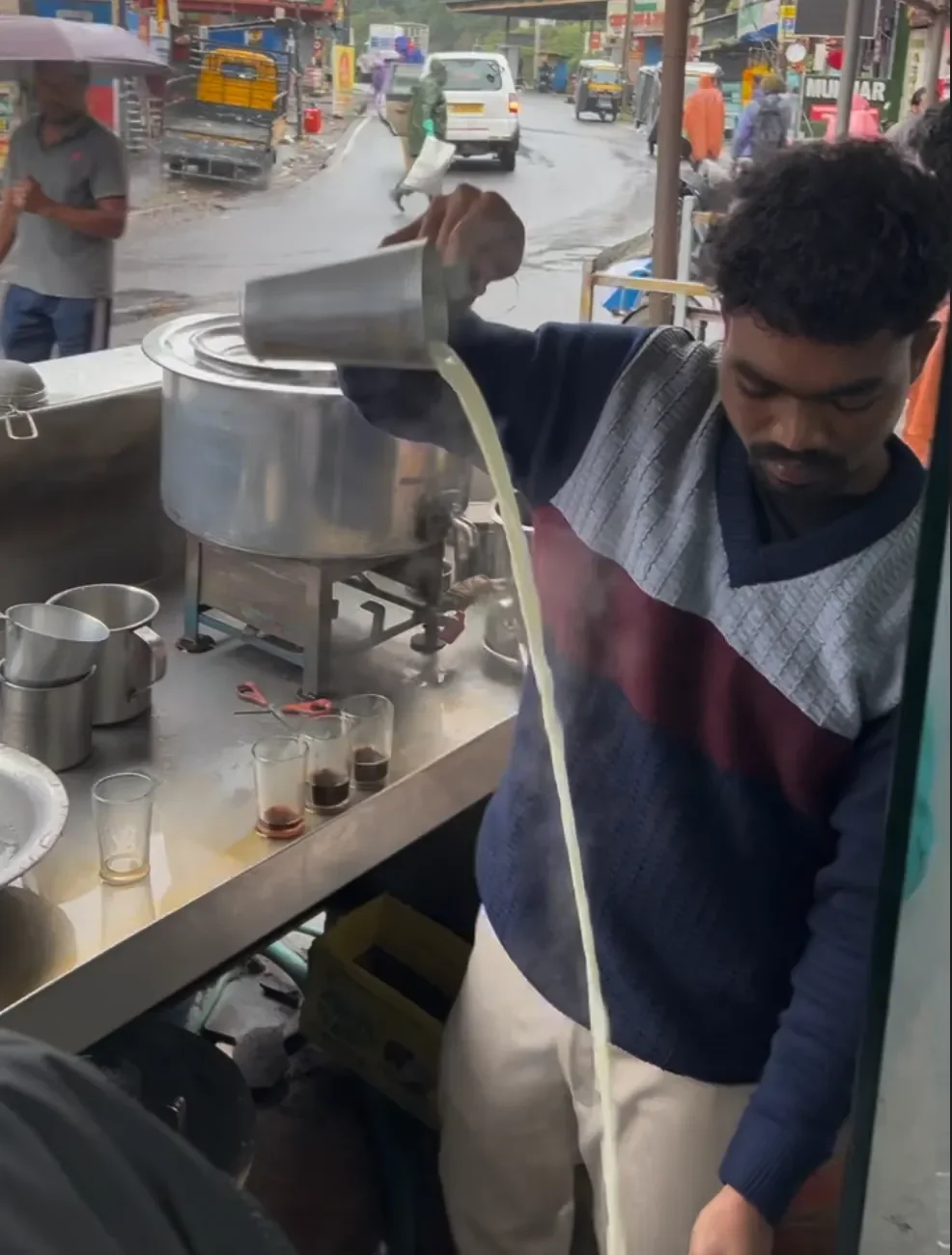
“Chaiwala is a person who prepares and sells tea, typically on the streets or from a small roadside stall in the Indian subcontinent.” We had plenty of chaiwala encounters.
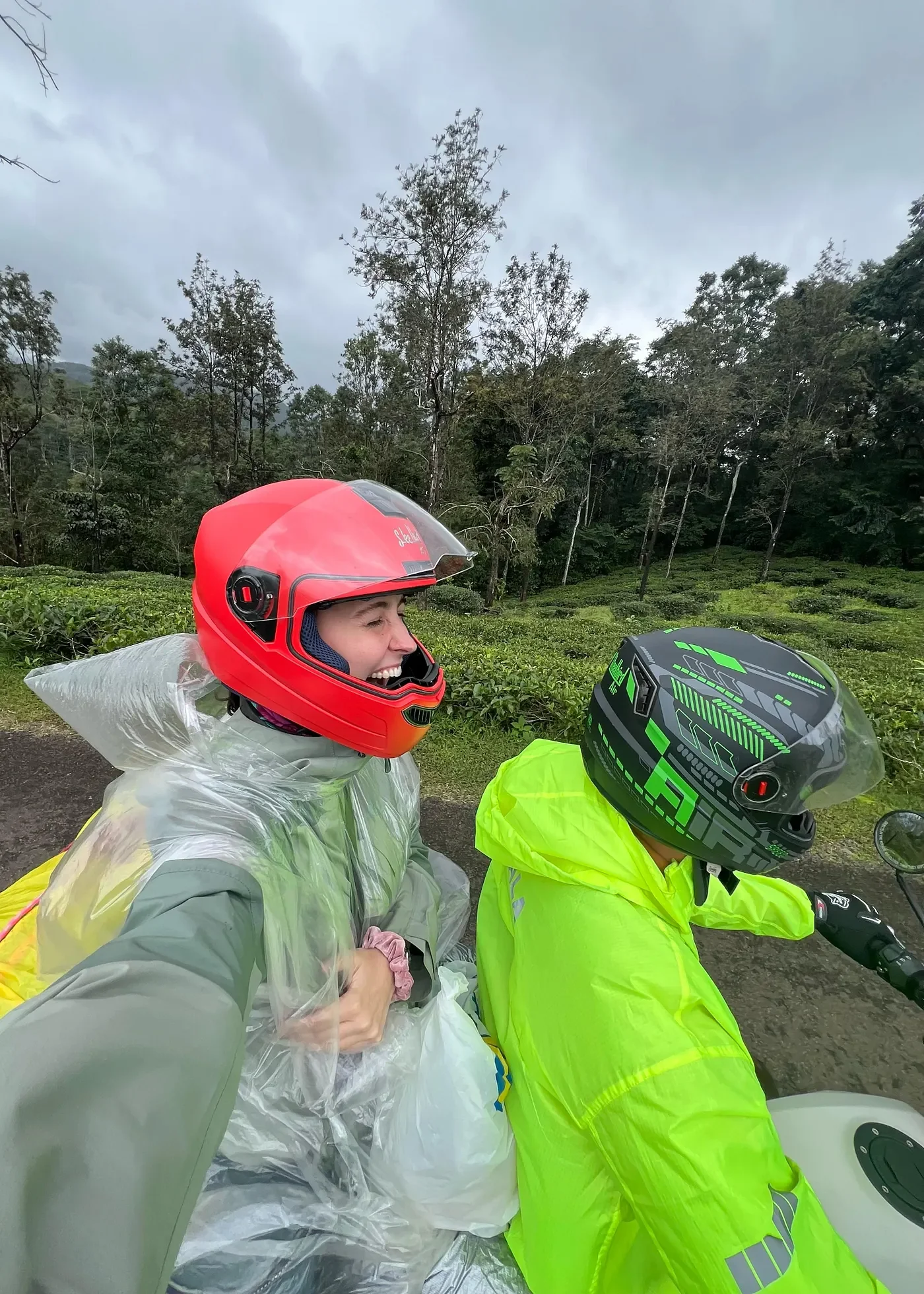
By hour 10, I lived blissfully on the back (brought back only when the sudden pothole realigned my spine with chiropractic precision).
Tor hits the brakes while petals spill across the wet pavement: an open-casket funeral procession has united the entire population of surrounding mountain villagers. We take a moment of silence as they clutch their rosary beads tightly.
Ahead, a little girl pokes her head out of the car window, grinning when we wave back. But she wasn’t the only one waving at us. Red flags bearing the unexpected stamp of communism wave above-head around every corner! The flags serve as a reminder that we’re in the world’s first democratically elected communist government.
On a city tour of Kochi, we learn how peasants, fisherfolk, and severely oppressed castes organized in 1957 to demand radical redistribution. Decades later, Keralites continue to wave those red flags high (meanwhile, an internet search reveals that communism is active only in name).
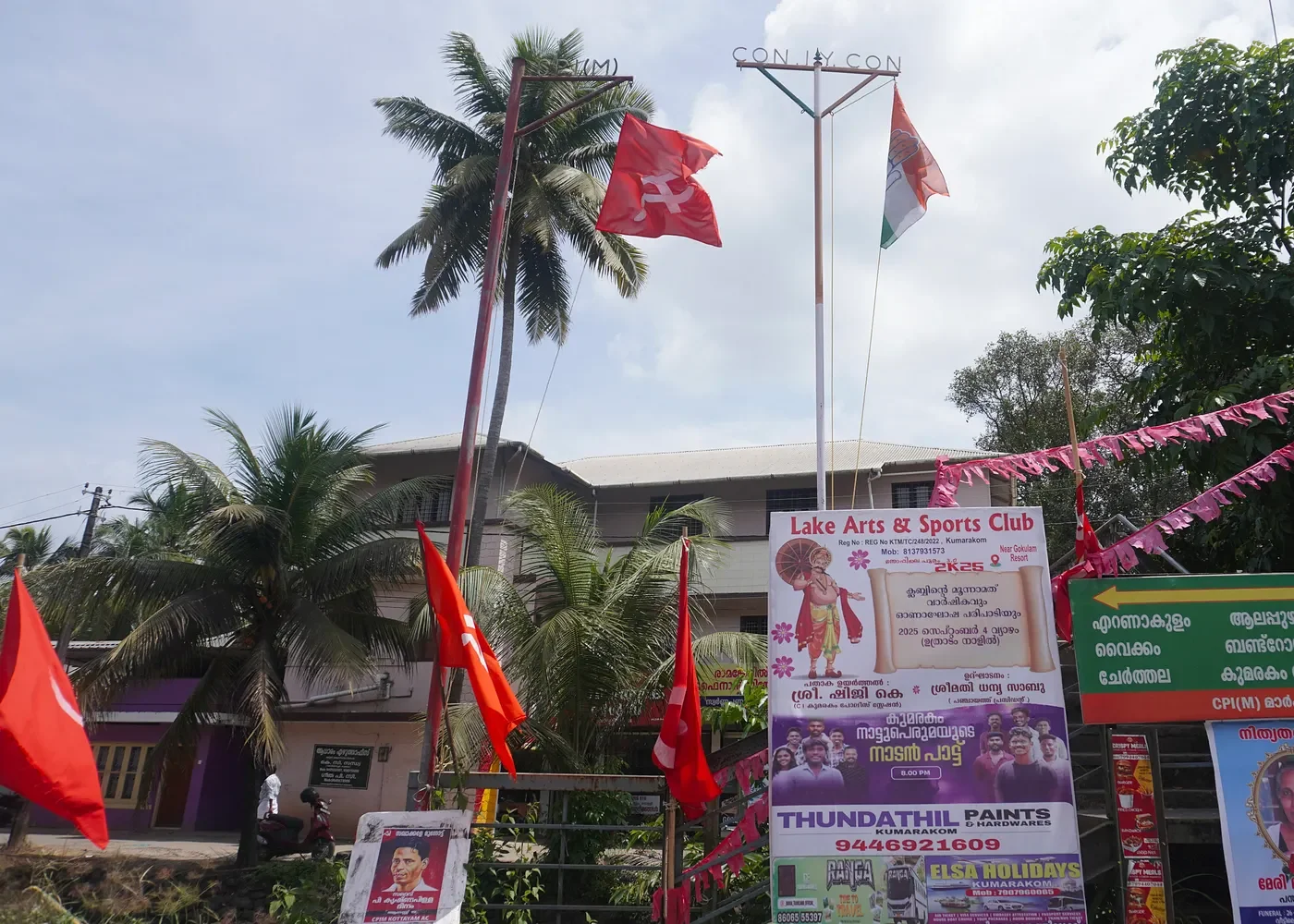
It was impossible to capture on the moving bike, but we counted hundreds of red Communist Party flags, graffiti, and even a shrine to Karl Marx.
Of course the dangerous driving is not restricted to city limits. Every blind bend is a gamble as the decorated megabus turns into impossible angles. “Death by marigolds,” you think as its orange petals pin you to the ledge.
Meanwhile, monsoon rains work hard to keep the tea fields in undulating formation, but in the process create perfect conditions for hydroplaning. “Cloudbursts,” the locals call these sudden eruptions of skies. There’s a reason why you don’t tell your mom about this journey until you’re back home.
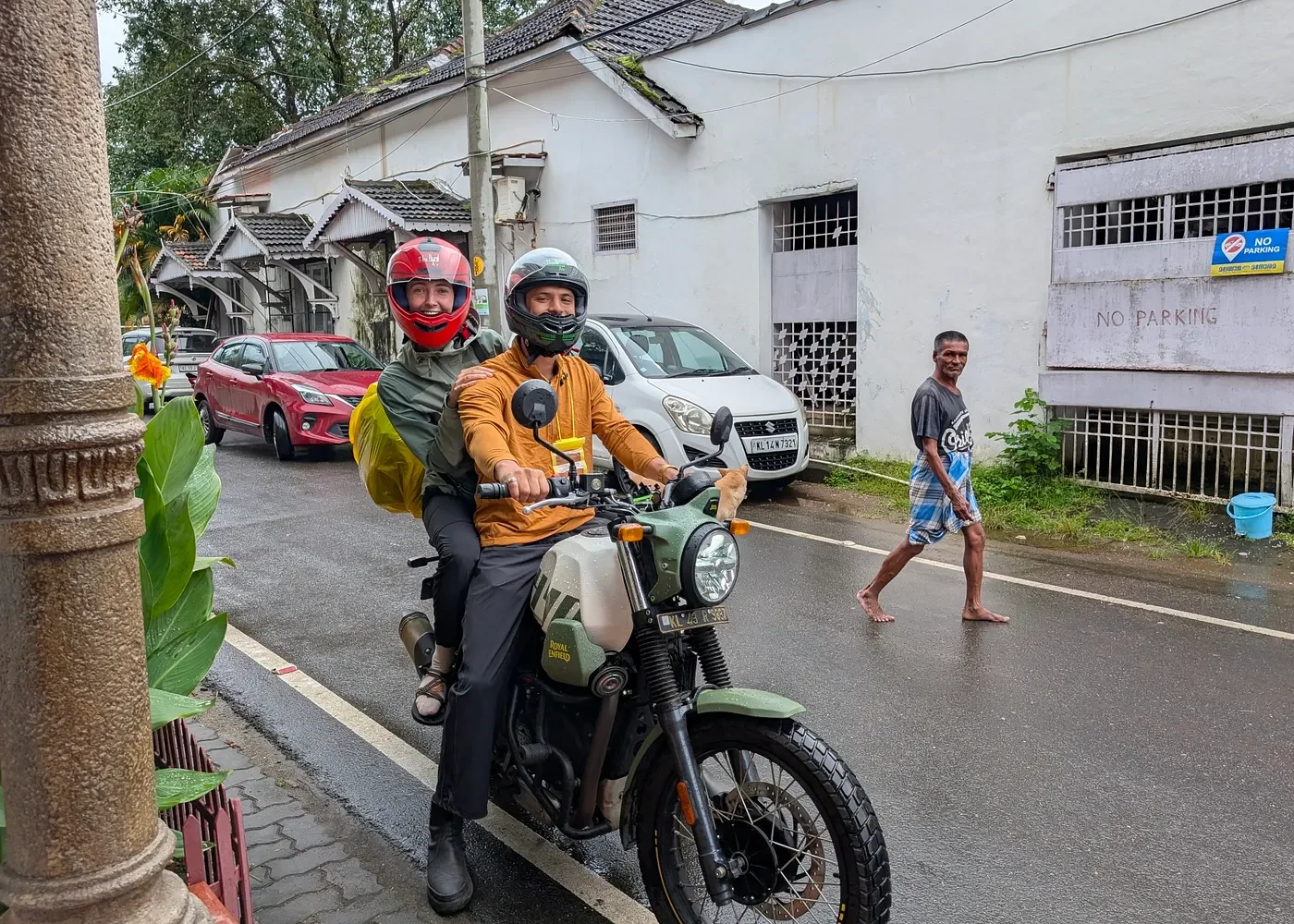
“Mom, we made it”
After 16 hours on the motorbike, I’m once again reminded how incredibly diverse this country is. As they say: “India is a land where the language changes every 100 kilometers, where a new religion, a new food culture, and a new set of festivals reveal themselves in saturated colors. It’s a land where the mindset shifts as quickly as the climate, transforming from desert to jungle to sea from one state to the next.” It would take countless lifetimes to explore this ancient land.
Thank gods for reincarnation!
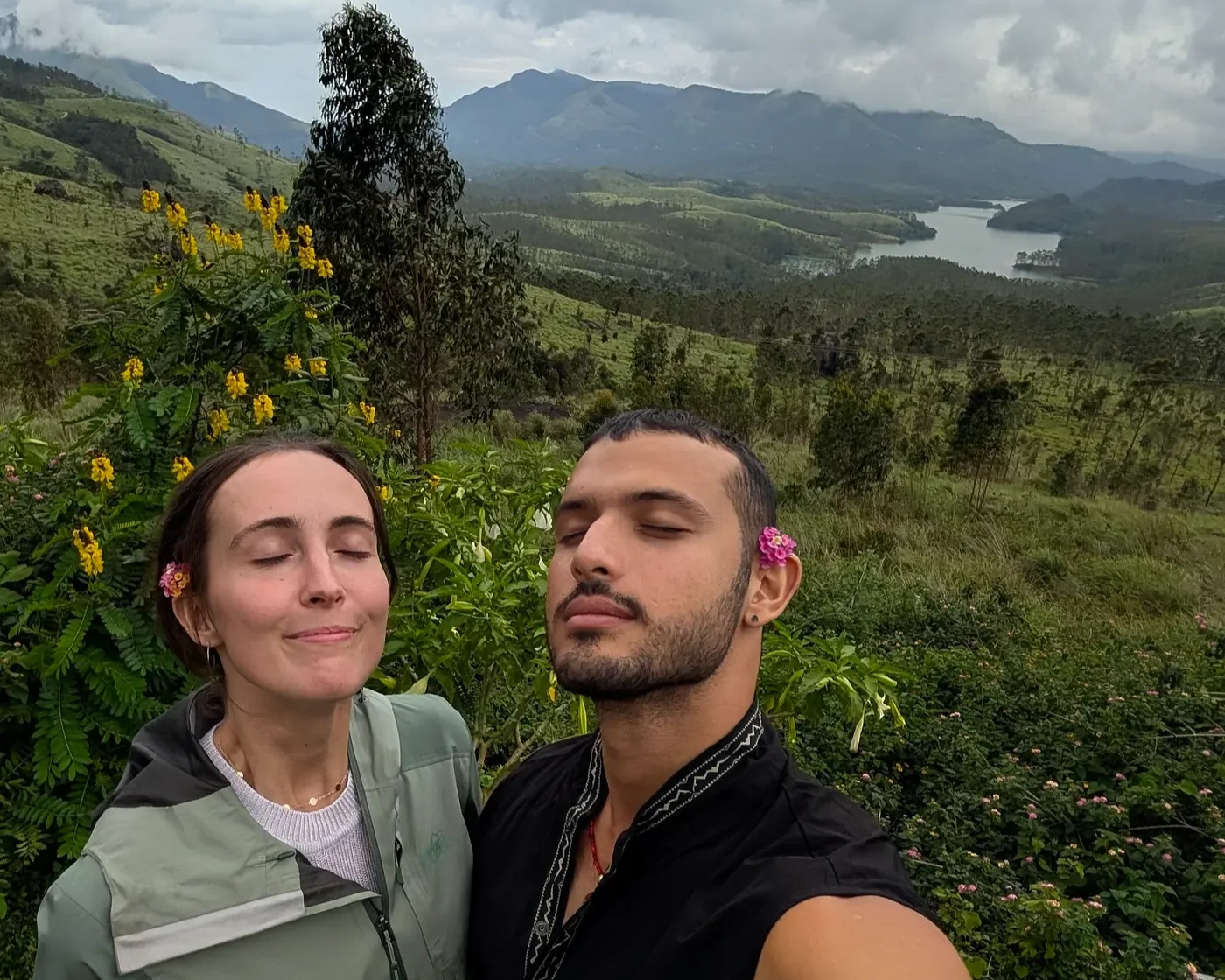
These mountains, known as the Western Ghats, were the natural barrier that kept Kerala isolated from the rest of the subcontinent (while leaving it wide open to sea trade via the Arabian Sea). This geography shaped the most extreme caste system which included “unseeables.”
