
Goa’s Oldest Community of Fishermen
Analogue portraits of the ramponkars on the Arabian Sea
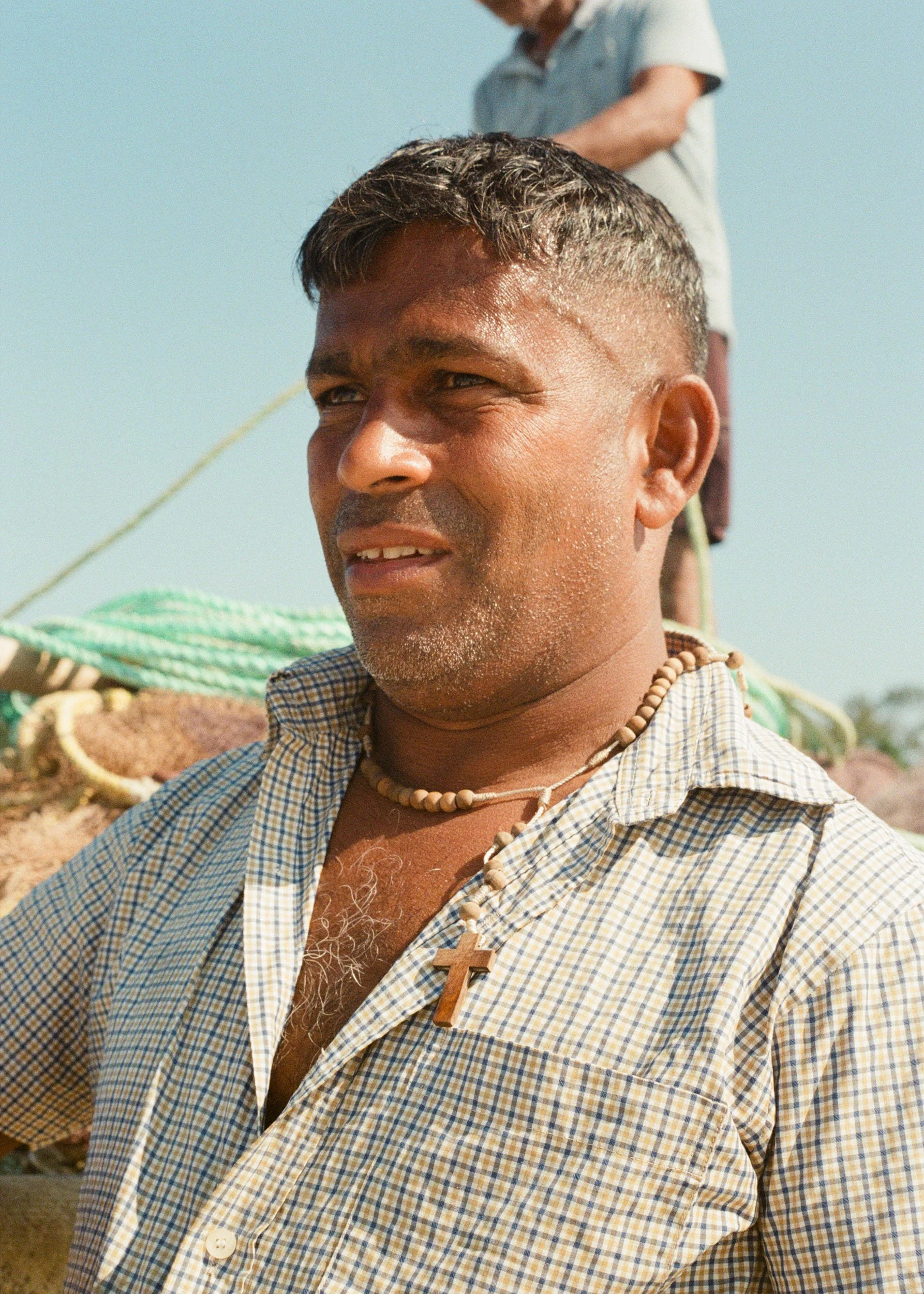
Agnelo, a member of the ramponkars, Goa's oldest community of fishermen
Agnelo dropped his cellphone in the sea last night. One false flop of an undead fish and suddenly his screen was sinking into the Arabian abyss. He watched it go, helplessly.
When we met again on Betalbatim beach this morning, he was clearly distraught about the cost of replacing this lifeline.
What will I do? he repeated while patching up a hole in the fraying net. The beach dogs, in pursuit of a seafood snack, had bitten through it again. Where will I get $100? he continued…
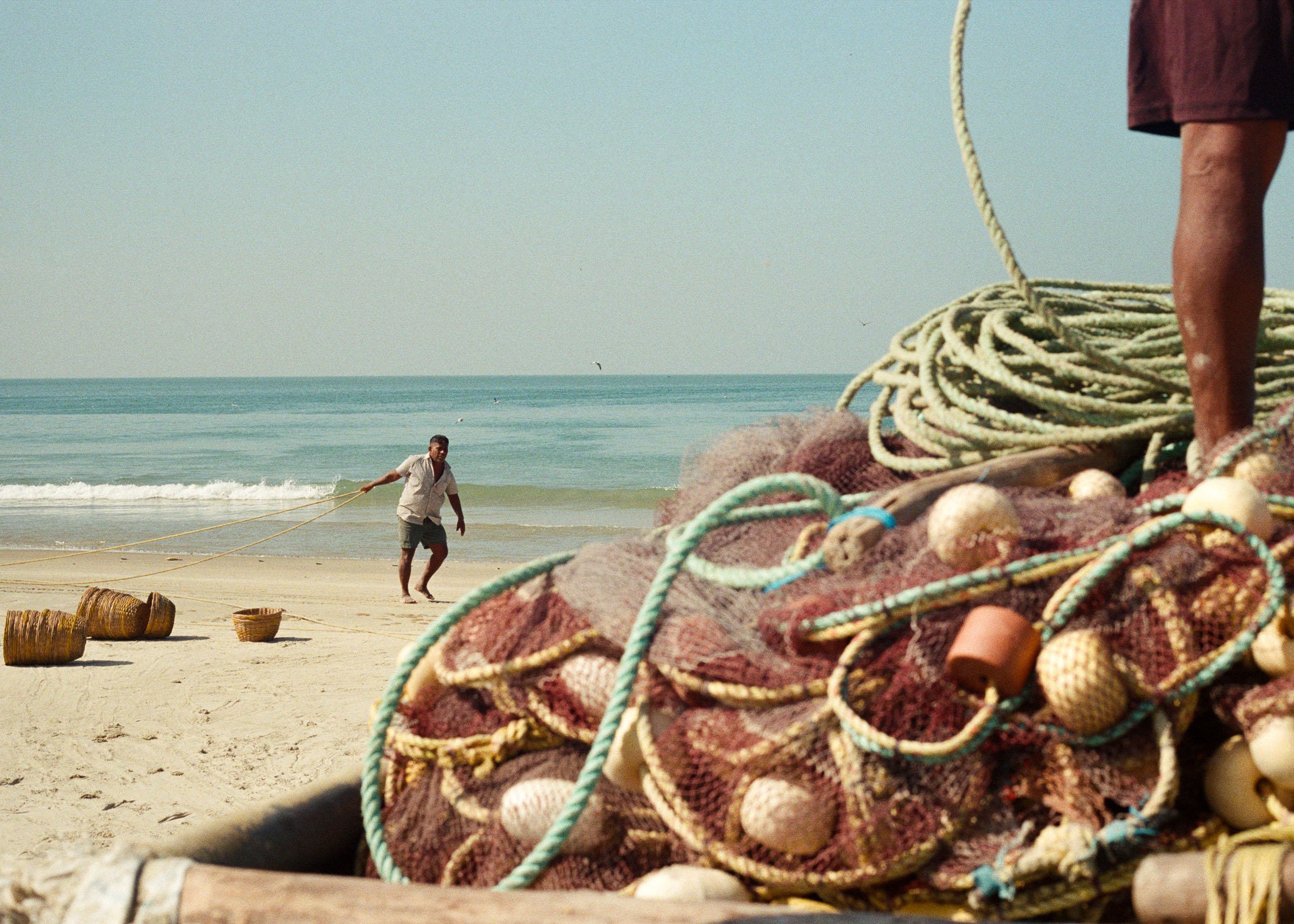
Retrieving the rope after it has dried in the sun
His phone is not the only lifeline that belongs to the sea. For decades, Agnelo and his step-father have cast wide nets into its waves. They are the ramponkars, Goa's oldest community of fishermen. Much like the fish that feed their village, their heritage is on the verge of extinction, slowly being swallowed by industrial trawlers and coastal gentrification.
As Colva village sleeps, Agnelo and his team embark into the moon-lit waters. The fish and crabs must be ready to sell by the morning. Every morning.
I know the routine by now. He’d waved me down one morning, when one of his men was sick, charming me with his equally carefree and diligent spirit. I was put to work then, and I’m put to work now. Another pair of hands cuts the time down noticeably, but that’s only if I follow Agnelo’s close command.
Get in the boat. Now pull. STEADILY! SLOWLY! SLOWLY! SLOWLY I SAID!
I pull the thick, green rope into the stern of the boat using the technique I’d been taught. The incoming tourists - those who managed their way to this more peaceful part of Goa - look on with curiosity. When I mess up, Agnelo must come and untangle the rope. I do everything in my power to prevent that.
My thoughts start to linger in this repetitive state of tugging. Why isn't the rope getting any shorter? Or so it seems that way. I’m convinced that this is what purgatory must feel like: to pull an endless salty rope, in the blazing sun, for it not to become any shorter.
My muscles ache and my respect for their work multiplies. This is the kind of manual labor that results in unforgiving rope burns, scattered sleep schedules, lost phones, perpetuitous pulling, and blistered hands.
It requires a tremendous amount of trust that the sea will spit you out again and again, in the rip currents that follow monsoon. It means feeding the village with the catch you’ve risked your life for, without much recognition or protection. In many ways, it’s a deeply spiritual role. It’s the foundation of Goan society; of any society whose soul and stomach is reliant on the seaside.
After what feels like eternity, the tail end of the rope is miraculously whipped into the boat’s belly. Hallelujah! as the Goan Catholics say, Agnelo being one. The fading tattoo of a cross on his right wrist seems to echo the heavenly rejoice that transpires as he gives me a high five.
Nestled like a burrowed snake, that rope will now rest before yet another evening harvest summons its unraveling. One of these nights, you and that friend of yours must join us, he reminds me, already looking back at the water.
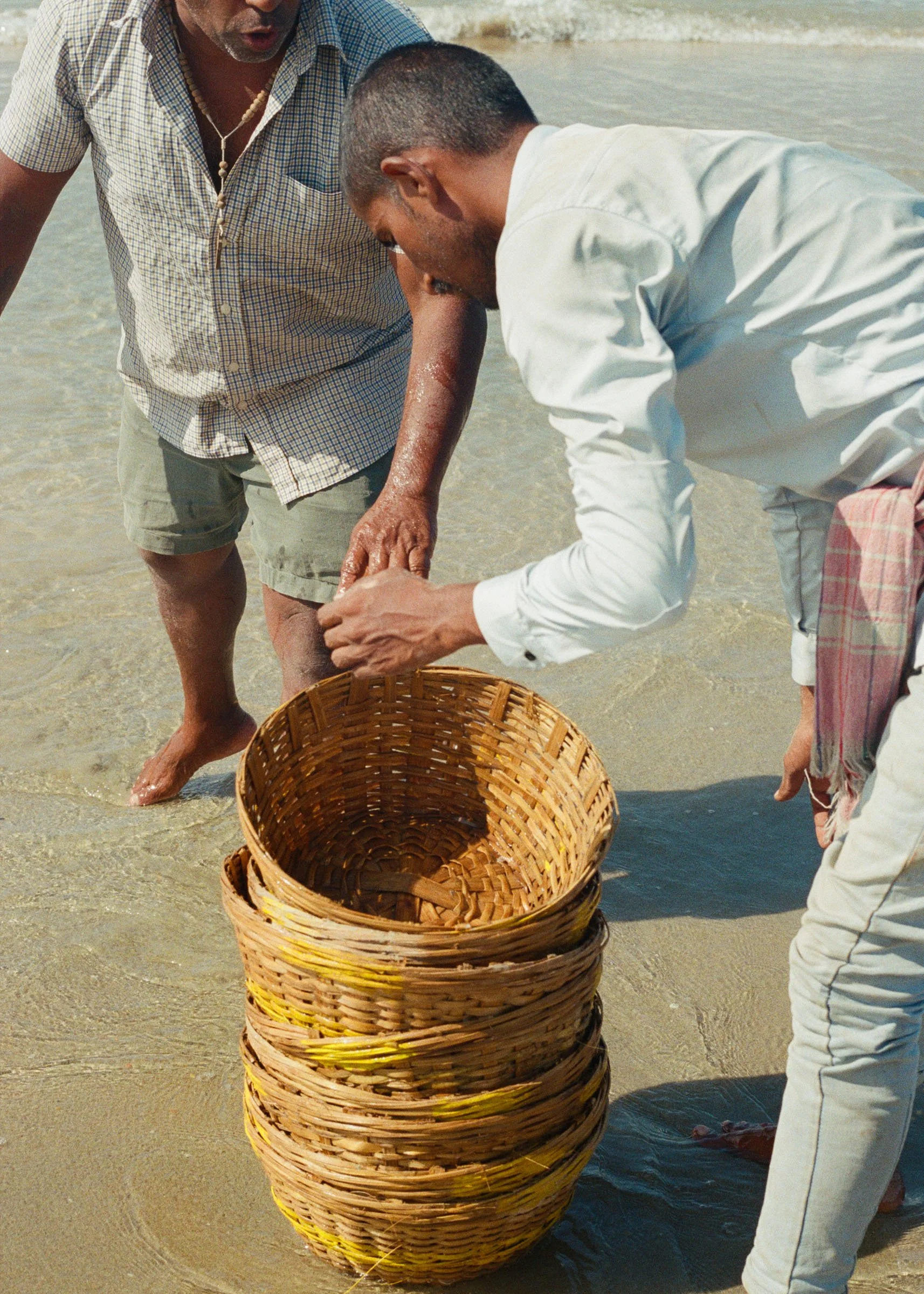
Traditional handwoven baskets of Goa
One Week Later
A tsunami of dead silver fish are splattered across the shore this morning. Thousands of small bodies scale the sand. Swarms of seagulls feast on this all-you-can-eat buffet, beaks stuffed with gills and tails. I’ve never seen anything like it.
It’s my final morning in Goa and I hopscotch through the carnage to find Agnelo and his step-father. There they are, at the usual anchor point.
Before I can slip him a donation for his sunken phone, he pulls a new screen from his chest pocket and flaunts it with pride. This is what it looks like to look out for one another, he explains. It’s the way of the ramponkars, the local collective of fishermen, who all pitched in. They protect their own, a brotherhood built on mutual survival.
Agnelo kicks a lifeless silver body away from his path. One of the industrial boats wrecked last night, Agnelo explained. Everyone survived, except the fish.
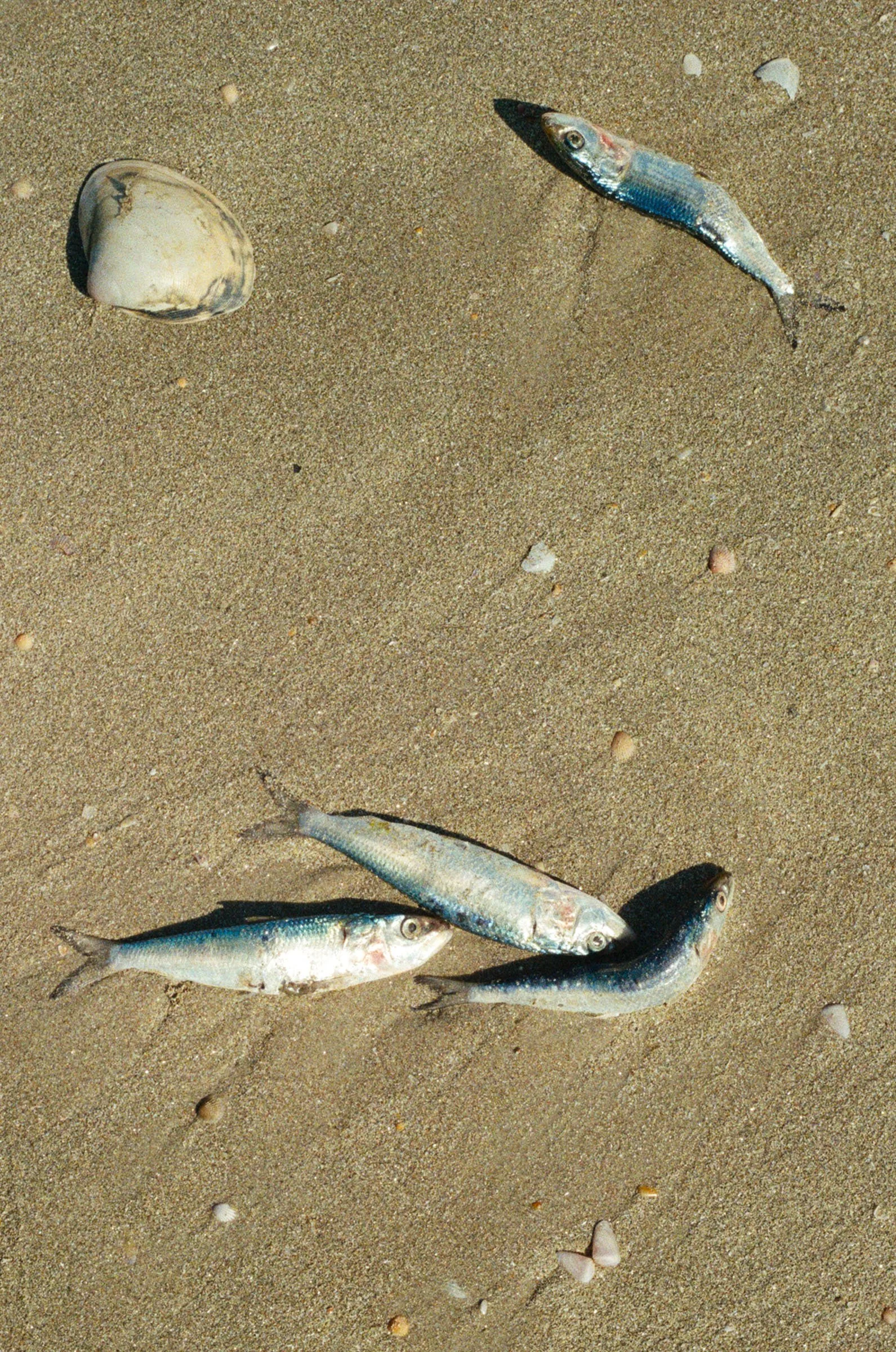
Thousands of dead silver fish scalded the shores after a shipwreck
It’s a surreal, slightly apocalyptic ending to my time here, a grotesque monument to what the ramponkars are resisting: industrial extraction that is stripping the sea blind. But Agnelo shrugs it off. His nets still need mending. The community still needs feeding. The rope still needs pulling.
One last time, I climb on the boat, to his world of sweat and salt.
Now pull. STEADILY! SLOWLY! SLOWLY! SLOWLY I SAID!
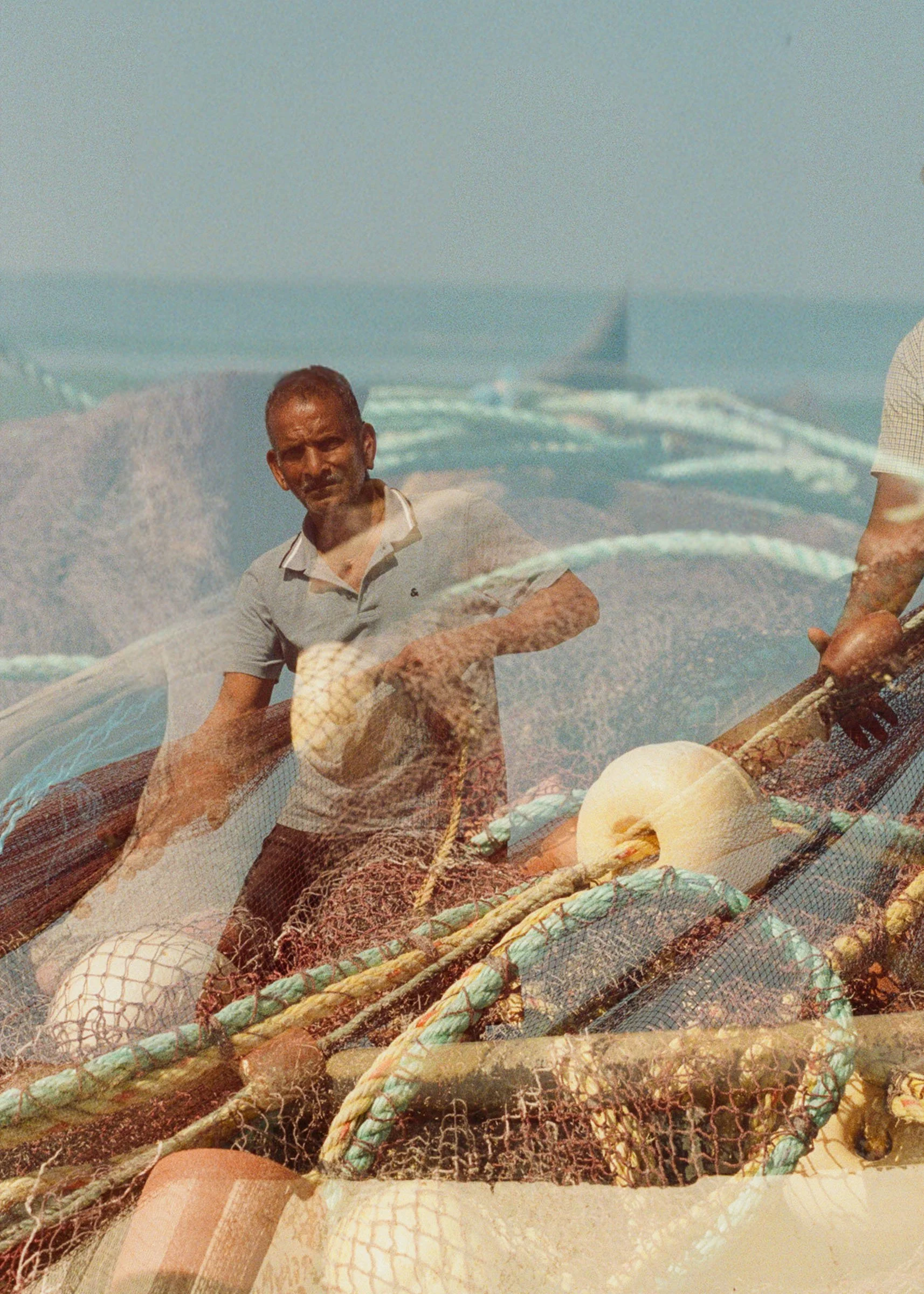
Agnelo’s step-father (double exposure)
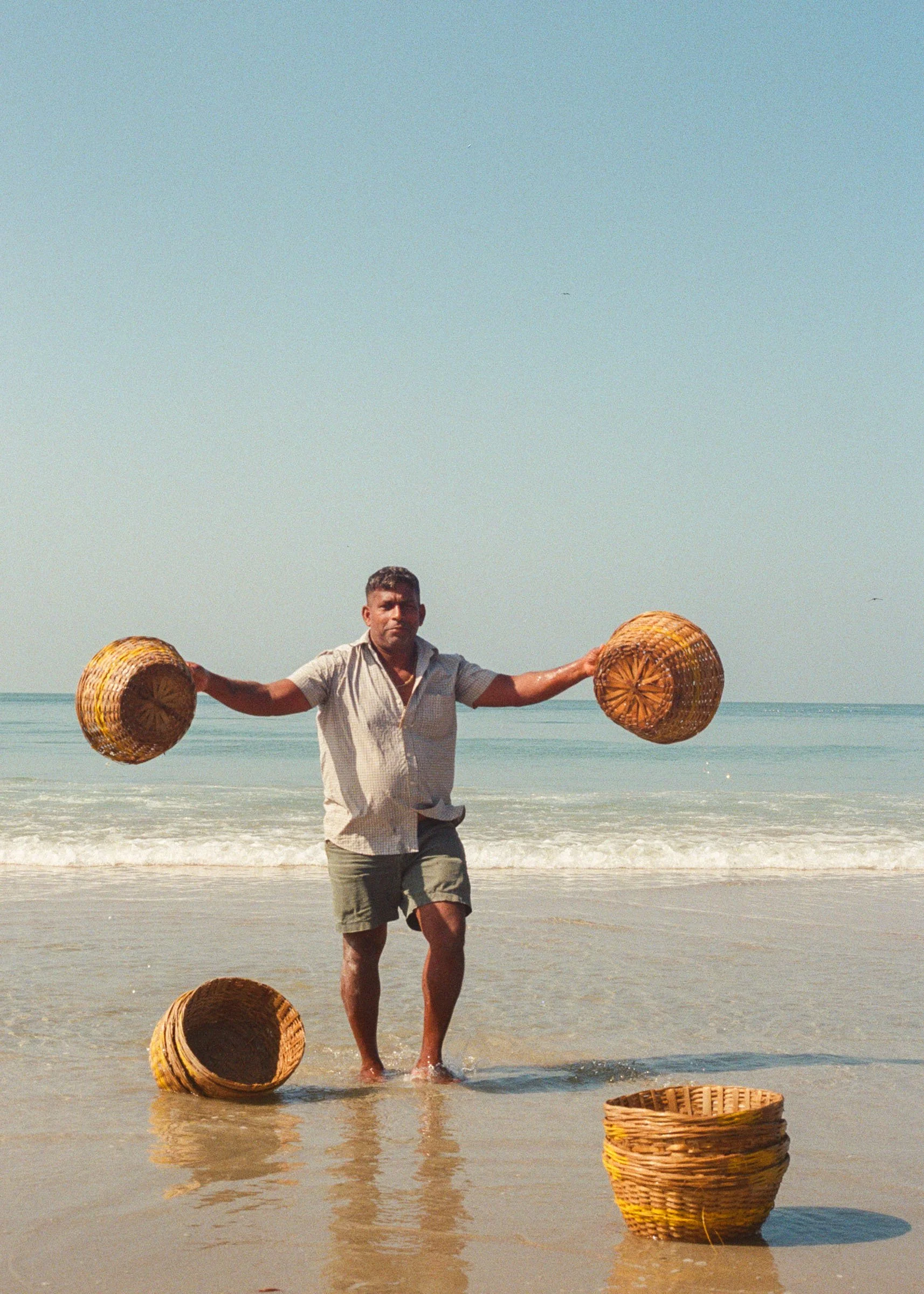
Drying the wicker baskets
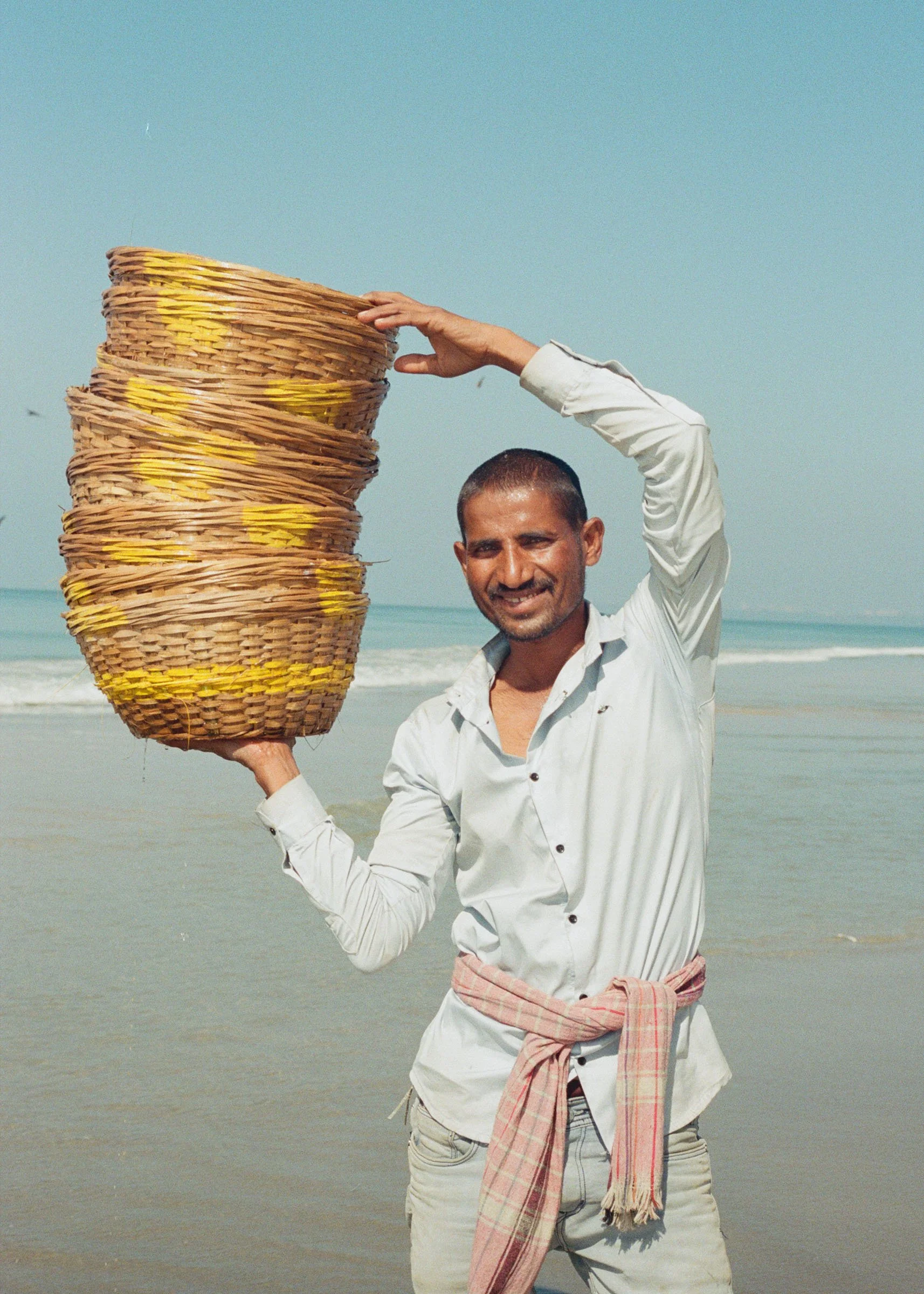
Their team member, and model, clearly
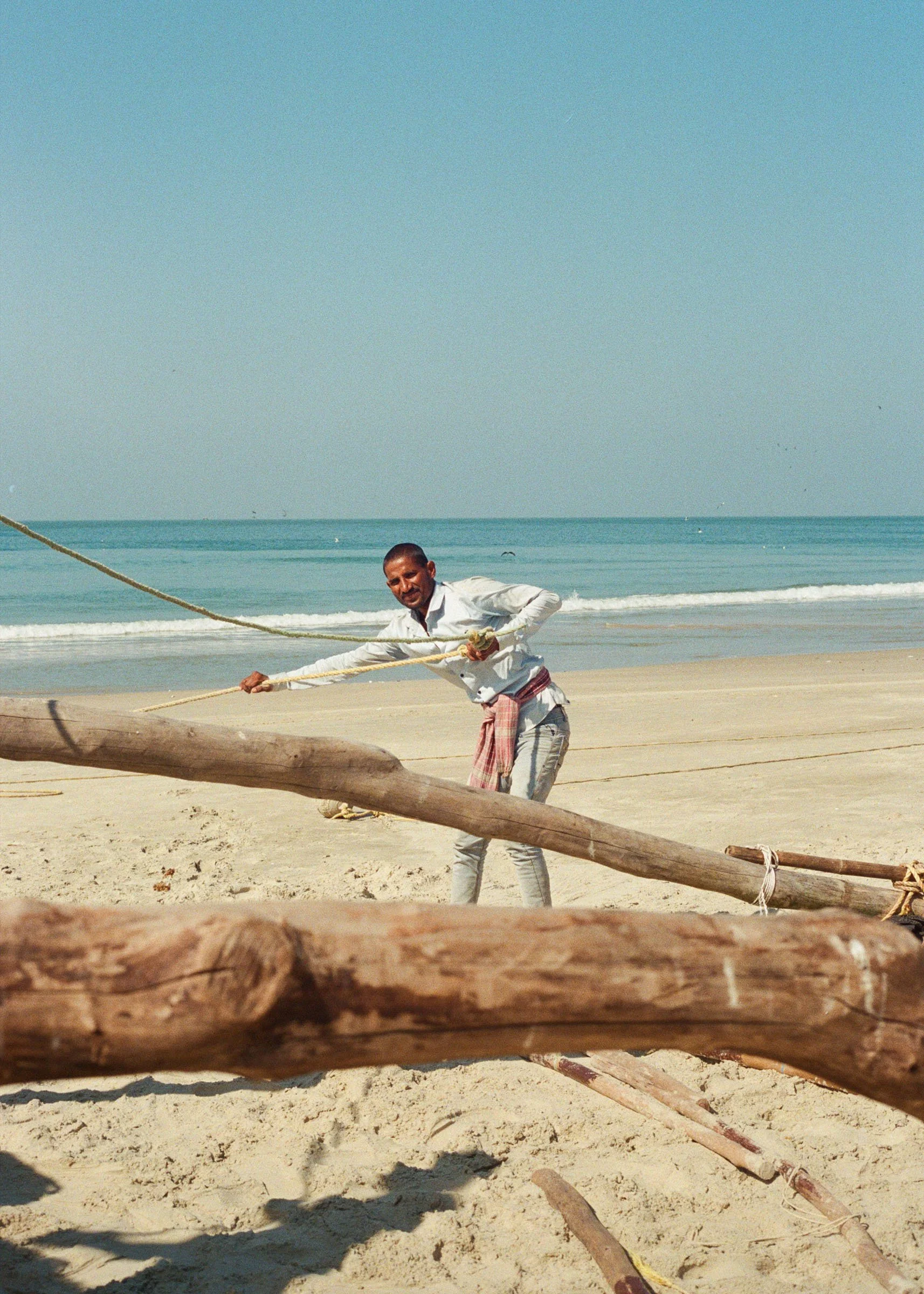
Pulling the endless, thick rope
